The elections left more than a new distribution of power: they exposed the accumulated fissures of Costa Rican politics. The magnitude of the governing party’s victory not only redefines majorities; it also compels us to ask what went wrong in the opposition, why social discontent found a single effective channel, and how far a government with such concentrated power can go. This result does not close a chapter; it opens an unavoidable debate about leadership, institutions, and the country’s democratic direction.
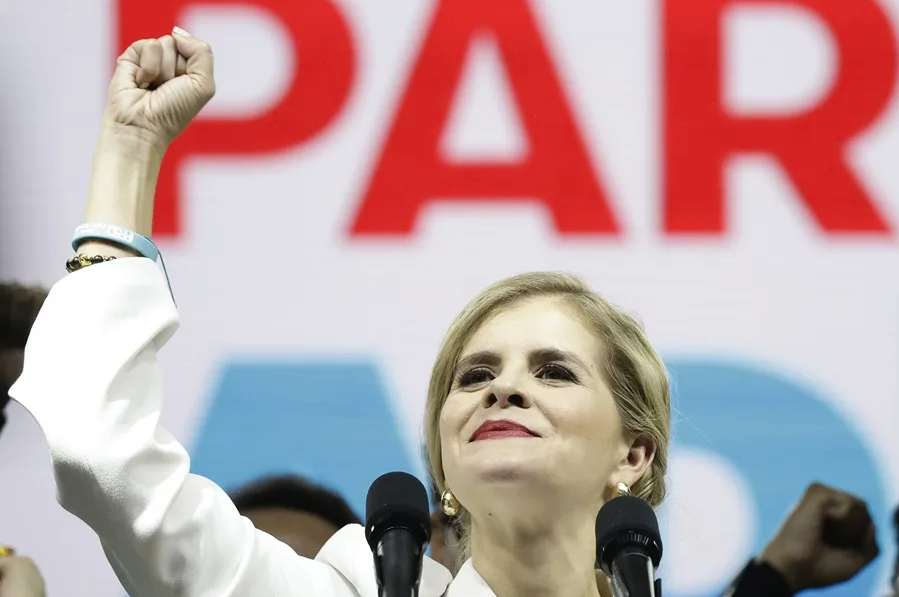
The governing party’s decisive victory in both the Executive and Legislative branches marks a turning point in Costa Rican politics. With Laura Fernández securing 48% of the vote and a legislative majority of 31 seats (out of 57), the government not only consolidates institutional power but also sends a clear message about the electorate’s mood. The National Liberation Party, its closest competitor, was relegated to 17 seats, revealing a political and symbolic gap that is hard to ignore.

This outcome cannot be explained solely by the governing party’s merits, but also by the opposition’s profound inability to build unifying consensus. Opposition parties appeared fragmented, more focused on internal disputes and short-term tactical calculations than on articulating a credible and shared vision for the country; this led several to disappear from the legislative scene and others to be reduced to their bare minimum.
It should also be noted that in the months prior to the elections, different political forces of varying orientations held talks aimed at unifying priority criteria and articulating common strategies based on shared pillars. However, this effort did not prosper, largely due to the absence of a figure capable of leading and organizing the process. In this new scenario, it cannot be ruled out that the presence of prominent figures in the Legislative Assembly, with experience and political vision, may at least allow for the construction of a minimal agenda for the next four years—particularly on electoral matters, with an eye to the 2028 municipal elections—especially considering that the governing party prevailed in 64 of the country’s 84 cantons.
Added to this is a repeated misreading of national reality by broad sectors of the traditional political class. For years, social discontent, distrust of elites, and citizens’ fatigue with discourse disconnected from everyday life were underestimated, as were the role, usefulness, and reach of new information and communication technologies—particularly social media. In this arena, the governing party made one of its boldest bets, developing an uninterrupted, consistent, and clearly targeted communications strategy that ultimately expanded its capacity to connect with broad segments of the public.
Thus, the government managed to channel popular discontent effectively, combining a narrative of order and control with perceived results in terms of macroeconomic stability.
However, the broad concentration of power raises legitimate questions about the limits and scope of the institutional transformations the governing party will—or will not—seek to pursue, particularly in sensitive areas such as the appointment of institutional authorities, relations with the Judiciary, and the preservation of democratic checks and balances.
Added to this are serious doubts about the ruling group’s capacity to translate its political strength into concrete governmental achievements, especially given that the outgoing administration left significant pending issues and insufficient results in key areas. This situation fuels the perception that a similar pattern could be reproduced, which would only deepen the country’s sociopolitical and economic problems, potentially covered by populist rhetoric with authoritarian traits.
It is also worth emphasizing that the Costa Rican case is far from unique and should be read in a broader context. At the level of political analysis and speculation—though not always supported by conclusive evidence—there is growing concern in various countries about the possible influence of organized crime on democratic systems.
And in a different sphere, more clearly documented and belonging to international politics, there are efforts to weaken international law and erode multilateralism, affecting frameworks of cooperation built over decades. Costa Rica, despite its solid institutional tradition, is not isolated from these dynamics and faces the challenge of recognizing and debating them seriously.
At bottom, the problem is deeper and structural. For at least two decades, Costa Rica has avoided undertaking the transformation of its sociopolitical structures and continues to cling to a conservative vision of the system, incapable of understanding and confronting today’s complex social reality. The governing party’s victory does not resolve this dilemma; it exposes it more clearly.
The scenario that opens combines opportunities and risks. The forcefulness of the mandate received offers the government the possibility of promoting agreements, modernizing institutions, and responding to long-postponed demands. At the same time, the weakness of the opposition and the concentration of power require active democratic vigilance, capable of preventing excesses and preserving the counterweights that have historically distinguished the country.
Between the hope for necessary change and doubts about its limits, Costa Rica enters a new stage in which the future is unwritten and will depend, to a large extent, on the political maturity of its leadership and on society’s capacity to defend and renew its democracy.
Autor

Political scientist, former Advisor to the Legislative Assembly of Costa Rica, former UNDP official, academic and researcher at the School of Political Science of the University of Costa Rica. Director of the opinion publication La Revista CR.