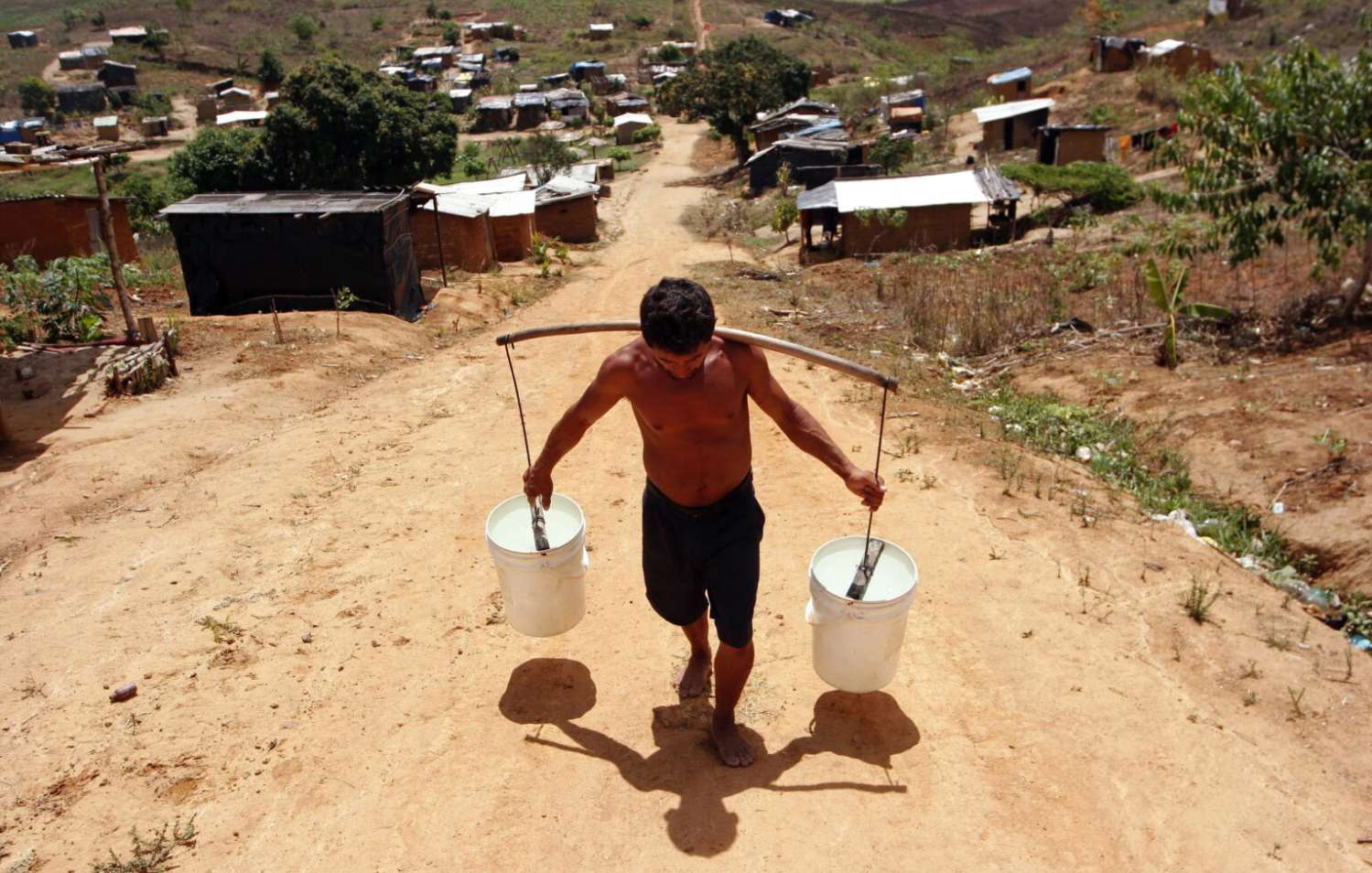
The recent reduction of poverty in Mexico challenges the idea that economic growth, on its own, leads to social progress. In a regional context marked by economic slowdown and persistent inequality, the Mexican case shows that the recovery of the State’s role through universal social policies, improvements to labor income, and greater public intervention can generate significant advances in well-being. Indeed, between 2018 and 2024, some 13.4 million Mexicans rose out of poverty, of whom 1.7 million left extreme poverty behind.
According to data from the National Institute of Statistics and Geography (INEGI), the multidimensional poverty rate in Mexico stood at 29.6% in 2025, the lowest level since this indicator has been measured. Unlike monetary poverty, multidimensional poverty considers not only income but also effective access to social rights such as education, health, housing, and food. Along these same lines, at the end of November, the Economic Commission for Latin America and the Caribbean (ECLAC) reported that poverty in Latin America stood at 25.5%, the lowest level on record. And this reduction was mainly driven by the fall of poverty and extreme poverty in Mexico, followed by Brazil.

How is this poverty reduction explained?
In 2018, Andrés Manuel López Obrador was elected as the first left-wing president in Mexico’s recent democratic history under the slogan “for the good of all, the poor first.” His arrival to power marked a watershed moment by breaking with a cycle of neoliberal governments that had relegated social policy, prioritizing economic growth and limiting the role of the State under the premise that this would generate a wealth trickle-down effect to the rest of the population.
From the beginning of his administration, López Obrador and his movement called the Fourth Transformation implemented a series of social programs distinct from the conditional schemes of the past, through direct cash transfers to senior citizens, young apprentices, farmers, working women, students, and people with disabilities. Additionally, the labor reform implemented in 2021 restricted the subcontracting of specialized services, which allowed thousands of workers to transition to formality and acquire full labor rights. To this was added a historical increase in the minimum wage, which has increased 215% since 2018. OECD data placed Mexico as the country with the highest wage increase among its members.
This set of policies has not been exempt from criticism by business sectors and the opposition, who question the dependence and clientelism that, in their view, social programs generate. It is pointed out, for example, that the existing social programs in Mexico, whose spending represents around 3% of GDP, respond to a logic of welfare assistance without structural transformation, with beneficiary registries that lack transparency and weak targeting toward lowest-income households. Likewise, the narrative persists that one should “teach how to fish, not give the fish.”
Nonetheless, the emphasis on social policy by the government of López Obrador, continued under the presidency of Claudia Sheinbaum, has contributed to dismantling several of these assumptions. In the first place, it is difficult to “teach how to fish” if there is no river—that is, if workers’ income is not improved and labor justice is not placed at the center of public policy. In particular, the increase in the minimum wage, which remained stagnant for more than two decades with the aim of maintaining international competitiveness, refuted the notion that its increase would inevitably trigger an inflationary spiral capable of putting macroeconomic stability at risk.
Persistent deficiencies
Despite these advances, the social policy of the Mexican Government is not without deficiencies. Among them, the lack of more precise targeting toward lowest-income households stands out, as well as the weakness—or even absence—of systematic monitoring and evaluation mechanisms. Likewise, the period of wage increases has coincided with a stagnation in the generation of formal jobs, which raises questions about the sustainability of annual minimum wage increases in a context of economic growth below the historical average. Added to this is the fact that, while poverty has decreased, inequality persists and wealth continues to be concentrated in a small sector of the population. Mexico’s Gini index (at 43.5 points) places it among the ten most unequal countries in the region.
A central and frequently omitted element in this debate is the vulnerability of these advances when they depend on specific political leaderships and favorable circumstances, rather than on robust institutional arrangements. In this sense, it is relevant that several social programs have been elevated to constitutional rank, with the explicit goal of shielding social rights and reducing the risk of regression in the face of eventual changes in the political cycle. However, the constitutionalization of rights, although significant, does not by itself guarantee their effective implementation or their long-term fiscal sustainability, which underscores the importance of strengthening the institutional capacities of the State.
The Mexican case suggests that the recovery of the role of the State is a necessary, though not sufficient, condition to transform persistent structures of poverty and inequality in the region. Rather than offering a recipe, Mexico provides empirical evidence that social progress is not an automatic result of economic growth, but the product of political, institutional, and distributive decisions that must be preserved and strengthened over time.
*Machine translation, proofread by Ricardo Aceves.
Autor

Member of the Mexican Foreign Service assigned to the Embassy of Mexico in the United States. Master's degree in International Relations from Yale University.