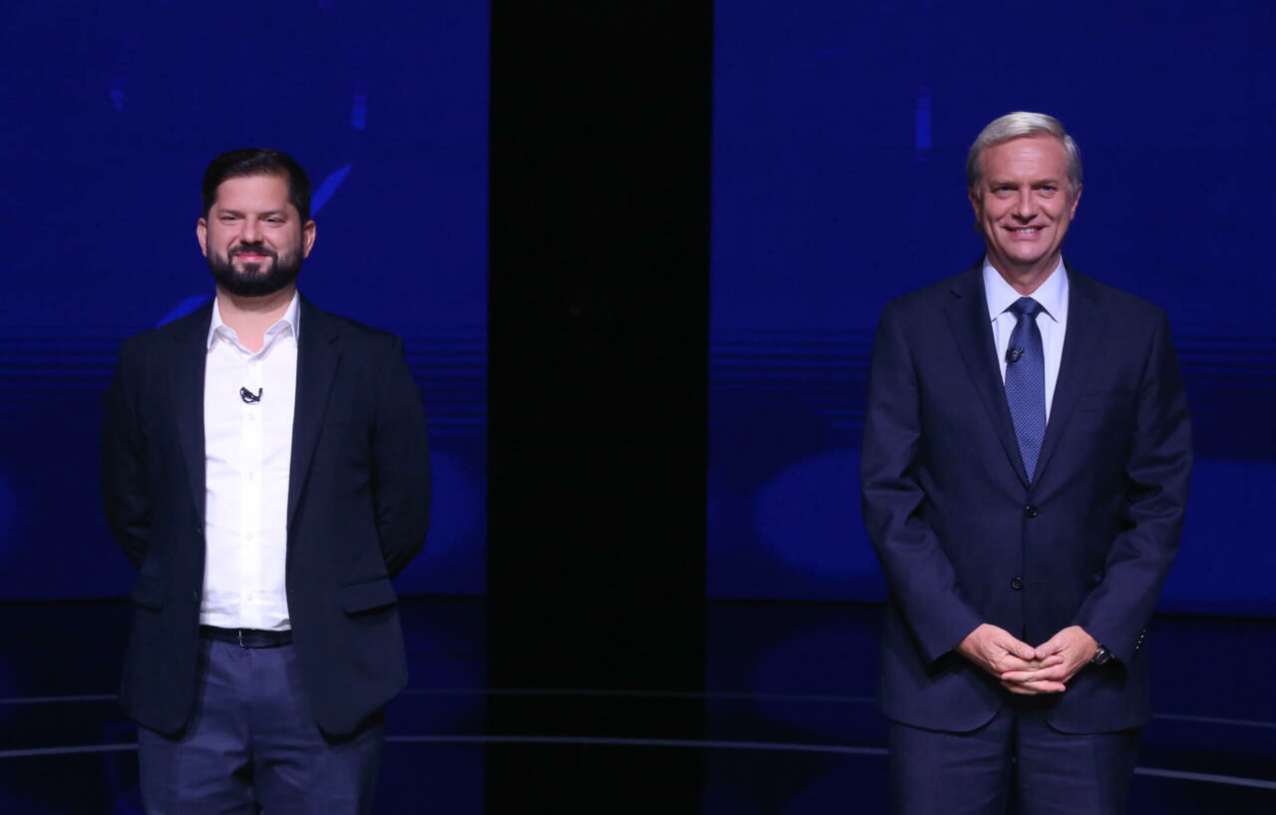
With a resounding victory, José Antonio Kast prevailed in the second round against the government-backed candidate Jeannette Jara and became the successor to Gabriel Boric. The election left a series of key milestones, such as the return of compulsory voting in presidential elections, which made Kast the most-voted president in Chile’s history with more than 7 million votes, as well as the participation in the runoff of a member of the Communist Party of Chile. But what is most significant about the second round is that, as in 2021, a new president will take office at La Moneda Palace, leaving the traditional parties that led the transition to democracy in minority positions.
Since then, two major coalitions dominated much of the elected offices and presidential contests: the center-left Concertación and the center-right Alianza por Chile. The 2021 election, which ended with President Boric at La Moneda, was the first time that none of the candidates competing in the runoff represented the historic coalitions, opening a new political cycle.

In this context, Kast faces the challenge of translating the overwhelming support he received into a government that addresses the aspirations of Chilean women and men in matters of security, migration, and economic recovery. To do so, there are lessons he can draw from his predecessor’s administration.
The previous government began with a climate favorable to its ideas and in the midst of the first constitutional process. In that context, Boric designed a ministerial cabinet with his main allies from his time as a student leader and his tenure in the Chamber of Deputies, leaving leaders with a Concertación background in secondary positions, with a few exceptions.
The so-called “concentric circles” strategy, which placed those from the Chilean Frente Amplio closest to the president in the inner rings and everyone else in the outer rings, failed to form a unified coalition. This strategy ultimately collapsed after the crushing defeat in the constitutional plebiscite of September 4, 2021. This forced the president to bring the strongest figures from the so-called Democratic Socialism into the cabinet, laying bare a kind of marriage of convenience rather than a genuine political alliance.
Returning to 2025, Kast has little time to decide whether he will opt for a cabinet that follows the failed bet of the Frente Amplio or one that opens itself to libertarian and center-right forces. Should he choose the latter option, Kast will seek to rally the different right-wing forces with representation in both legislative chambers, in order to move closer to the legislative majorities needed to advance his agenda.
In this regard, the recent experience of designing President Boric’s cabinet can serve as a warning about the difficulty of building robust legislative support in a highly fragmented congress like Chile’s. With 42 deputies, the list of Republicans, Libertarians, and Social Christians requires very precise coordination with the center-right, which still holds 34 seats in the Chamber of Deputies, when it comes to passing legislation. Even if successful, it would still need two additional votes to achieve a simple majority, meaning it will have to bring its positions closer to the Party of the People (PDG) and its 14 deputies, the great surprise of the first presidential round.
In a context of great fragmentation, high expectations, and a “watchful” opposition, the president-elect will have to decide whether to move forward with a new coalition that provides legislative support for his government. Center-right parties will have to decide whether to join, at the risk of being absorbed, as happened to the PRO in Milei-led Argentina.
Kast’s first hours have shown a certain moderation, both in his discourse and in the expectations generated among the population. In his first speech, he called for valuing the role of the opposition and even pointed out that the problems the government will face are complex and that results will take time to materialize. Although his government has not yet begun, Kast is already generating expectations about how he will act once he takes office at La Moneda Palace.
Autor

President of the Chilean Association of Political Science - ACCP. PhD candidate at the University of Rostock. Master in Public Policy, Public Administrator from the University of Chile.