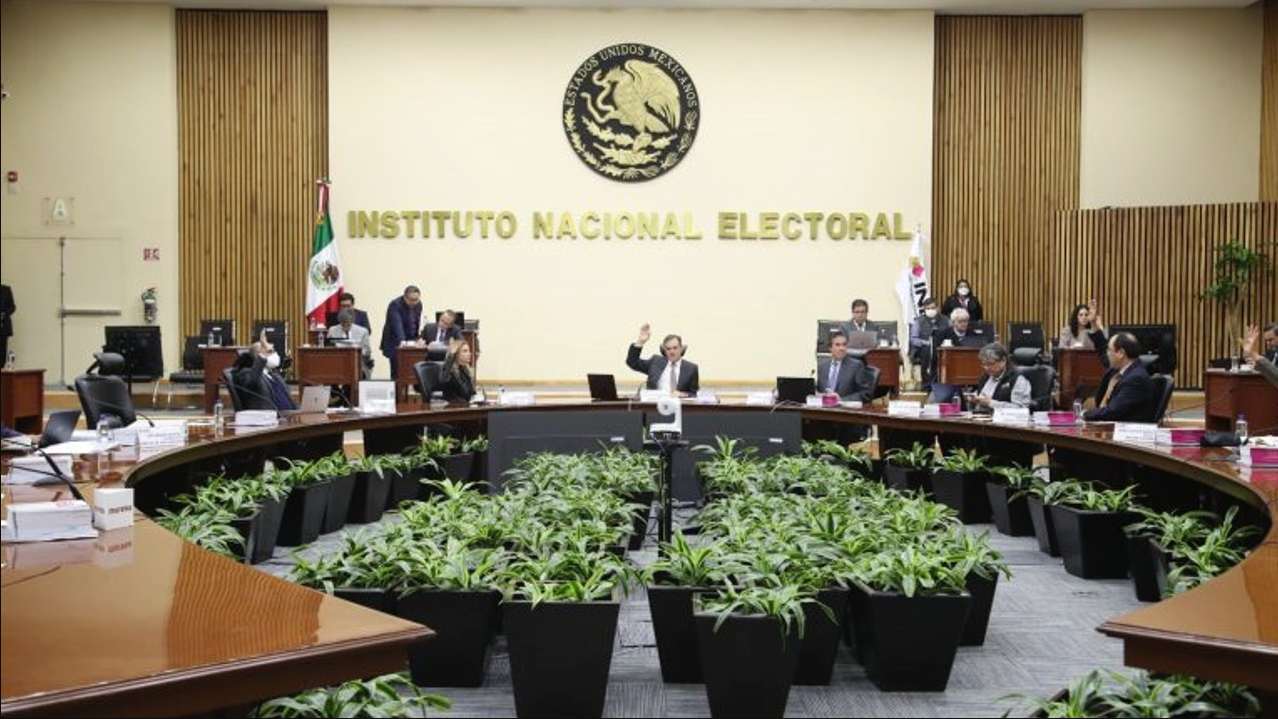
Electoral systems are not neutral; they are the result of the political interests of those who design and approve them. Governments, political parties, and parliaments take part in the creation and modification of the rules of the game for competing and gaining access to political power. Over the past forty years, Mexico has undertaken several electoral reforms that made it possible to move from a non-competitive party system to a competitive one. This transition resulted in divided governments (presidents without a parliamentary majority), juxtaposed governments (different parties governing at the national and state levels), and political alternation at all levels of government.
After two failed attempts at electoral reform initiatives promoted by President Andrés Manuel López Obrador and his party, MORENA—which did not achieve the qualified majority in the legislative branch required to enact constitutional changes—the government of President Claudia Sheinbaum, in August of the current year, created the Presidential Commission for Electoral Reform. This commission is made up of federal government officials and is chaired by the President of the Republic herself. The Commission presents itself as a space to listen to citizens, analyze the current system, and propose improvements that “guarantee free, transparent, and representative elections.”

According to the Commission, the input for generating the electoral reform proposal consists of holding forums in all the states of the country and conducting a survey in which citizens are asked about electoral issues. To date, 65 events have been held, with the participation of more than five thousand people and more than 300 proposals submitted, as reported by the Commission on its website in early December. According to its schedule, the electoral reform proposal will be presented to the President of the Republic in January 2026. The deadline for approving a reform that modifies the Constitution on electoral matters is 90 days before the start of the federal electoral process, which begins on September 1, 2026.
The Commission’s discourse is that, unlike previous reforms, the people are now being heard through citizen opinions and the holding of public forums. This governmental rhetoric does not eliminate the negotiations among elites that exist and will continue to exist within the ruling party and its allies, as well as with opposition parties. The advantage the federal government currently has compared to the past is that, together with its political allies, it holds a legislative majority sufficient to carry out constitutional changes. In short, MORENA has the time and the votes to approve its electoral reform.
Resistance could come from allies and from some of the different groups and factions within MORENA, not from the opposition, which stands out for its absence from the debate on the reform and for the leadership crisis within its parties. The modification of the date of entry into force of constitutional changes promoted by decrees approved by President Sheinbaum—such as the extension of the ban on consecutive re-election to all elective offices and the prohibition on relatives of officeholders from running as candidates—were the result of decisions originating from the ruling party and its allies, not from the opposition.
Opposition parties have shown a total lack of proposals, limiting themselves to rejecting aspects of previous government initiatives, such as the elimination of legislators elected by proportional representation, the election by popular vote of members of the national electoral authority, the reduction of public funding for parties, and the elimination of local electoral bodies and tribunals, among other issues. So far, the opposition has failed to become an important interlocutor in the debate on electoral reform, confining itself to reacting to government actions and arguing that these proposals run counter to political competition.
Political parties, through their representatives, are responsible for approving changes to the electoral system. Given the majority held by MORENA together with its allies in the legislature, responsibility for the electoral reform will rest exclusively with them. And although in recent decades the Mexican political system has demonstrated the ability to generate political agreements to move from a non-competitive hegemonic party system to a competitive one with political pluralism, parties have also shown that they are capable of violating the very rules they design. Examples abound: receiving illegal resources despite generous public funding, failing to respect campaign timing by engaging in early electoral promotion outside legal periods, or fostering political clientelism through the use of public resources.
The lack of neutrality in electoral systems does not necessarily conflict with fairness in competition. Those responsible for creating and modifying them have the ability to design systems that are more plural and representative. The question at this moment regarding Mexico’s electoral reform proposal is what the interest of the government and its party is. Although there are still no concrete proposals, some statements made to the media by the head of the Commission, Pablo Gómez, refer to eliminating proportional representation and local electoral authorities, to mention two of the issues raised in those interviews. The effects of these reforms, if they are ultimately implemented, would be that only parties with greater territorial presence would be able to elect representatives, leaving out various expressions that fail to achieve a majority in any of the 300 federal electoral districts into which the country is divided.
Autor

Professor of the Faculty of Political and Social Sciences, Universidad Autónoma del Estado de México (UAEM). PhD in Political Science from the University of Salamanca (Spain).