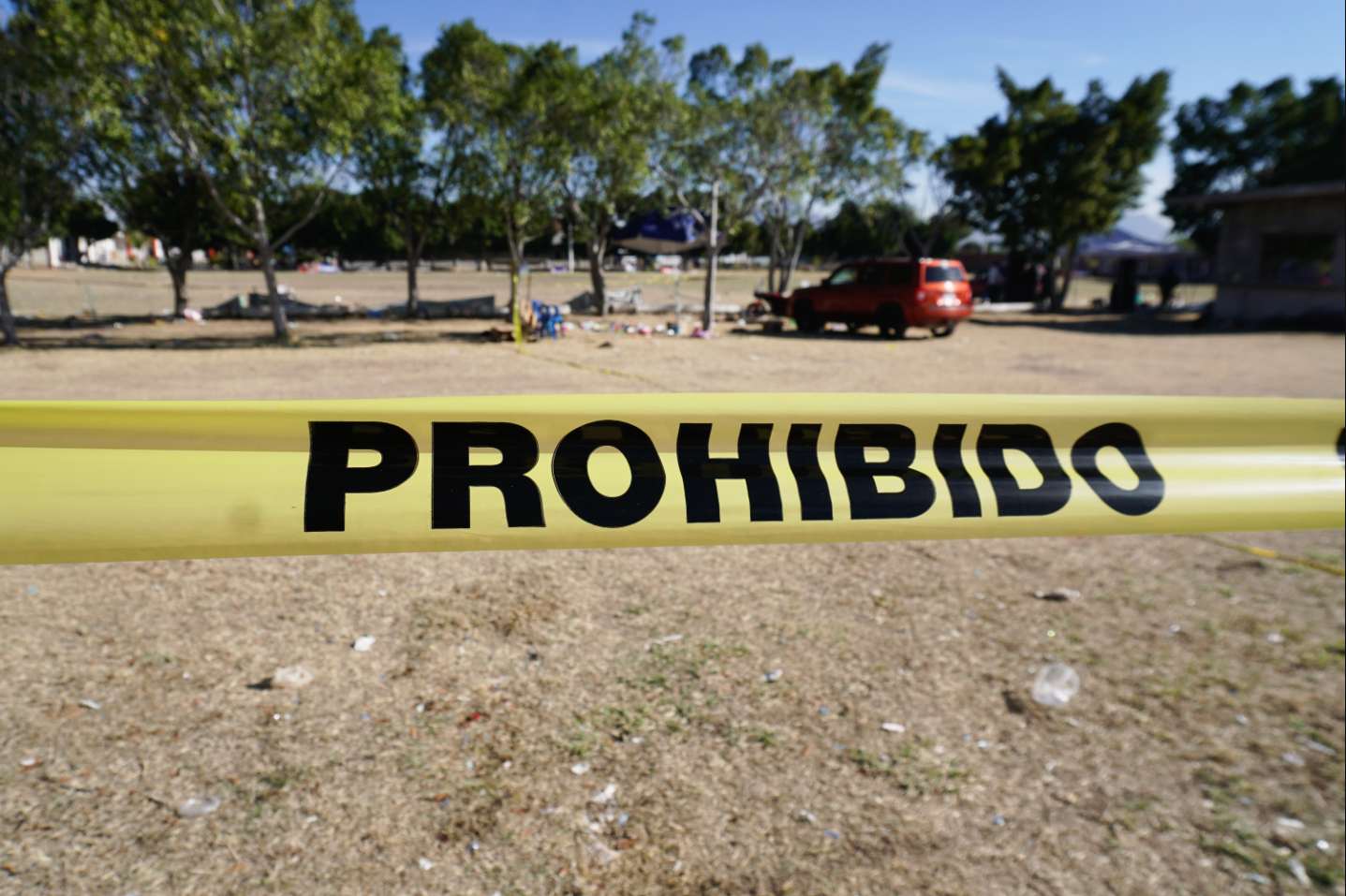
On January 25, a football field in Salamanca, Guanajuato, was the scene of the latest massacre to shake Mexico. The toll was eleven people killed and around ten injured. Authorities attributed the attack to a cell of the Santa Rosa de Lima Cartel, and the motive is believed to be connected to protection payments associated with the practice of football. This type of crime is commonly thought to affect mainly businesses and merchants; however, its expansion has extended into unconventional spheres. How has this crime manifested itself in areas such as faith, education, and recreation?
Over the years, organized crime groups have diversified their illicit activities, with protection rackets being one of the modalities that has generated the greatest returns. Through threats, intimidation, or, in some cases, the direct use of violence, they demand periodic payments from individuals or businesses—both formal and informal—on a daily, weekly, or monthly basis, in exchange for allowing them to sell their products or continue their activities. This implies territorial control over a given area.

This crime affects both a transnational corporation and a small taco stand. Fear that the business may be damaged or destroyed, or even that they may be killed, leads workers and owners to agree to pay the demanded amounts. In some cases, the sums requested are unpayable, forcing them to shut down. In others, despite the threats, they choose to resist and continue operating.
The National Institute of Statistics and Geography (INEGI), through the National Survey on Business Victimization (ENVE) 2024, estimates that during 2023, 747,000 extortion crimes were committed in Mexico, of which 113,000 corresponded to extortion in public spaces, in establishments, or to protection rackets. Whereas in 2011, 44.7% of victims handed over what criminals demanded, by 2023 this figure had risen to 67%. This upward trend reflects an increasingly successful modality for criminals, as the majority of victims yield to their demands.
In addition, INEGI indicates that, of the crimes committed against economic units, more than 90% were not formally reported. Among the reasons for non-reporting, the agency highlights that nearly 60% correspond to factors attributable to the authorities, including fear of extortion, institutional distrust, and previous negative experiences.
In the absence of official figures that accurately quantify losses due to protection rackets as a percentage of business income, some estimates—such as that issued in 2024 by the president of the National Alliance of Small Merchants (ANPEC)—suggested that it represented between 10% and 20% of the income of this type of enterprise (Senate of the Republic, 2024). For its part, the Employers’ Confederation of the Mexican Republic (Coparmex) indicated in 2025 that the crime of extortion, which includes protection rackets, resulted in economic losses of more than one billion dollars.
It has been widely documented how businesses and producers from various sectors have faced protection rackets. Recently, however, a trend has begun to emerge in which activities that were previously off the radar of organized crime have started to be affected by this practice.
In 2022, the Archbishop of Guadalajara, Cardinal Francisco Robles, stated that in regions in the north of the State of Jalisco it was necessary to obtain authorization from the local leader in charge of a cartel’s illicit activities to hold patron saint festivities and that, if so, up to 50% of the proceeds collected during the celebrations had to be handed over. Likewise, in 2024, the president of the Evangelical Network of Veracruz, Guillermo Trujillo, affirmed that several temples in the state had closed due to protection payments, equivalent to approximately between 580 and 1,160 dollars per month, according to the exchange rate in force at that time.
In the educational sphere, this sector has not been spared from this crime. Protection payments have been reported among school teachers in different regions of Mexico; this was documented by the newspaper El Universal in July 2024, noting that during the administration of Andrés Manuel López Obrador, twelve investigation files had been opened for this crime. One case that exemplifies this situation is that of the Lázaro Cárdenas primary school, located in Michoacán, where in April 2025 parents reported protection payments demanded from teachers, stating that criminals even used students as intermediaries to deliver folders containing threats addressed to educational staff.
Similarly, recreational activities such as sports have also been affected, with the massacre in Guanajuato being its most lamentable episode. The antecedent to this tragic event was the issuance of threats by organized crime against local amateur football leagues, which led several of them to suspend their matches days before the attack. Various journalistic sources have recorded that organizations and administrators received demands for protection payments, equivalent to nearly 2,900 dollars per month, as a condition for holding football matches.
In the absence of police protection, some leagues opted to hire private security. However, several outlets, such as El País, noted that, according to federal authorities, the attack in Salamanca may have been the result of a dispute between the Santa Rosa de Lima Cartel (CSRL) and the Jalisco New Generation Cartel (CJNG), since five of the victims—members of the private security team—were allegedly linked to the latter group. According to these accounts, members of the CSRL arrived at the football fields and opened indiscriminate fire on players and spectators.
In short, protection rackets in new activities continue to rise. The scenario is complex, as the Mexican state is failing to fulfill its primary function of guaranteeing public safety. This is explained, in part, by the collusion of political actors at different levels of government and state agents who cooperate with organized crime groups or choose not to act. This situation has enabled these organisations to exert de facto control over various regions of the country.
There is no encouraging outlook in the face of a reality that overwhelms Mexicans. The security strategy of Claudia Sheinbaum’s government, so far, presents limitations, while part of the population feels increasingly cornered by criminal networks. In the face of protection rackets, two real paths seem to exist: yield to the demands or refuse and face the consequences. Neither should be an option. The massacre that occurred in Salamanca can be interpreted as an extreme expression of this context, in which, in the absence of state protection, private security was hired. However, the outcome shows that organized crime acts according to its own interests and that, in order to achieve them, the life of others does not constitute an obstacle.
Autor

Professor of International Relations at the University of the Valley of Mexico. PhD candidate in Political Science from the University of Guadalajara and Master's in Political Affairs and Public Policy from the Colegio de San Luis.