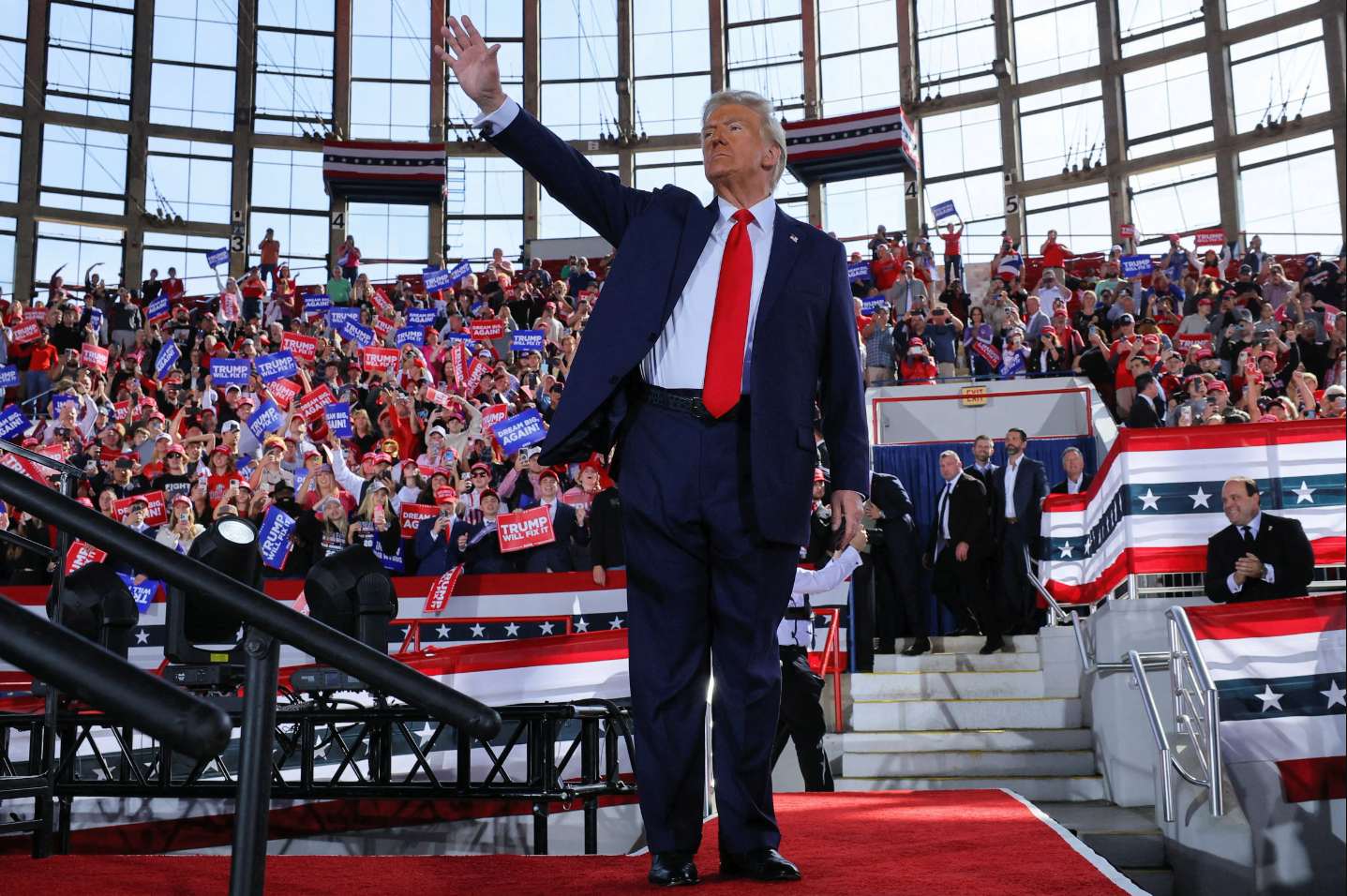
Donald Trump is reconfiguring the economic and foreign policy of the United States through commercial, military, financial, and cultural instruments aimed at restoring and securing the primacy of its major capital interests. The administration employs tariffs, diplomatic pressure, military deployment, and financial power to protect corporate interests; at the same time, it reshapes the public narrative with renewed emphasis on sovereignty, culture, and national security.
Tariffs have once again become a central tool. Negotiations with countries of the European Union concluded with a baseline tariff of 15% on European products, including automobiles, in exchange for increased purchases of U.S. energy and direct investment in the United States. This tariff policy seeks to redirect supply chains and attract productive investment, in line with the America First slogan. At the same time, the administration promotes an unrestricted expansion of fossil fuel production and discredits climate agendas such as “net zero,” which benefits major energy and extractive companies with interests in global markets.

The use of military power and selective forceful actions is part of the strategy. The administration has led operations that have altered regional balances: the management of the Russia–Ukraine conflict, tactical and diplomatic support for Israel in its confrontation with Palestine, elite operations in Venezuela that have facilitated political changes favorable to oil interests, and the military strike on Iran alongside Israel. In Venezuela one result stands out: the Office of Foreign Assets Control (OFAC) authorized Repsol, Eni, BP, Chevron, and Shell to operate in the country—extraction, refining, technology transfer, and agreements with PDVSA. Control of strategic hydrocarbon reserves constitutes an explicit geoeconomic objective whose capture implies direct benefits for Anglo-American corporations with technological and financial capacity.
In the sphere of domestic policy and international discourse, Trump has emphasized the centrality of the dollar and the U.S. financial system as pillars of national security. In his National Security Strategy (NSS, 2025), he argues that the survival of the republic is closely tied to the continuity “of the leading financial system and capital markets…, including the dollar’s status as the global reserve currency.” This position explains policies that combine domestic stimulus—through sharp increases in military spending and subsidies to strategic sectors—with measures aimed at preserving the dollar’s international liquidity and the predominance of U.S. financial institutions in global markets.
Military strengthening is accompanied by striking figures: the administration claims to have promoted a one-trillion-dollar investment in the Armed Forces and has pressured NATO allies to increase military spending from the traditional target of 2% of GDP to 5%. This demand implies not only collective rearmament favorable to the U.S. defense industry, but also the consolidation of military and technological supply chains dominated by American firms. In fact, the NSS combines the “most powerful and capable military in the world” with economic and technological resources to exercise influence in geopolitical theaters, and adds cultural power as a complement to legitimize the strategy.
Discursive intervention in global forums reinforces this framework. In Davos, Trump argued that Western prosperity derived from “our very special culture” rather than from tax codes, and called for the defense of that culture as the basis of transatlantic leadership. This cultural narrative—the vindication of the American Way of Life and the notion of freedom tied to the market—serves to validate policies that prioritize corporate profitability and financial primacy over multilateral agendas of fiscal consolidation or climate action.
This divergence from the recommendations of multilateral organizations is notable. The IMF, in its World Economic Outlook update (January 2026), insists on the need to “rebuild fiscal buffers” and advance reforms to control debt and sustain growth. U.S. policy departs from the IMF’s script: stimulus through military spending and support for fossil fuels replaces fiscal consolidation measures and structural reforms. The administration has even signed Executive Order 14199, withdrawing federal funding from numerous international agencies and NGOs considered “contrary to the interests of the United States,” thereby reducing the multilateral capacity to respond in areas such as development, health, and climate change.
The combination of economic, military, and cultural interventions generates a model of accumulation and power that favors a core group of large financiers and rentiers. These actors, closely linked to the state, obtain direct benefits: preferential access to natural resources (oil and gas), defense contracts, regulatory advantages, and diplomatic protection. The staging of controlled conflicts—from sanctions and selective operations to strategic alliances—stabilizes scenarios favorable to the investment of these groups, even when the global economy experiences low growth and financial volatility.
On the domestic front, cultural conflict is intensifying. Migration policies and the operations of Immigration and Customs Enforcement (ICE) have provoked civic reactions and local mobilizations, as in Minneapolis, where protests multiplied against the agency’s presence. The clash also became evident in the symbolic sphere: the halftime show of Super Bowl LX in San Francisco, featuring Bad Bunny—who invoked a culturally diverse America stretching from Tierra del Fuego to Alaska—was criticized by the White House. The episode reflects the tension between an inclusive and multicultural narrative—one that recognizes Indigenous peoples, migrations, and cultural mixing as part of humanity’s future—and the official narrative that privileges a traditionalist and marketable version of the American character.
The tension between a discourse of cultural hegemony and the underlying economic reality is crucial. The government proclaims low inflation and sustained growth; official data show occasional declines in the consumer price index in certain quarters and increases in hydrocarbon production. However, global growth remains weak, U.S. public debt remains at elevated levels (above 120% of GDP in gross terms), and financial risks persist. The wager on primacy through military spending, control of resources, and consolidation of cultural power does not eliminate macroeconomic vulnerabilities nor the need for fiscal and structural policies that promote productivity and reduce inequalities.
Autor

Professor and senior researcher in the Department of Economics at the Metropolitan Autonomous University (UAM), Iztapalapa Unit. PhD in Latin American Studies (Political Science) from UNAM, Mexico.