It is very difficult to take in good faith the hostility of Ecuadorian President Daniel Noboa toward Colombia and President Gustavo Petro. Since launching his trade war and his bombastic accusations on X, the Ecuadorian leader has spread disinformation, provided no evidence for his “allegations,” and seems quite comfortable interfering in the electoral process Colombia is about to undergo. President Gustavo Petro must preserve the prudence he has maintained so far and be careful not to make accusations of his own without evidence, because the relationship between the two countries is more important than the egos of two temporary leaders.
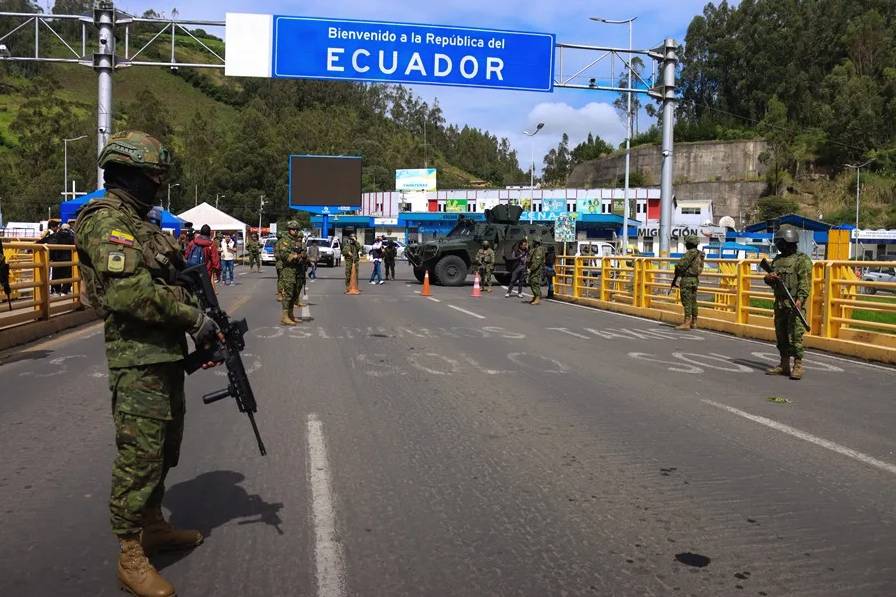
A month ago, Ecuador’s Ministry of Production, Foreign Trade and Investment announced that the country’s trade war against Colombia would intensify. Tariffs imposed on exported Colombian products would rise from 50% to 100%. In its statement, the agency — acting according to Noboa’s wishes — wrote that “after confirming the lack of implementation of concrete and effective measures regarding border security by Colombia, Ecuador finds itself obliged to adopt sovereign actions.” Despite Colombia’s repeated attempts to engage in dialogue, the Ecuadorian government’s response has been a resounding no. A few days ago, Noboa’s X account accused President Petro of fostering violence in Ecuador.

The problem is that reality is far more complex than the messages coming from the neighboring country suggest. The 580 kilometers of shared border have always been a porous space influenced by outlawed groups, both Colombian and Ecuadorian. As Ecuador has become one of the world’s leading cocaine exporters, controlling border crossings has become more difficult. That is not President Petro’s fault, nor Colombia’s. What Noboa is trying to conceal with his theatrics is that the public security situation has slipped out of his control. In the first quarter of this year alone, according to figures from Ecuador’s National Police, 1,857 murders have taken place — an average of 24 per day. Last year, the country recorded an overall average of 23 murders a day. This has sent the Ecuadorian president’s popularity plummeting. According to the polling firm Imasen, more than 60% of Ecuadorians believe the country is heading in the wrong direction.
Today, because of this disaster, the ambassadors of both countries have been recalled for consultations, there are no active dialogue channels, and X has become the venue for exchanging accusations. President Petro, who until recently had maintained a diplomatic stance, finally lost patience and blamed Ecuador for the violence we have witnessed. “I know that sectors of the far right in Colombia that have traveled to Miami and Quito have built a kind of strategy so that Uribe’s far right and its candidate win the elections,” he wrote, without providing evidence. That is, of course, not the way to reduce tensions, but the Casa de Nariño now seems to have given up on that objective.
What are we left with? Two historically allied countries trapped in a trade war that only harms the most vulnerable people along the border, hinders security cooperation, and damages exporters and importers on both sides. In other words, we all lose.
Autor

Director of the newspaper El Espectador. Winner of the Simón Bolívar National Journalism Prize. Master's degree in Journalism with a focus on Newspaper Management from Northwestern University. He holds a degree in Philosophy from the University of Los Andes in Bogotá.