Artificial intelligence doesn’t need an authoritarian regime to become an instrument of control. It only needs democratic institutions to be slow to respond. The silent erosion of privacy in the AI age threatens to transform the absence of limits into technological authoritarianism.
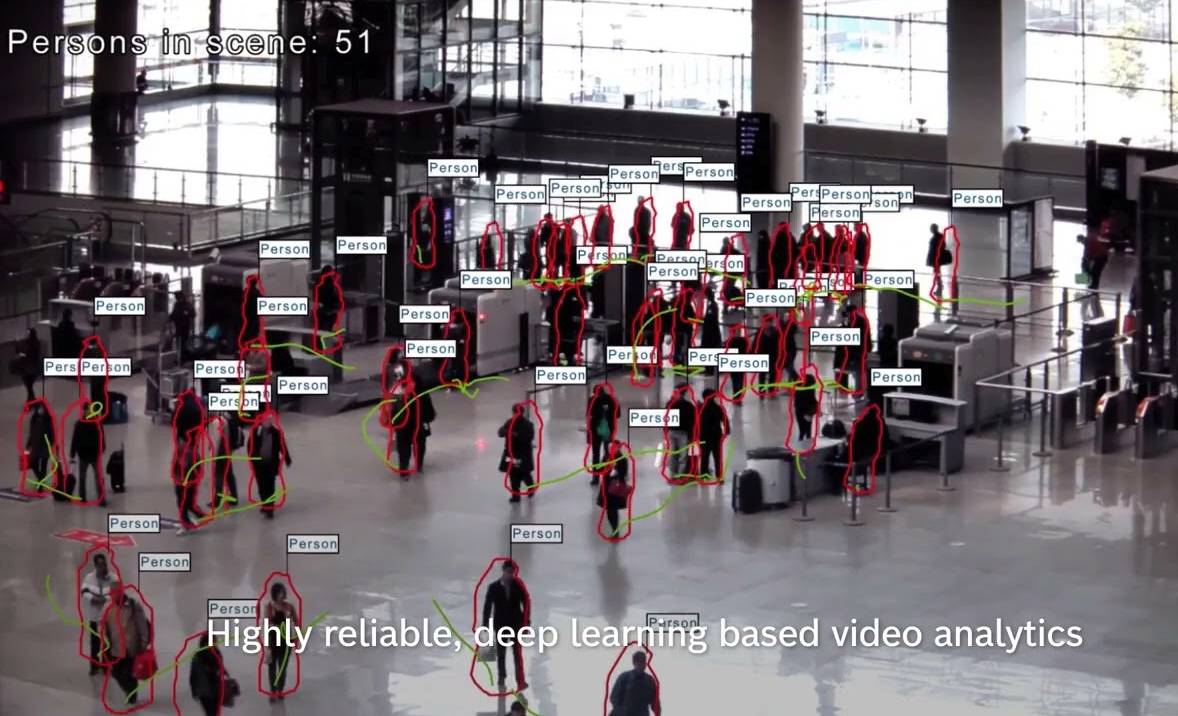
The distinction between public and private life has always been a silent foundation of democracy. It is rarely debated, yet it underpins much of political life. For decades, digital anonymity functioned as an imperfect but genuine form of political privacy. Activists, journalists, and dissidents could participate in public conversations without that participation necessarily being linked to their identities. Today, that boundary is beginning to blur. Using scattered data available online, artificial intelligence tools can now reconstruct identities, track behavior, and anticipate actions that once required extensive investigation—or were impossible to detect.
A study published on arXiv earlier this year, “Large-Scale Online Deanonymization with LLM” by Lermen and colleagues, analyzed profiles from Hacker News—a forum where users post under pseudonyms—and matched them with LinkedIn profiles using only the text those individuals had publicly shared online. No passwords, hacking, or private data were involved. Using a sample of 338 profiles, the model correctly identified 226 individuals (67%) with a precision rate of 90%. What once required hours of specialized work can now be automated, scaled, and performed at a cost of just one to four dollars. The authors warn that although these capabilities are not infallible, they force us to rethink what online privacy means.

The chilling effect on digital participation
When surveillance becomes plausible—even if it is not systematic—people begin to censor themselves. They moderate their opinions and avoid associating with causes they perceive as risky. The damage to pluralism does not require actual abuse; the mere possibility is enough. The perception of being watched can discourage people from expressing themselves, regardless of the context. If that happens when surveillance is only a possibility, what happens when de-anonymization becomes real, accessible, and inexpensive?
In The Human Condition, Hannah Arendt argued that the private sphere is the space from which citizens can appear in public as autonomous individuals. Without a protected private sphere, political participation ceases to be free and becomes performance under observation. Losing digital anonymity is not the loss of a technical feature—it is the loss of a condition necessary for exercising political freedom.
This loss is not merely philosophical. When a state or any actor with access to these tools can know who said what, when, and from where, the space for dissent, organization, and free deliberation begins to shrink. Not through legislation or decrees, but silently and irreversibly. Mass surveillance does not eliminate freedom—it simply makes exercising it increasingly risky.
Surveillance in authoritarian contexts
If digital anonymity now represents part of the private sphere for activists, dissidents, and journalists, its erosion is not a technical issue but a political one. It is well documented that authoritarian governments invest considerable resources in surveillance and monitoring tools to track, intimidate, and persecute opponents.
Venezuela provides a striking example. According to the report The Watchers in Sight, the Venezuelan state has spent more than one billion dollars on a digital surveillance infrastructure. This includes AI-powered facial recognition, mass telecommunications interception, and systematic cyber-patrolling. Cuba demonstrates that this is not an isolated case. The First Comprehensive Report on Digital Surveillance in Cuba (2026), based on 200 testimonies from Cuban citizens, found that 88% reported authorities referencing or criticizing their social media posts and digital messages as grounds for summons, detention, or interrogation. Two countries, two regimes, one model: digital surveillance as a tool of systematic political control.
In such environments, large-scale de-anonymization capabilities pose a qualitatively different threat. Individuals who participate under pseudonyms to protect their identities may choose to remain silent if the risk of identification and persecution becomes real.
Yet this danger is not limited to authoritarian systems. In April 2026, more than 600 Google employees signed an open letter to CEO Sundar Pichai demanding that the company reject classified contracts with the U.S. Department of Defense. They warned that there is currently no way to ensure these tools will not be used to cause harm or undermine civil liberties beyond public scrutiny. What is noteworthy is that the people building these technologies are often among the clearest voices articulating the risks of their unchecked use. That warning should not be lost amid the noise of public debate.
Toward democratic limits
The same tool capable of de-anonymizing a dissident can also identify a cybercriminal or trace disinformation networks. The problem is not the technology itself. The question is who uses it, for what purpose, and under what oversight. Defining that distinction is precisely the role of regulation.
Legislatures now face this challenge. In the case of de-anonymization, the authors of the arXiv study point out that traditional privacy protection frameworks—such as k-anonymity and differential privacy—were designed for structured databases and do not adequately address attacks based on free-form text. Consequently, simply updating existing regulations will not be enough. Data protection frameworks must be rethought to account for emerging risks associated with large language models and unstructured information.
Additional technical safeguards include limiting access to user-data APIs, detecting automated scraping, restricting large-scale data exports, and designing models capable of rejecting requests intended to de-anonymize individuals.
Establishing limits on these technologies requires, at a minimum, that any use for mass identification or surveillance be subject to judicial authorization, that contracts between governments and technology companies be public and auditable, and that independent accountability mechanisms exist. Yet no parliament can solve this challenge alone. It demands agreements among states, globally recognized ethical standards, and multilateral oversight mechanisms.
The urgency is clear. If democracy requires citizens capable of acting independently, it must guarantee the material conditions that make such autonomy possible: the real possibility of anonymity, association without surveillance, and privacy. These protections do not emerge automatically. They require deliberate political choices and a democratic culture willing to defend the private sphere not as a privilege, but as a prerequisite for public life.
When those conditions weaken, freedom does not disappear overnight. Instead, it becomes progressively harder to sustain. Surveillance grows cheaper, while freedom becomes more expensive—not because it is prohibited, but because exercising it increasingly requires accepting greater risks.
*Article originally published in Diálogo Político.
Autor

Political scientist with a specialization in International Relations. Consultant in digital political communication and political analyst.