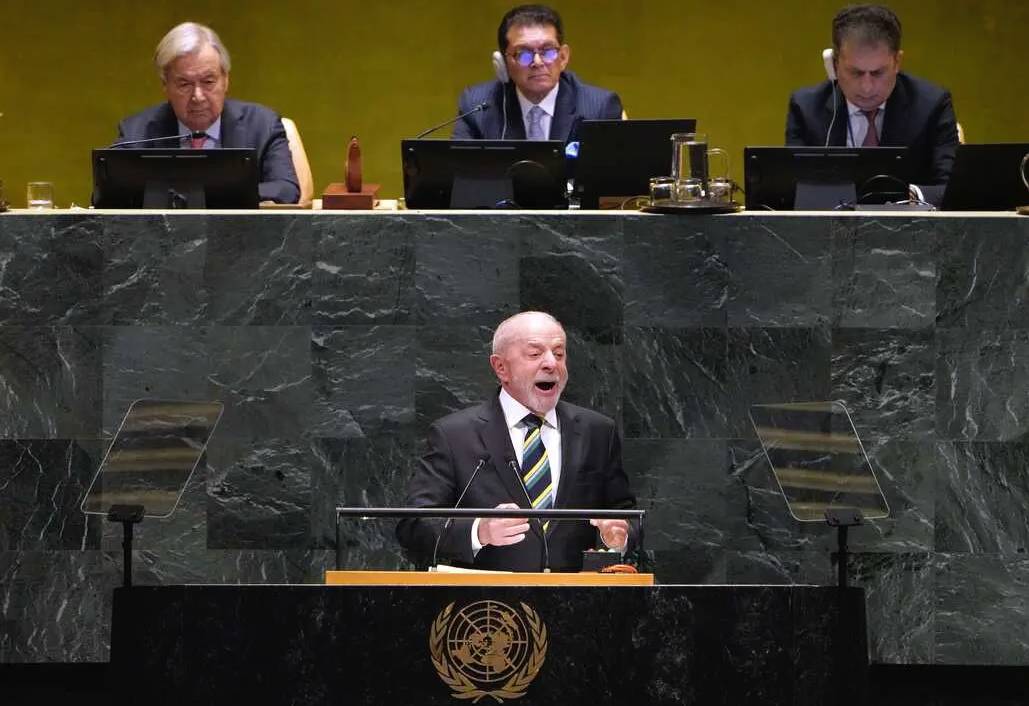
From September 22 to 28, representatives of 193 states, including 20 Latin American countries, took their seats at the United Nations headquarters to present their perspectives on the direction of the world, outline the main concerns and priorities of their nations, and share both their achievements and challenges with the international community. The various speeches offered a glimpse, almost like a mirror, into the ideological positions, personalities, and attitudes of those currently governing Latin America. Indeed, the speeches are a useful way to catch up, even if only at a glance, on the region’s current political landscape.
Perhaps one of the most striking aspects of the Assembly was the presence of Delcy Rodríguez as Venezuela’s acting president following the capture of Nicolás Maduro by the United States in January. But beyond her presence, perhaps the most unexpected element was what she told the General Assembly: “Venezuela has embarked on a process of democratic transition to ensure its rebirth.” That those words were spoken by a representative of the Venezuelan government before the international community, regardless of whether or not they ultimately materialize, would have been unimaginable until very recently.

Organized crime, the need to reform the UN and restore its credibility, and the challenges posed by the rapid advance of artificial intelligence were the issues that received the most attention at the Assembly.
Organized crime as the region’s central problem
Organized crime was the issue most widely shared among Latin American leaders: 18 of the 20 countries mentioned it, with Argentina and Cuba the exceptions. The most recurring idea was that no state can tackle it alone, along with the need for greater multilateral cooperation and concrete proposals. There was talk, for example, of creating mechanisms to track and freeze illicit financial flows and interconnected platforms for exchanging key information about these organizations.
Differences emerged, however, when it came to defining how such cooperation should be structured: while Brazil, Ecuador, and Mexico emphasized that it should respect state sovereignty, Peru, Bolivia, and Honduras favored greater hemispheric alignment. Thus, although there was clearly broad consensus on the need to develop coordinated responses to organized crime, the speeches revealed different conceptions of the scope and limits of such multilateral cooperation.
What to do about the UN
The need to reform the UN and make it more efficient was another of the issues most widely discussed by Latin American leaders. Several speakers criticized excessive bureaucracy, the slowness of its mechanisms, and the lack of concrete results, leading to proposals such as reducing duplication and concentrating resources on priority areas, reforming the Security Council, limiting veto power, improving its capacity for prevention and mediation, and giving Latin America greater representation.
However, as with organized crime, behind this consensus on the need to reform and improve the organization lie significant differences over the scope that such transformation should have: while most advocate for a more agile, effective, and representative UN, Argentina, Colombia, and, in some respects, Chile, called for the reduction or limitation of certain UN agendas and/or functions.
Artificial intelligence
The rapid advance of artificial intelligence was the third major issue shared by Latin American leaders. As expected, positions varied. While Brazil warned that “it would be an unforgivable historical omission” not to regulate big tech companies and artificial intelligence, Argentina maintained that the country would position itself “at the forefront of freedom,” rejecting preventive regulation.
Between these two extremes, Chile and Paraguay proposed promoting its development without slowing innovation, but with responsibility and oversight. Thus, artificial intelligence emerged not only as an opportunity but also as a challenge that forces us to confront increasingly urgent questions: how far do we want to go? Who should take responsibility for regulating it? What consequences are we willing to accept in the name of technological progress?
Amid so many differences, one common expectation emerged: fewer slogans and declarations, and more action, concrete results, and commitment. Panama’s President, José Raúl Mulino, summed up this idea well, an idea that resonated strongly throughout the General Assembly: “the world does not need less United Nations; it needs a United Nations that works better.”
What remains to be seen is how much of what was said in New York in 2026 will become reality, and whether states and the United Nations will rise to the challenges they themselves acknowledge.
Autor

Political scientist from Loyola University Chicago, Researcher at CIEPS – International Center for Political and Social Studies AIP Panama.