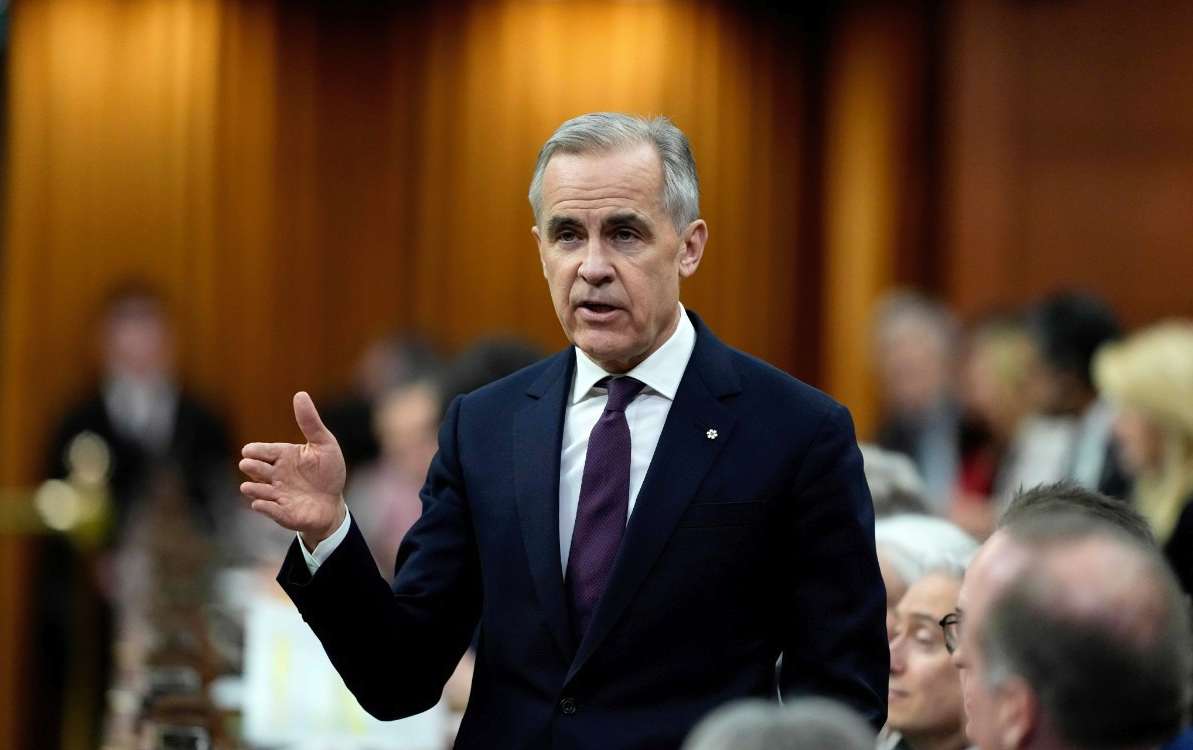
This January, Canada’s Prime Minister Mark Carney delivered a widely praised address in Davos that many interpreted as a beacon of hope in the face of a fraying rules-based international order. The speech was particularly well-received by foreign affairs analysts, including because Carney drew on lessons from Thucydides and Václav Havel, linking historical insights on power, oppression, and conformity to contemporary challenges. In it, he urged middle powers such as Canada to act with greater honesty and consistency, applying the same standards to allies and rivals so that states can coexist in an order that actually functions as advertised.
The Davos speech set high expectations. These are now, however, fading as Carney’s government wavers in sending robust aid to the people of Cuba and in denouncing the most recent unlawful coercive measures imposed by the U.S.

So far, Canadian officials have committed to sending an additional $8 million, which will be channeled through international aid organizations operating in Cuba. This represents a modest and indirect commitment, especially in comparison with initiatives undertaken by other countries. Mexico has sent more than 2,000 tons of direct humanitarian aid while continuing diplomatic talks on resuming oil supplies, and other countries in the Global South are reportedly preparing similar, more tangible responses.
This is despite Canada’s standing as one of the largest humanitarian contributors in the world and as one of the largest oil-producing nations. It is also despite the country’s historical and economic ties with Cuba.
Canada was one of the few U.S. allies to maintain diplomatic relations with Cuba following the 1959 Revolution. Cuba is also Canada’s top market in the Caribbean, and Canada is the country’s largest source of tourists as well as its second-largest source of direct investment.
Three overlapping causal mechanisms help explain this gap between rhetoric and policy in Canada’s case. First, international constraints are significant. Like other middle powers, Canada’s freedom to act in open defiance of the regional hegemon is tightly limited. This is especially true given Canada’s enduring economic and security ties with the United States, which are unlikely to change anytime soon. These ties expose Canada to a high risk of US retaliation if it chooses to aid Cuba. For example, major Canadian oil companies also operate in the US and could be vulnerable to secondary sanctions.
Second, domestic politics shape foreign-policy choices. Contrary to simplified assumptions in classical international-relations theory, state behavior is not determined only by systemic incentives but also by domestic constituencies and issue salience. In Canada today there is no broad public movement demanding robust government aid to Cuba. By contrast, much larger and vocal constituencies mobilized in support of Ukraine have helped keep assistance to that country politically salient and administratively prioritized.
Third, institutional preferences matter. Diplomats at Global Affairs Canada, the federal ministry handling Canada’s foreign affairs, have long favored what they regard as a pragmatic approach toward Havana. That posture helps explain Ottawa’s repeated reluctance to provide direct, high-profile assistance during acute shortages or crises, as seen when Canada did not intervene during Cuba’s 2024 blackout crisis. On the other hand, the same approach has also led Canada to be less outspoken on political issues in Cuba, unlike its firmer stance toward Maduro’s Venezuela or Ortega’s Nicaragua.
Taken together, this approach has generally allowed Canada to preserve a baseline level of diplomatic engagement while also safeguarding economic and strategic interests. Over time, this posture has become partly institutionalized within Global Affairs Canada and is regarded as the most workable and sustainable policy line.
In recent years, Canada has preferred to send assistance to Cuba through international aid organizations, but these efforts are unlikely to be effective or sustainable given the scale of the humanitarian needs the country may face. Currently, Canadian airlines have suspended service to Cuba until further notice, and the government has advised Canadians traveling there to return home. It remains unclear whether Canada will develop a strategy to support the Cuban population. While facing their own constrains, it is more likely that leadership from global South countries such as Mexico, China, and Brazil will take action on this matter.
The upshot is twofold. Not only is Carney’s government failing to live up to the values it promoted on the world stage, but the international community also applauded a Davos speech that was both conflicting and somewhat ingenuous. At times, Carney was realistic and incisive, exposing the weaknesses in the United States-led rules-based order and its functioning. At key moments, however, Carney suggested that Canada still supported those rules and was willing to defend them through a more honest and equitable approach. Here, the tension between diagnosis and prescription was never resolved.
This contradiction in Carney’s Davos speech is of particular importance for those of us studying or analyzing foreign policy. If it is made clear that the order is selectively enforced, then reaffirming commitment to its key rules and norms without confronting the structural international, domestic, and institutional drivers that sustain this selectivity risks entrenching the very inconsistencies he exposed. In this sense, the speech reflected a familiar pattern in Canadian foreign policy: rhetorical candour about global inequities combined with a pragmatic reluctance to challenge them when doing so carries material or diplomatic costs.
Autor

Bachelor's degree in International Relations from the La Salle University Center of Rio de Janeiro. Master's degree in Political Science from the University of Carleton (Canada) and PhD candidate in Political Science at the same institution.