Ecuador closed 2025 with the highest number of violent deaths in its history. This was not an isolated outbreak, but rather the confirmation of a trend: homicides have risen steadily at least since 2020, and this increase has accelerated persistently over the past five years.
According to official data from the National Police of Ecuador, between January and December 2025, 9,161 intentional homicides were recorded, a 30% increase compared to 2024. The national rate reached 50.6 violent deaths per 100,000 inhabitants, a figure that places Ecuador among the countries with the highest homicide rates globally. Even more significant is the nature of this violence: 95.4% of the deaths are classified as criminal violence, directly associated with organized crime, territorial control disputes, and illicit economies linked to drug trafficking.

This surge is primarily explained by the expansion of transnational organized crime and by Ecuador’s late—but accelerated—incorporation into the illicit economies of drug trafficking. Its location between Colombia and Peru—major cocaine producers—the availability of deep-water ports, and a dollarized economy that facilitates financial and money-laundering circuits have turned the country into a functional node within these networks. Since approximately 2020, Ecuador has ceased to be a marginal transit territory and has become an active part of the drug trafficking value chain.
Parallel to this insertion, the structural weaknesses of the state have deepened. The fragility of the judicial system, the limited capacity to investigate and trace illicit financial flows, selective corruption, and the collapse of the prison system have created favorable conditions for the progressive and systematic capture of institutions by criminal organizations. In this context, violence is the expression of accumulated institutional deterioration.
From a regional perspective, the Ecuadorian case is not novel. Years earlier, Colombia and Mexico went down this same path, with their own national dynamics but with common patterns: expansion of illicit economies, responses centered on the militarization of security without structural state reforms, and prolonged cycles of violence. In this sense, Ecuador is confronting a late phase of a widely documented regional process.
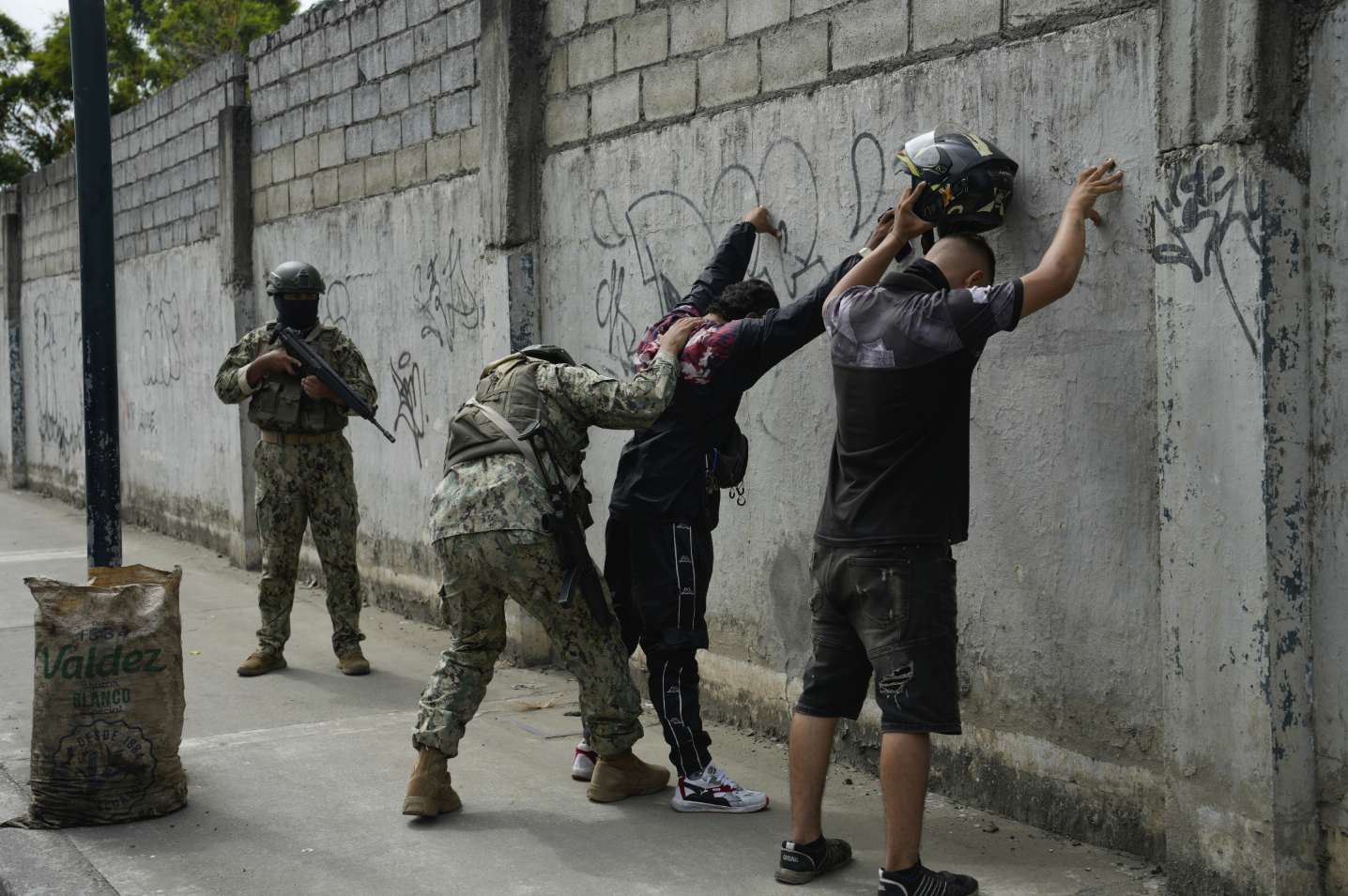
Despite having these experiences as reference points, the response of the Ecuadorian state has been predominantly reactive. Successive states of exception, massive military deployments, intensive police operations, and a governmental narrative of internal war have shaped security policy. These measures have produced visible effects and, in some cases, temporary reductions in certain crimes—common robberies, for example, decreased by 3% in 2025—but they have not altered the structural conditions that sustain violence, as evidenced by the evolution of official statistics.
A central factor explaining these results is the persistent precariousness of the national intelligence system. Ecuador lacks an integrated framework that effectively coordinates the National Police, the Armed Forces, and civilian agencies in order to anticipate crime, map criminal networks, and trace illicit financial flows. This institutional fragmentation results in duplicated efforts, loss of critical information, and uncoordinated responses. Without strategic intelligence, security policy is reduced to territorial and military deployment which, in the absence of structural reforms, is quickly exhausted.
Territorial evidence reinforces this reading. According to official data, six zones account for nearly 85% of homicides: Guayaquil (DMG), Los Ríos, Manabí, El Oro, Guayas, and Esmeraldas. These are port areas and strategic export corridors where local and transnational criminal interests converge. However, the displacement of violence toward historically safer provinces exposes the false sense of calm that often precedes institutional neglect. Wherever the state assumes the problem is external or distant, criminal organizations find the conditions to settle and expand.
Beyond its immediate effects, this dynamic has long-term democratic consequences. The persistence of high levels of violence favors the institutionalization of extraordinary measures as part of the ordinary functioning of the state: recurring states of exception, expansion of coercive power, and a shrinking space for public debate over policy alternatives.
Regional experience shows that militarization, without deep state reforms, does not solve the problem of organized crime and, in many cases, reconfigures it. Without judicial strengthening, financial intelligence, prison control, and interinstitutional coordination, violence does not diminish: it adapts, mutates, and persists.
The balance of 2025 allows for a clear reading. Ecuador is joining, belatedly, a regional trajectory already well known, marked by expanding illegal economies, reactive state responses, and sustained deficits in institutional capacity. The pending discussion is not how many soldiers to deploy in the streets, but how much of the state remains to be rebuilt where organized crime has learned to operate with advantage.
Autor

Professor at the School of International Studies of the University of Azuay and former governor of Azuay during the government of Guillermo Lasso. Master's degree in Latin American studies, University of Salamanca, Spain.