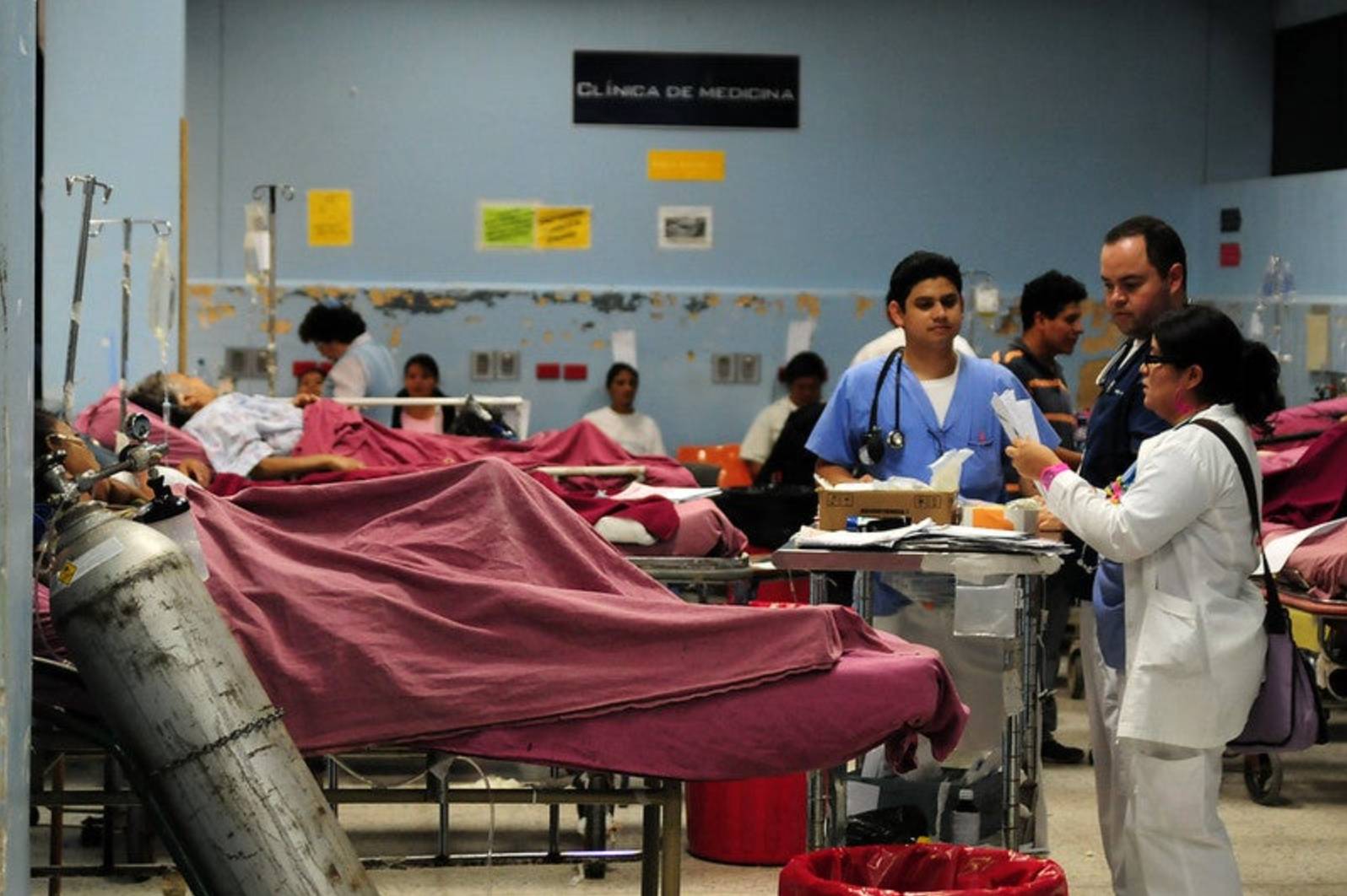
The consultation was over. So was the diagnosis. All that remained was to pick up the medication. “We don’t have it,” they told him at the hospital pharmacy. “You’ll have to buy it elsewhere.” For that patient, the care he received ultimately became an unexpected expense that he now had to cover out of his own pocket. The illness was the same. What changed was who ended up paying the bill.
This scene occurs every day in countries across Latin America. And it raises a public policy question that goes beyond the cost of a medication: What does it really mean to mention universal healthcare when part of the cost of falling ill is ultimately shifted onto families?

Over the past few decades, countries in the region have expanded healthcare coverage and developed different insurance mechanisms. However, being covered does not always mean being protected. Universal healthcare also requires that receiving care not force households to take on costs that jeopardize their financial well-being.
Who pays for healthcare in Latin America?
Financial protection is one of the components of universal health coverage. A healthcare system must not only guarantee timely access to quality services, but also reduce the risk of families facing financial hardship when they have to pay directly for their care.
To examine this relationship, we analyzed comparable World Bank data for eight Latin American countries: Argentina, Brazil, Chile, Colombia, Ecuador, Mexico, Peru, and Uruguay, over the 2000–2023 period.
The comparison reveals significant differences. Mexico recorded the highest average level of out-of-pocket spending, at 47.87% of current health expenditure, followed by Ecuador, at 45.71%. Chile reached 38.12%, and Peru 36.08%. Brazil and Argentina recorded 31.30% and 28.09%, respectively. At the lower end were Uruguay, at 20.54%, and Colombia, at 16.10%.
When we look at public spending, another dimension of the comparison emerges. Argentina allocated, on average, 5.67% of its GDP to general government health expenditure; Uruguay, 5.38%; Colombia, 5.26%; Brazil, 3.89%; Chile, 3.82%; Ecuador, 3.45%; Peru, 2.96%; and Mexico, 2.72%.
The data show a general trend: countries with higher levels of public financing tend to record lower proportions of out-of-pocket spending. But spending more does not, in itself, guarantee that families will pay less. This leads to a first conclusion: public financing matters, but it does not explain the whole story.
The paradox of Latin America
These percentages reveal something deeper than a form of financing: they show the extent to which shortcomings in healthcare systems ultimately shift the bill onto households. Behind that figure are families that rearrange their budgets, dip into their savings, postpone other expenses, or even take on debt to continue a treatment. The costs do not disappear. They simply change hands.
In the comparison, Mexico and Ecuador combine lower levels of public spending with the highest proportions of out-of-pocket expenditure. Argentina shows another side of the same paradox: although it has one of the highest levels of general government health expenditure, it maintains a relatively high proportion of out-of-pocket spending. This suggests that the volume of resources alone does not explain the degree of financial protection achieved.
Increasing public resources is a necessary condition for strengthening families’ financial protection, but it is not sufficient. The way each system organizes, distributes, and converts those resources into effective healthcare services also influences how much households ultimately pay.
For this reason, the debate over universality should not be limited to asking how much money is allocated to healthcare. It must also ask how that money reduces gaps in access to quality, free, and affordable healthcare for our communities.
That is the Latin American paradox. A patient may have the right to healthcare enshrined in the Constitution and be formally covered, yet still end up paying because a medication is unavailable when they need it. They may access a consultation without making a direct payment and, nevertheless, incur other costs to complete their care.
Free healthcare, therefore, has a dimension that goes beyond not paying at the moment a service is received. It also means that the system must be capable of preventing a significant share of the cost of falling ill from falling on families.
The challenge is not simply to increase public spending. It is to ensure that this spending is transformed into timely access, available services, and lower out-of-pocket costs for households.
The unfinished business of universal coverage
Latin America has made progress in expanding universal health coverage, but out-of-pocket spending remains an important source of financing for its healthcare systems. The comparison among these eight countries shows that the region continues to face significant differences in its ability to protect households financially against illness.
For this reason, universality should not be measured solely by asking how many people are covered. It should also ask how much families must sacrifice to pay for what the system fails to guarantee.
When a family has to buy a medication, pay for a test, or turn to private healthcare, the cost does not disappear: it changes hands. It leaves the public budget and enters the household budget. And not all households have the same ability to absorb it. In this way, out-of-pocket spending not only reflects a gap in financial protection; it can also deepen the economic inequalities that healthcare systems should help reduce.
That is the challenge for Latin America: to build healthcare systems capable of financially protecting families. Success lies not simply in how much a state spends, but in how much it manages to prevent the cost of falling ill from being borne by households.
The consultation will continue to end with a diagnosis and a prescription. What universal coverage must change is what happens afterward. The day a patient can pick up their medication at the hospital pharmacy without having to hear “We don’t have it” or “Come back next week,” the bill will stop arriving at their household’s table.
And then universal coverage will have ceased to be merely a promise of access and finally become genuine protection against the cost of falling ill.
Autor

Médico y magíster en Salud Pública. Especialista en Gerencia Hospitalaria y Administración de Hospitales. Investiga y divulga sobre desigualdades territoriales en salud, gobernanza sanitaria y sistemas de salud en América Latina.