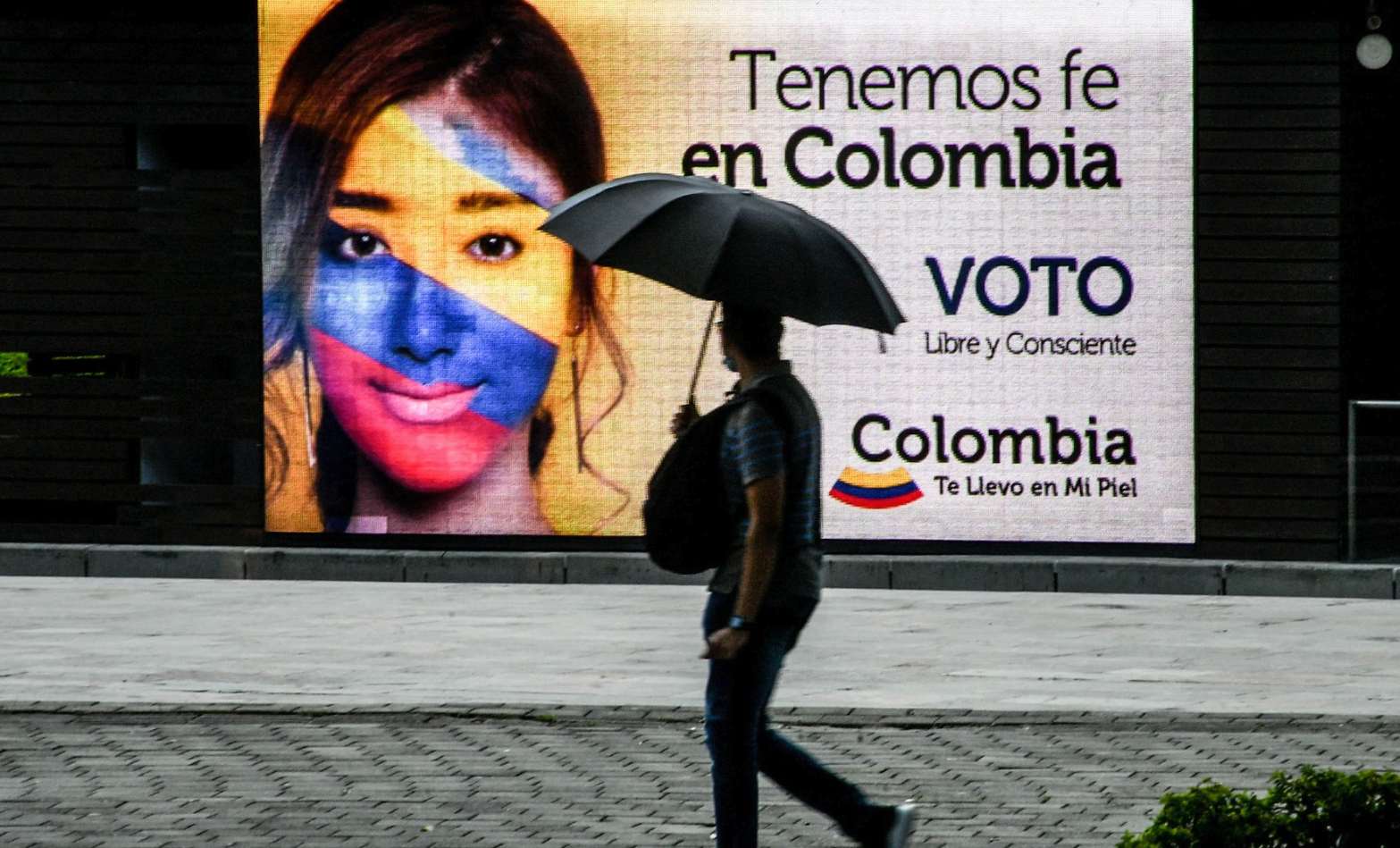
Elections must be protected, they must be defended, and—most importantly—their results must be respected, as has happened so far. While lines such as these should not be necessary in a democratic country like Colombia, the level of visceral intensity that the political debate has reached from all fronts—including institutional ones—and the direct threats against calls to the polls by criminal groups that refuse to abandon drug trafficking and other illegal sources of income make it necessary to insist on them.
Electoral authorities are being targeted by attacks from different sides, with insinuations of an alleged intention to interfere with the results that will emerge from the votes of March 8 (Congress and party consultations) and May 31 (Presidency). Transparency mechanisms currently in place have even been questioned, although more than six million electoral witnesses are expected and there will be direct monitoring by around 150 international observers, including the European Union and the Carter Center from the United States.

It would be ridiculous to claim that our electoral system does not have many things that need improvement. One example is the lack of legitimacy of the National Electoral Council (CNE), a partisan body that arises from nominations and votes by members of Congress. This means that its decisions—administrative in nature—always carry a burden of interests behind them, and that attempts to reform it fail legislature after legislature for that same reason. Additional problems have proven impossible to eradicate, such as vote-buying, clientelism, or violent coercion, to mention a few.
Yet this imperfect system has, for many years, delivered results accepted by all, with corrections along the way whenever problems have been detected, and those results have kept our democracy functioning. Just four years ago, that same imperfect system enabled a significant transition of power that brought the first revolutionary left-wing government to the Casa de Nariño. A government for which those very procedures that brought it to power now seem to be an inconvenience.
However legitimate the aspiration may be for the immediate continuity of the left-wing project currently in power, or for a right-wing alternative seeking to recover the spaces lost at the ballot box four years ago, the electoral functioning that has sustained our democracy must be protected. Opportunities for improvement will not arise from eliminating one’s opponents, but from defending democracy itself.
For this reason, just now—when the country is witnessing a reconfiguration of its political map and illegality has gained ground to the point of generating electoral risks in more than 700 municipalities—the words recently spoken by National Registrar Hernán Penagos to the newspaper El Espectador gain renewed relevance: “There is no rule in Colombia that could allow national elections to be suspended or canceled; under no circumstances, neither due to public order nor due to emergencies of any kind. (…) A new Congress and a new president will be elected with transparency and integrity.”
That is how it must be. The eyes of the country are rightly on the National Registry Office and the CNE, because their competence will largely determine the democratic calm required for the traditional transfer of power every four years on August 7 to continue taking place without disruption. But to go from there to launching suspicions without factual basis, leaving in the air the idea that a major fraud is being orchestrated, is an enormous irresponsibility. We refuse to accept that, as some warn, this could also be a planned strategy to later disregard the results.
Citizens must be certain that their state—the one that allows us to function as a country—has sufficient maturity to overcome so much caudillismo and populism in what may become the most polarizing campaign in recent decades. Let us not play with our elections, the central pillar of our democracy that has allowed us to have a calm transition of power every four years. By respecting their results, the improvement of the system is still possible. Without recognizing them, our democratic system would die.
Autor

Director of the newspaper El Espectador. Winner of the Simón Bolívar National Journalism Prize. Master's degree in Journalism with a focus on Newspaper Management from Northwestern University. He holds a degree in Philosophy from the University of Los Andes in Bogotá.