Throughout 2025, Nicaragua’s co-presidency under Daniel Ortega and Rosario Murillo has accelerated the consolidation of an authoritarian family state. Constitutional reforms in January eliminated the separation of powers, subordinating the judicial, legislative, and electoral branches to the executive, while subsequent legislation extended political terms and enabled the regime to weaponize electoral institutions against political opponents.
Since 2018, the Ortega-Murillo government has imprisoned, exiled, or stripped citizenship from hundreds of critics and dismantled thousands of civil society organizations, hollowing out independent checks on power. These legal and institutional changes have transformed Nicaragua from a weakened democracy into a closed authoritarian system, heightening the risk of systematic human rights abuses and creating permissive conditions for opaque foreign economic engagement—particularly China—in strategic commercial and mineral sectors.

Starting December 2021, President Ortega broke ties with Taiwan, establishing diplomatic relations with Beijing, marking this “new era” by opening a Chinese embassy in Managua the same month. This decision followed weeks of the Organization of American States (OAS), United States, and European Union (EU) condemning the 2021 elections as illegitimate due to the months of repression and incarceration of 39 people, including civil society leaders and presidential candidates by President Ortega. Beijing took the opportunity to enter Managua seeking to ease the sense of intensifying international isolation for Ortega’s regime.
As of 2023, Managua’s total exports to Beijing were valued at an estimated $27.3 million yet increased by almost 300 percent in 2024 to $82.1 million. Also in 2024, Beijing was the second largest exporter to Nicaragua, making up 14 percent of total imports, at $1.65 billion. Recently Beijing and Nicaragua have held over $1 billion trade deficit, acting as a lifeline of the regime’s desperate survival strategy with China as a primary benefactor. As Western pressure builds, Beijing provides capital, infrastructure, trade, and opportunities for the Ortega-Murillo regime through the commercial and mineral sector.
Nicaragua has directly aided in the expansion of China’s economic development in the region and passed multiple pieces of legislation to pave a simple road for Beijing. For example, on October 30th, 2025, Nicaragua’s National Assembly unanimously passed a Special Economic Zone (ZEE) directly tying China’s Belt and Road Initiative effectively boosting influence through infrastructure and trade.
The ZEE includes many perks for Beijing operations in Nicaragua, such as full exemptions from income tax, dividends, import duties for up to a decade, targeted industrial sectors for manufacturing, agroindustry, tech, and exports. The head of the ZEEs will be President Ortega’s son, Laureano Ortega Murillo with a renewed promise of jobs, poverty alleviation, and technology transfers. The President’s son heading the ZEEs reflects Nicaragua’s foreign policy focus on becoming a Pacific-Caribbean trade bridge.
Moreover, since 2021, the Ortega-Murillo regime has quietly granted an estimated 300,000 hectares of land, or almost 2.36 percent of Nicaragua’s national territory to four PRC affiliated mining companies: Zhon Fu Development, Nicaragua XinXin Linze Mineria Group, Thomas Metal, and Brother Metal. These companies do not contain a track record in Nicaragua, connected to a known Chinese entity, or even have a website. Yet, they are conveniently tailored by the Ortega-Murillo regime as Nicaragua allows opaque shell companies with no track record to operate in critical infrastructure sectors.
To aid Beijing’s mineral campaign, the Ortega-Murillo regime has been revoking concession rights and granting those same stripped mining concessions to these opaque Chinese affiliated shell entities. In 2022, the Sandinista National Assembly reformed Law 387 to allow concession transfers without public bidding, weaken social oversight mechanisms, and concentrate decision-making for the Ministry of Energy and Mines.This “reform” allows Nicaragua exclusive control over flipping ownership on mining concessions without warning.
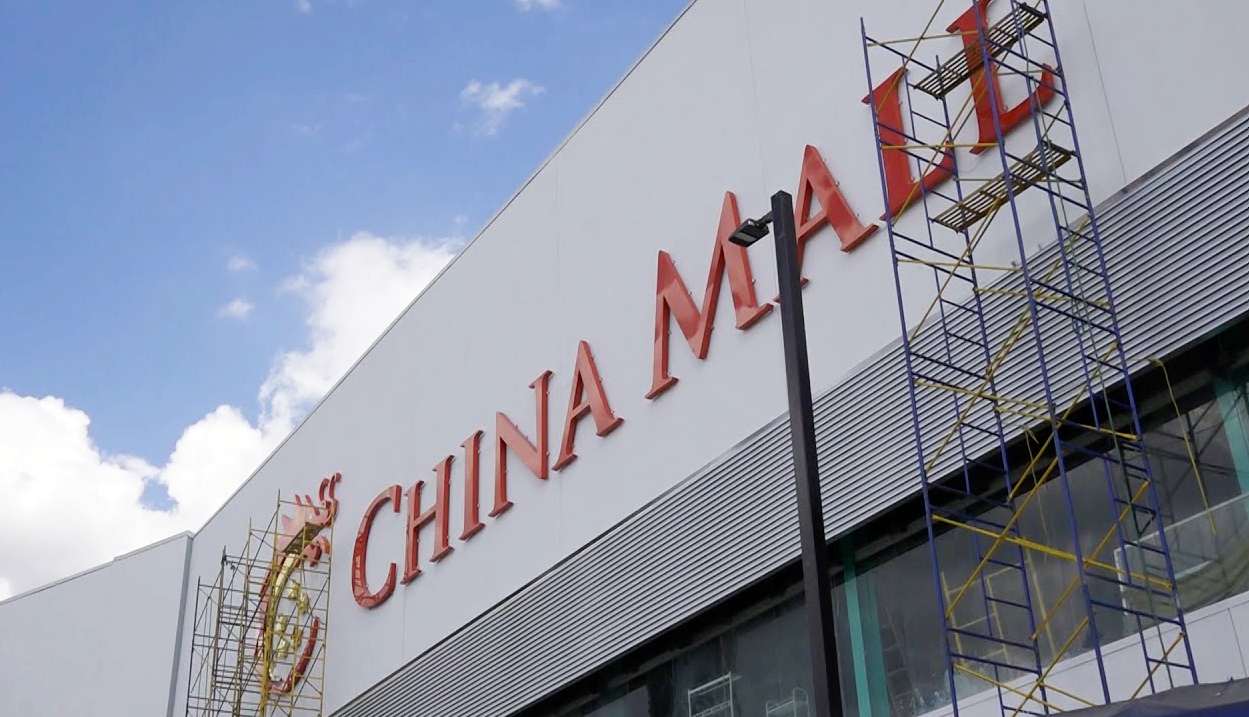
Separate from mining, Beijing has been manipulating Nicaragua’s commercial sector reliant on Chinas exports to Nicaragua. Currently, Nicaraguan merchants claim to face “unfair competition” as their sales dwindle, due to the explosion of Chinese nationals operating in the region. Chinese businesses have frozen the Nicaraguan market through selling inexpensive products easily accessed by Chinese nationals under the low-tariff agreements between Ortega-Murillo and Beijing. Reports reflect that China’s strategy is to exploit import benefits provided by the Nicaraguan government, allowing Chinese nationals to sell goods at “rock-bottom prices”.
This strategy has allowed Beijing to completely undermine Nicaraguan businesses and take over the market. In May 2024, the Confidential reported Chinese businesses have slashed 70 percent of local merchant sales. Moreover, this increase of Chinese businesses by Chinese nationals directly translates to the growth of imports from the PRC, influencing a further expansion of the already tremendous trade deficit.
This inability to produce goods appealing to Beijing markets will perpetuate further trends of high imports and minimal exports by Nicaragua, granting the opportunity for Beijing to fully influence the export capacity under the Ortega-Murillo regime.
Nicaragua has rapidly stepped forward to ban media by prohibiting Bibles, newspapers, magazines, books, drones, and cameras from entering the country. This came without an official decree by the government but has still been enforced by immigration and customs at border crossings. Since 2018, 61 media outlets have been closed or confiscated with over 2,300 recorded violations by journalists, forcing 300 journalists into exile from Nicaragua.
Globally, the world must continue to investigate and report the egregious human rights violations conducted by this family dictatorship. Their goal of alienating their civil populace to generate wealth for themselves and Beijing through illicit and shadowy economic efforts must face legal hearings to benefit the people of Nicaragua. Nicaragua’s corrupted government continuing to weaken the foundations of their democratic institutions to favor Chinese ownership of commercial and industrial zones will freeze Nicaraguan exports in favor of dependence on Chinese imports.
Autor

Holds a degree in International Relations and Politics and is a graduate student in the Global Affairs program at Florida International University, USA. Open source analyst at the Jack D. Gordon Institute.