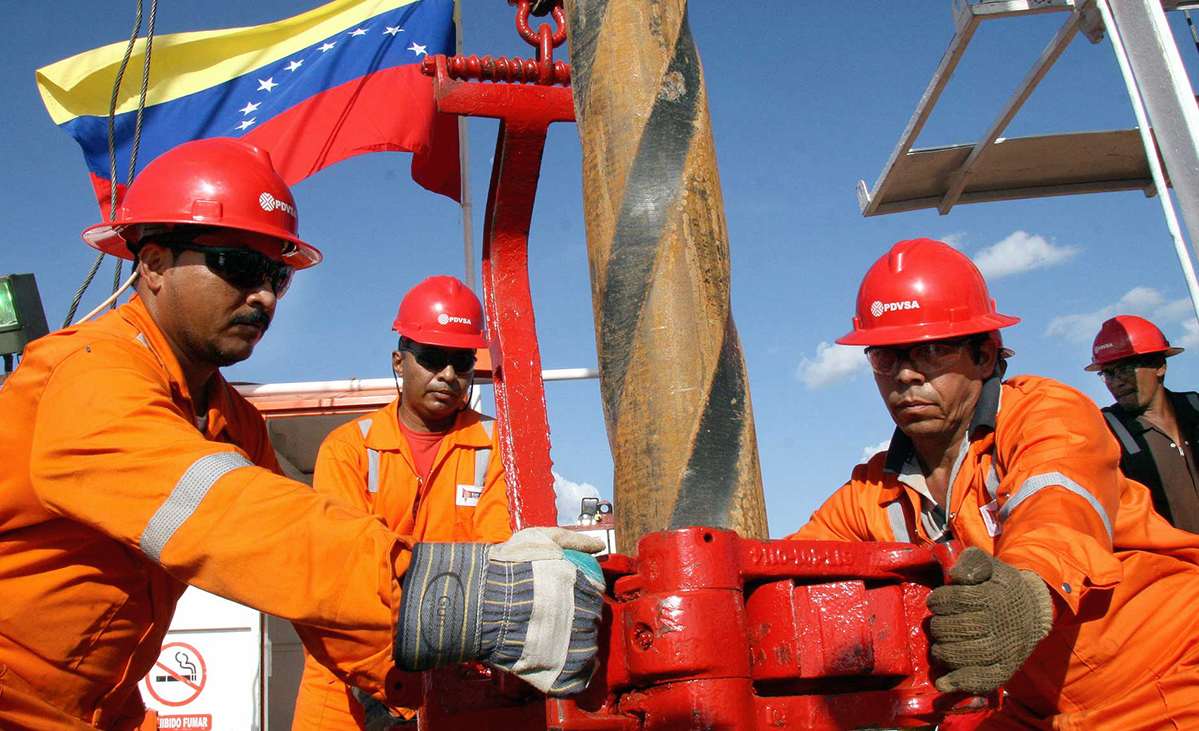
The reactivation of Venezuelan oil extraction raises a central question for Latin America that goes far beyond the volume of barrels, the political implications, or the costly profits that U.S. markets are already beginning to capture: how can countries in the region benefit from this new boom?
In a context in which the greatest value of oil no longer lies solely in extraction, but in the finance, services, technology, and logistics that surround it, Venezuela’s resurgence compels a rethinking of the role of each regional economy within a value chain that can be complementary. The outcome is not predetermined and will depend on the decisions made by countries across the region.

For Venezuela, the reactivation of the oil sector would imply immediate liquidity relief and a partial revival of its real economy, but not an automatic recovery of economic sovereignty. The initial benefit lies primarily in the reactivation of employment and the restart of infrastructure that is currently underutilized. However, the real challenge is strategic: transforming oil into sustainable industrial capacity.
To achieve this, the government of Venezuela—or whoever is in charge of its leadership—should prioritize strengthening its energy governance, establishing stable contractual rules, rebuilding critical infrastructure, and restoring its technical human capital. The key businesses are not limited to extracting more barrels, but include field rehabilitation, drilling and maintenance services, crude blending and upgrading processes, refining oriented toward higher-value derivatives, and especially the development of petrochemicals and fertilizers that would allow the diversification of its productive structure.
Colombia could leverage its role as a natural provider of goods, services, and logistics for Venezuela with greater purchasing capacity. The opportunity lies in productive linkages (transportation, oilfield services, metalworking, cross-border trade, agroindustry, and financial services). Colombia should deepen the development of its multimodal logistics through Caribbean ports, land transportation, and efficient customs, strengthen its supply of technical services, and consolidate its export-oriented agroindustry in order to secure contracts for industrial maintenance, the provision of inputs, and the export of food and processed goods, among others.
For Brazil, Venezuela’s oil boom represents more of an industrial and technological expansion opportunity than a purely commercial one. Brazil benefits by positioning itself as a regional supplier of heavy engineering, energy infrastructure construction, and complex technological solutions. Its focus should be on developing EPC capabilities (engineering, procurement, and construction), manufacturing industrial equipment, automation, and technological services applied to the energy sector. The most promising business opportunities include the modernization and expansion of refineries, the construction of terminals, the provision of technology for heavy crude, and integrated projects that combine energy, petrochemicals, and logistics—areas in which Brazil can capture value through scale and expertise.
Mexico, for its part, emerges as a key actor due to its role as an energy and financial intermediary between Venezuela and the United States. Its refining infrastructure, trading experience, and geographic proximity allow it to capture value in the transformation and redistribution of Venezuelan crude. To maximize this advantage, Mexico should strengthen sectors such as energy trading, risk management, flexible refining, and port services. Strategic business opportunities are concentrated in the blending and processing of heavy crude, the re-export of derivatives, storage, and maritime transshipment.
Further south, Argentina stands out for its experience in unconventional exploitation and specialized oil services, which enables it to export high value-added technical capabilities. In this way, it could benefit by developing reservoir engineering, drilling services, industrial software, and predictive maintenance solutions.
Chile, meanwhile, could take advantage of the Venezuelan oil boom through its financial and institutional value rather than productive capacity. Chile stands to gain by positioning itself as a regional platform for financial, legal, and risk-management services for complex energy projects. The development of structured finance, insurance and reinsurance, arbitration, and compliance is key. Priority businesses include project finance structuring, guarantees and investment vehicles, audits, and due diligence processes, among other areas.
Finally, Caribbean countries could benefit as a bloc by reducing their energy vulnerability and capturing logistical value. The return of Venezuelan oil opens opportunities in light refining, storage, transshipment, and lower-cost electricity generation. For this to translate into real development, the Caribbean should focus on regional storage hubs, micro-distribution of derivatives, maritime services, and stable energy contracts that reduce the structural costs of tourism and local industry, avoiding new forms of dependency.
Ultimately, the new Venezuelan oil boom does not by itself redefine the regional economic map; it does so according to each country’s ability to transform oil into something more than extractive rents. The real differential will no longer lie in who produces the most barrels, but in who manages to capture value in the logistics, services, financing, technology, and industry that revolve around crude oil.
If countries in the region act in a coordinated manner, Venezuelan oil could become a catalyst for productive integration and regional economic strengthening. If fragmentation persists, however, the region will once again repeat a familiar story: limiting itself to exporting raw materials without developing its own industrial, technological, and financial capacities, thereby remaining subordinate to the global centers of economic power.
Autor

Postdoctoral researcher in Data Science applied to corporate human rights redress at the University of St. Gallen (Switzerland). PhD in Organizational Management with honors (Cum Laude), MBA, and Business Administration degree from the University of Quebec.