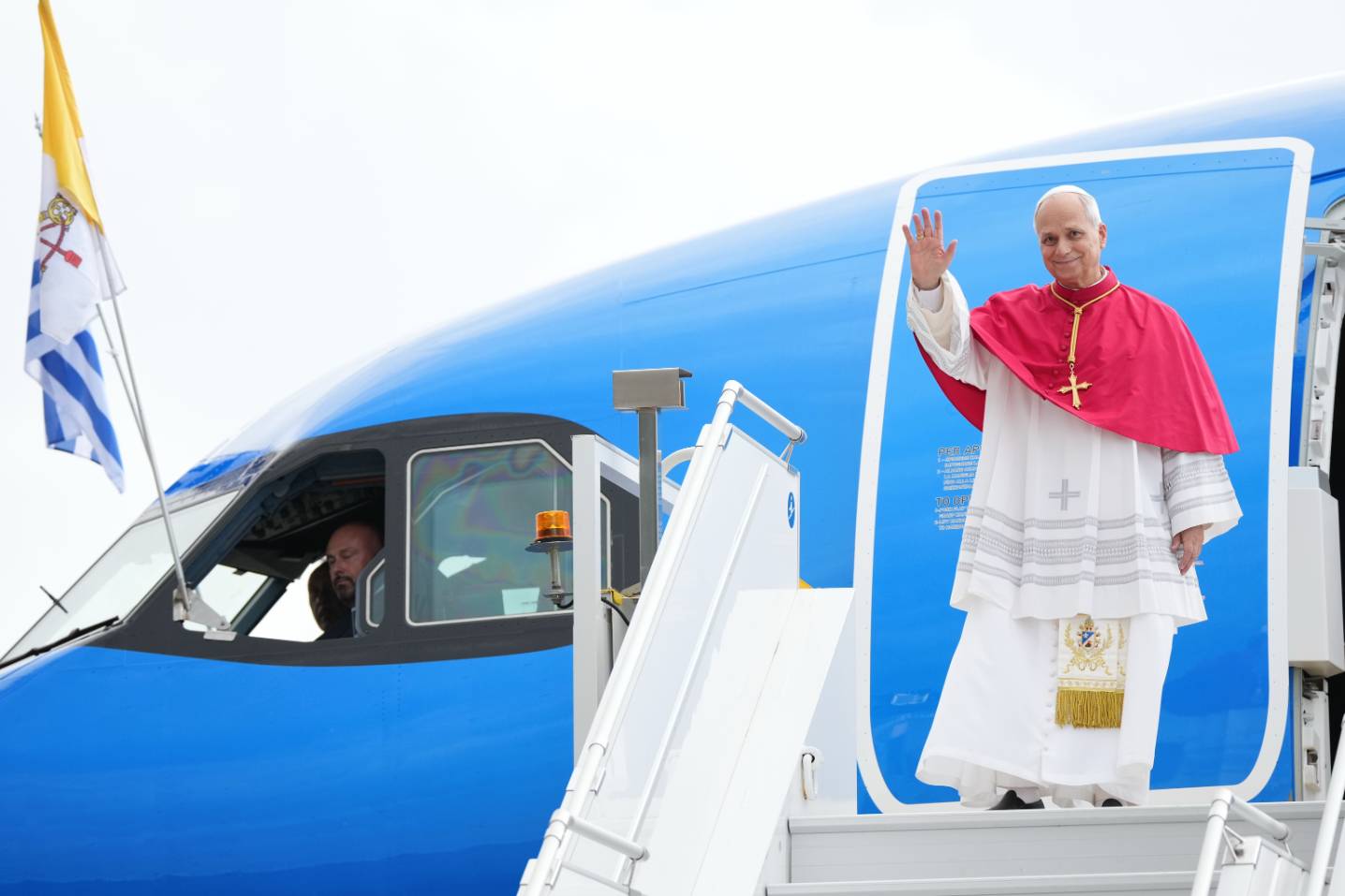
Pope Leo XIV’s first tour of Latin America is no mere pastoral visit. It is an event of profound geopolitical and sociological significance in a region undergoing a transformation of its political and religious identities. With a schedule covering Uruguay, Argentina, and Peru, a country with which he has strong personal ties, the pontiff is not simply returning to familiar territory; he is entering a region marked by acute institutional tensions and growing social polarization. This situation is compounded by the implementation of a far-right agenda, the resulting erosion of democracy, and the persistence of unmet social demands.
The itinerary through the three countries selected reflects a fascinating institutional asymmetry. The tour begins in Uruguay, historically recognized as the most secular state in the region. In a consolidated democracy with a secular tradition dating back nearly a century, Leo XIV’s presence is viewed through the lens of pluralism and institutional respect. His meeting with President Yamandú Orsi symbolizes a diplomacy built around common ground: the defense of social cohesion and democratic sustainability. Here, the motto “I proclaim to you a great joy” appeals to civic optimism in a society where the Catholic Church competes in a fragmented and deeply secularized marketplace of beliefs.

The setting changes dramatically upon crossing the Río de la Plata. Argentina welcomes the pontiff amid economic suffocation and extreme polarization. The local motto, “Welcome, everyone. Go forth and proclaim,” is a direct challenge to social fragmentation, commonly known as la grieta (the divide). His meeting with President Javier Milei, whose previous tensions with Church teachings on social justice and the role of the state are a matter of public record, lies at the heart of the trip’s political drama.
In a country where poverty has reached alarming levels, the Pope’s rhetoric on human dignity serves as an ethical counterweight to far-right, market-oriented discourse. It challenges the social legitimacy of the reforms underway without resorting to direct partisan confrontation.
Finally, the visit to Peru brings the tour to its culmination through the lenses of identity and systemic crisis. The Pope, who knows the country’s dynamics in detail after serving as bishop of Chiclayo, arrives in a nation caught in a chronic crisis of political representation and alarming institutional erosion. The Peruvian motto, “Let us open our hearts,” resonates as a call for reconciliation in a deeply fractured country. Yet the analytical significance of this leg of the trip lies in Leo XIV’s journey to Pucallpa, in the Amazon.
By prioritizing encounters with Indigenous communities and native peoples, the Vatican once again places integral ecology and the vulnerability of minorities at the center of its agenda. Bringing the encyclical Laudato si’ to the forefront is more than an expression of environmental commitment; it is an implicit critique of the weakness of state structures in protecting their territories and most vulnerable populations, particularly Indigenous women, who experience environmental and economic violence through intersecting forms of discrimination.
Leo XIV’s tour offers three fundamental conclusions about the Holy See’s soft power in the twenty-first century. First, the Catholic Church no longer operates as a hegemonic actor in Latin America, but rather as a broker of consensus in an arena where political neopentecostalism is gaining considerable ground within far-right political agendas. Leo XIV is therefore seeking to reposition Catholicism as the historic defender of human rights and distributive justice, in keeping with the principles of the Catholic Church.
Second, the trip demonstrates that the Pope’s agenda of “open borders” and “welcoming migrants” directly clashes with the nationalist and security-focused shifts adopted by several governments in the region. Human mobility is currently the continent’s greatest governance challenge. By addressing the dignity of migrants, the Pope redefines the boundaries of national sovereignty through a global ethic of hospitality and human dignity.
Finally, the prominence of the gender agenda and human rights violations within the institution itself add another layer of civic accountability. The pontiff’s confirmed private meetings with victims of abuse within the Catholic Church demonstrate that the Vatican understands that its legitimacy in foreign policy is intrinsically linked to its ability to ensure internal accountability and engage in self-criticism.
Ultimately, Leo XIV’s visit goes beyond reaffirming religious dogma. Its purpose is to assess the region’s democratic and social stability, while restoring the Catholic Church’s institutional influence in the face of the rise of political neopentecostalism in Latin America.
His tour is a reminder that faith, far from being confined to the private sphere, remains a major political actor capable of bringing the communities on the margins of the Amazon rainforest to the same table as those occupying the corridors of presidential power. The success of this tour will not be measured by the number of people attending Mass, but by the ability of the Pope’s message to offer common ethical ground in a fragmented and disillusioned Latin America.
Autor

PhD in Rule of Law and Global Governance from the University of Salamanca and a degree in Geography from the University of Costa Rica. Specialist in the geopolitics of Latin America, with an emphasis on the analysis of religious political parties and far-right dynamics.