Relations between the United States and Mexico on security matters landed abruptly in the state of Sinaloa when the U.S. Attorney’s Office for the Southern District of New York formally requested the arrest and extradition of Rubén Rocha Moya, the Morena governor of this northwestern Mexican state, along with nine other officials, for alleged ties to organized crime.
This news is especially significant because there is no precedent in the history of bilateral relations for a demand of this kind, although some former governors have been arrested and have served sentences in U.S. prisons.

The news was not surprising because U.S. President Donald Trump has maintained throughout his term that Mexico has been captured by organized crime and has asserted that the country has effectively become a kind of narco-state, something that fits with the narrative that several criminal organizations classified as terrorist groups must be fought.
Among them, of course, is the Sinaloa Cartel, considered one of the most powerful criminal organizations in the world because of its extensive network of contacts spanning entire continents.
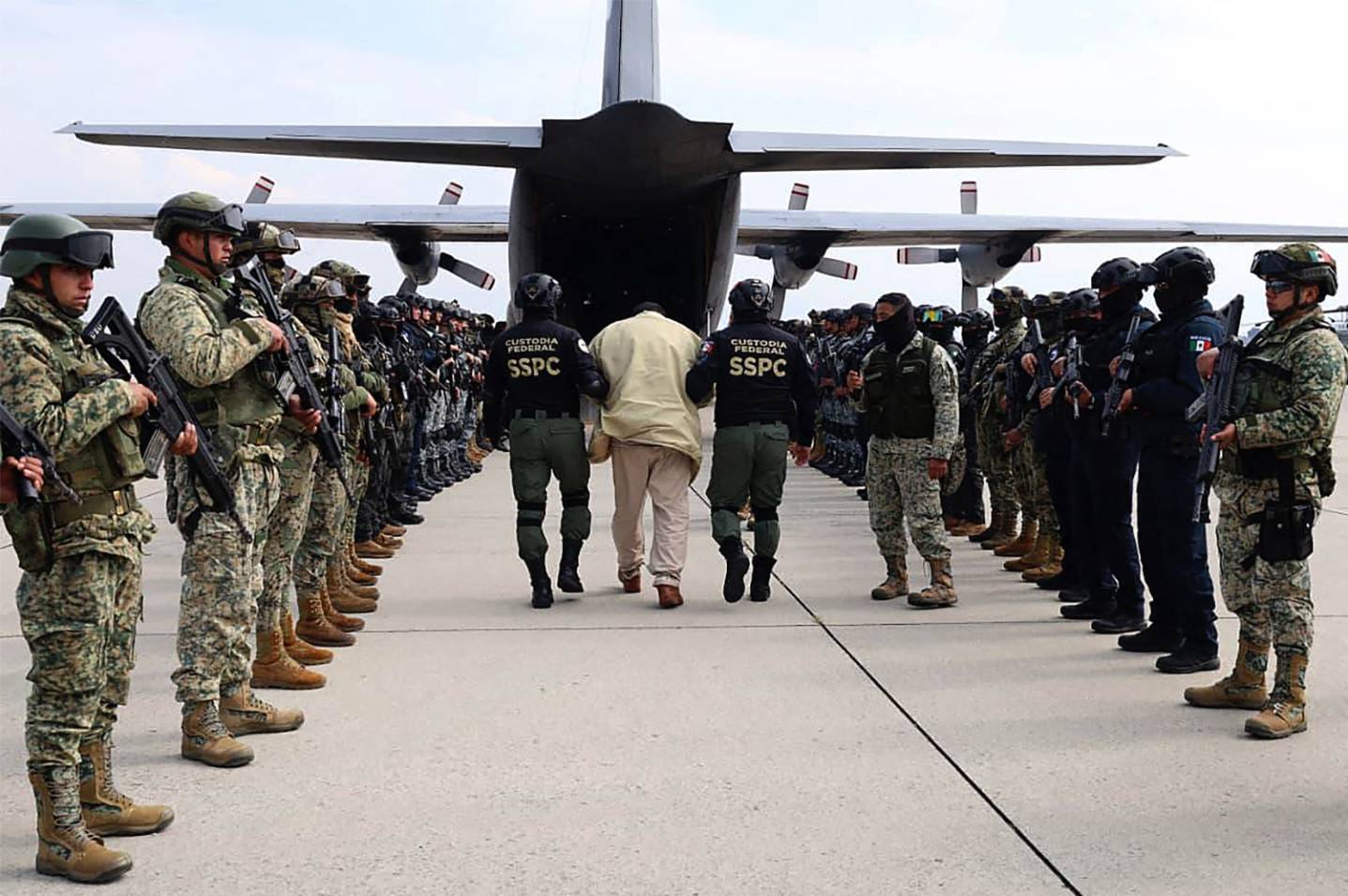
However, although there is bilateral interest in combating these groups, as occurred with the arrest and extradition to the United States of figures such as Joaquín El Chapo Guzmán and Ismael El Mayo Zambada, undisputed leaders of the Sinaloa Cartel, and the arrest and death in custody of Nemesio Oseguera Cervantes, El Mencho, leader of the Jalisco New Generation Cartel, the relationship between the two countries remains complicated because the Trump administration is demanding that its Mexican counterpart “go further”: targeting the politicians who have provided political and logistical support.
That is why the extradition request for Governor Rocha Moya has become a touchstone in bilateral relations, because it disrupts the coordinates within which Mexican President Claudia Sheinbaum had been operating, as this demand places a heavyweight figure within Morena at the center of the issue.
Now, Sheinbaum faces the dilemma of either handing over the alleged collaborators of organized crime or rejecting the request by arguing that it is not sufficiently supported by evidence. Of course, it would ultimately be Mexico that determines whether the accusation has merit, which opens the door to speculation that no amount of evidence would ever be enough, given the consequences this could have within the presidential circle.
Granting what the U.S. prosecutor is requesting would shake the structures of Morena, where the leadership of Andrés Manuel López Obrador still carries significant weight. Complying with the U.S. request would amount to shooting oneself in the foot, which is why the first reaction has been to buy time by demanding evidence from U.S. authorities. However, it is only a matter of time, and if Sheinbaum maintains the same position even after such evidence is presented, tensions will continue to escalate.
Thus, in making this decision, Sheinbaum is initially prioritizing the internal balance of her movement and protecting the heavyweights of her party from being reached by U.S. justice. Eventually, by granting the extradition of some or all of those on the Southern District of New York’s list, she would seek—in a cost-benefit logic—to avoid further complications in the relationship in other areas, particularly in the ongoing negotiation rounds over the thorny United States-Mexico-Canada Agreement.
To this must be added the fact that the country is going through a critical economic moment, with difficulties acknowledged by the Bank of Mexico itself, which warns that this year’s growth forecast stands at 0.1%. According to some economic observers, this is a euphemism to avoid saying that the national economy will shrink to zero this year, and the worst thing that could happen would be poor outcomes in the trilateral negotiation rounds.
Thus, the president’s room for negotiation is narrow and dangerously tilted toward having to continue yielding to the U.S. government in whatever might help President Trump improve his approval ratings ahead of the legislative elections in early November, when, as is well known, forecasts suggest Republicans will lose ground and fail to retain their majority.
Trump needs to show that his pressure strategy is successful in the areas of illegal migration and the fight against organized crime and, if possible, emerge relatively unscathed from the war against Iran. Therefore, intense months are expected in bilateral relations, and the Rocha Moya affair is one link in a broader strategy pursuing two objectives: subordinating President Sheinbaum to U.S. interests and ensuring that Washington’s allies in Latin America continue winning elections.
Autor

Professor at the Universidad Autónoma de Sinaloa. D. in Political Science and Sociology from Universidad Complutense de Madrid. Member of the National System of Researchers of Mexico.