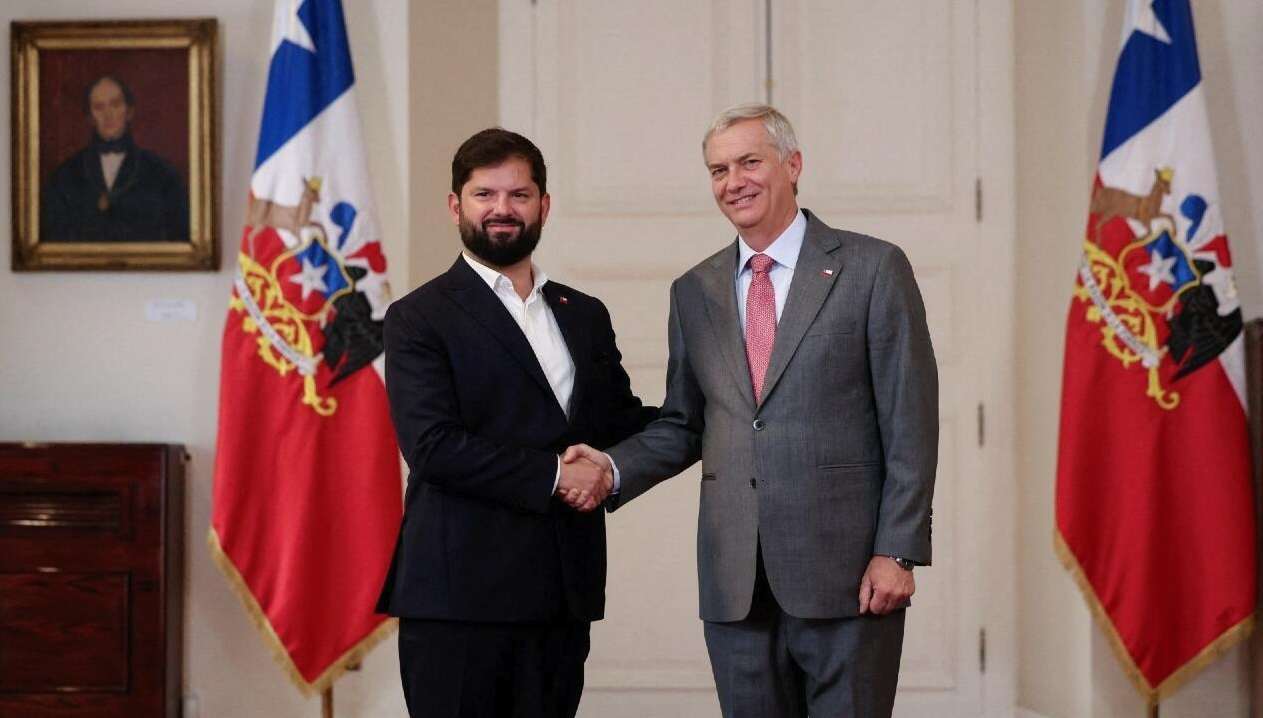
The recent presidential election in Chile produced clear results that are difficult to relativize. José Antonio Kast, candidate of the Republican Party, prevailed with 58.17% of the vote, compared to the 41.83% obtained by Jeannette Jara of the Communist Party. It was not only a victory in percentage terms, but also territorially: Kast won in all 16 regions of the country, achieving his strongest support in Ñuble, with close to 70%, and his lowest vote share in the Metropolitan Region, with just over 53%. With this result, it was a victory rarely seen in recent Chilean politics.
In absolute terms, the result was historic. More than 7.2 million people voted for Kast, making him the most voted president in the country’s history. However, this figure must be read with caution. The combination of automatic registration and compulsory voting structurally expanded the electoral roll, so the record does not necessarily express an exceptional level of support, but also a profound institutional change in the rules of the democratic game. Even so, the magnitude of the support obtained cannot be minimized.

This electoral behavior can also be explained, in part, by a social climate marked by persistent demands for security, public order, and migration control. These issues dominated the presidential campaign and ultimately tipped the balance in favor of a candidacy that offered simple answers to complex problems. Thus, more than an ideological adherence, the vote for Kast seems to express, in a first analysis, discontent with the performance of President Boric’s government.
Chile in perspective
Chilean politics over the last two decades has been marked by a pendular movement between center-left and center-right projects, from Michelle Bachelet’s first government, followed by Sebastián Piñera’s first administration, the second terms of both former presidents, and the election of Gabriel Boric. Although the country has oscillated between expectations of reform and demands for stability, this pendulum has acquired a consistent regularity over time.
Nevertheless, the social uprising of 2019 marked a turning point. It expressed a deep, accumulated malaise and opened a window of opportunity for structural transformations. Boric’s election in 2021 was read, in that context, as the beginning of a new political cycle—more participatory, inclusive, and reformist. However, the rejection of the constitutional project in 2022 and the subsequent electoral defeat of his sector show the limits of an agenda for change that failed to consolidate broad consensus or offer short-term certainties.
In this sense, the Chilean pendulum reflects not only ideological alternation, but also the ability—or inability—of governments to translate expectations into concrete results. Boric’s government, strained between its transformative impulse and institutional constraints, ended up prioritizing administration over reform, leaving a sense of unfulfilled promises.
Kast’s campaign, for its part, opted for a more direct and less ambiguous narrative. Security, migration, and public order were the axes of a discourse that connected with an electorate tired of complex diagnoses and long-term solutions. Nonetheless, that same emphasis raises relevant questions: to what extent are those promises sustainable without a solid parliamentary majority? What happens when “simple” solutions collide with the complexity of designing and implementing public policies? A significant part of the problems of Boric’s government originated in an excessively wide gap between expectations and real capabilities. Kast should not forget this lesson when he occupies La Moneda Palace starting on March 11, 2026.
First challenges of the Kast government
The regional context is also not simple for the future president. In Latin America, there is an advance of right-wing governments in a scenario of fatigue with projects of profound change from the left. In foreign policy, the landscape presents additional challenges. The relationship with Argentina and the strategic projection over Antarctica gain relevance in a context of global competition. Likewise, the renewed interest of the United States in Latin America, driven largely by the expansion of Chinese influence, opens up opportunities and risks. For Chile, the challenge will be to balance relationships, seize spaces for cooperation, and safeguard its strategic autonomy, avoiding automatic alignments that could strain its long-term foreign policy.
Added to this is a polarized regional political climate. Statements by Colombian President Gustavo Petro, describing Kast’s victory as an advance of “fascism,” illustrate a rhetoric that may hinder political dialogue and regional cooperation.
On the domestic front, Kast will face a fragmented Congress—albeit with a relative majority—along with an electorate with high expectations. His first year in office—the legislative honeymoon—will be decisive for advancing agreements that allow him to show results that satisfy his base electorate. Security, migration, and economic growth are the issues that will concentrate public attention and will require more negotiation than imposition.
In sum, the transition from Boric to Kast does not simply mark a change in political sign. It reflects the limits of profound change and the risks of promising order and security without addressing social and economic complexity. The challenge for the new government will be to govern a broader and more demanding country. The pendulum has swung again, but its next turn will depend on the distance between expectations and realities that the next president establishes.
Autor

Professor at the Catholic University of Temuco (UCT), Chile. Associate Researcher at the Center for Public Policies at the university. Doctor in Political Science and Master in Politics and Government at the Universidad Diego Portales (UDP).

Assistant Professor of the Department of Sociology, Political Science and Administration of the Universidad Católica de Temuco (Chile). PhD in Social Sciences and Master in International Studies from the Univeristy of Chile.