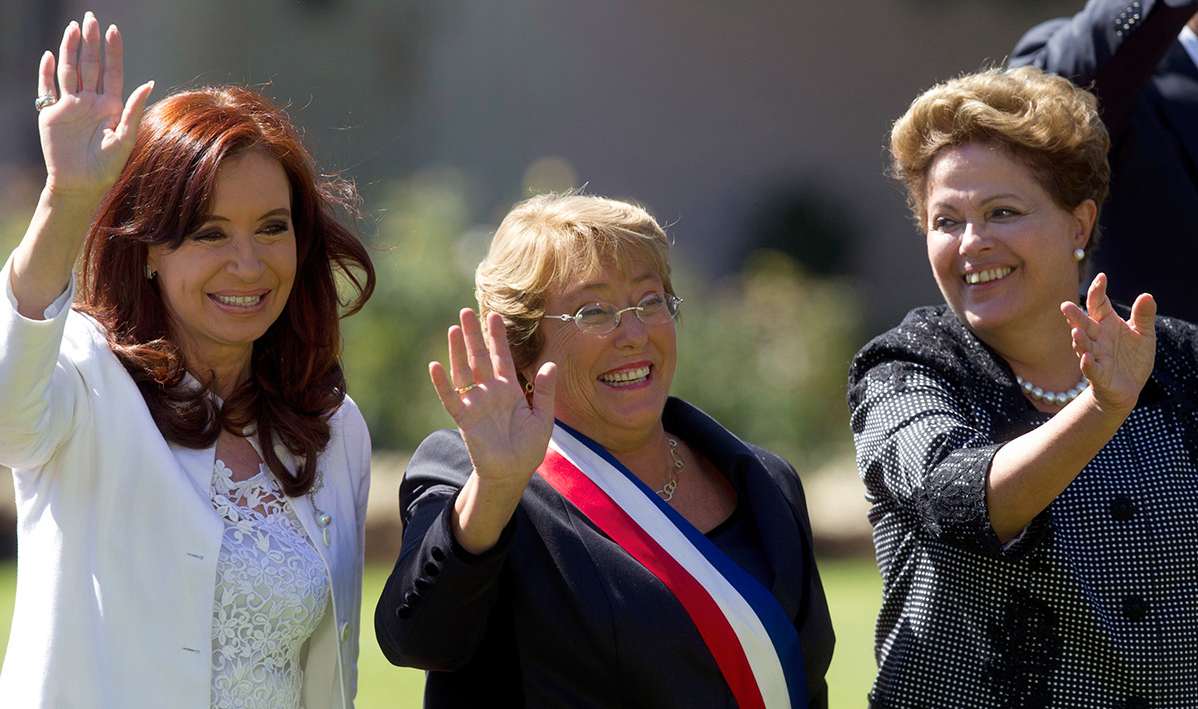
Just over three decades ago, Argentina passed Latin America’s first quota law. It was 1991, and the idea of requiring parties to include women on their lists sounded, to many, like a democratic heresy. Today, the region is the world’s most prolific laboratory of innovation in political equality: more than 45 legal reforms, according to the Observatory of Political Reforms, and the highest average level of female representation in the world. The region even surpasses several European democracies in the presence of women in their legislative bodies.
But parity is not just a number. It is a story of learning, disputes, and the transformation of the criteria by which democratic legitimacy is measured.

From quota to democratic principle
The first quota laws operated with a corrective logic: without altering the architecture of the electoral system, they introduced a minimum threshold of women candidates. The implicit message was that the low presence of women in institutions was an anomaly to be fixed, not a requirement of democracy itself. That logic encountered its limits: parties placing women at the bottom of lists with no real chances, male alternates replacing elected women, simulations that complied with the letter while emptying the spirit.
Faced with these party evasion strategies, women’s organizations and legislators from different parties, in alliance with electoral bodies and regional networks, responded with more demanding reforms. The region learned by doing: trial, error, correction, and new regulation. Each gap identified became input for the next wave of changes. Thus, what began as a corrective measure gradually became something qualitatively different: parity as a structuring principle of access to power.
The difference is not minor. While quotas said “include some women,” parity says “balanced representation between men and women is a basic democratic standard.” This conceptual shift—codified in constitutions, reinforced by electoral courts, defended in regional conferences—redefined the debate. The question is no longer whether women should be present; it is what institutional architecture guarantees that they cannot be excluded.
Parity is not always the same
However, the region does not move forward uniformly. Behind the proliferation of parity laws lie different trajectories.
There are cases of mature institutionalization, where parity has been woven over time through successive reforms that closed ambiguities, strengthened oversight mechanisms, and anchored the principle in the Constitution. Mexico is the most advanced example: after decades of reforms and active jurisprudence by the Electoral Tribunal, the 2019 reform enshrined “parity in everything”—Executive, Judicial, autonomous bodies, cabinets. There, reversing parity would require not only a broad legislative majority, but also facing formidable political and legal costs.
There are other cases of institutionalization, such as Argentina, where the principle was consolidated without reaching constitutional status but with sufficient normative density to make regression costly. And there are cases where the accumulation of measures or adjustments did not produce institutional coherence: Honduras approved parity with mandatory alternation, but escape valves—primaries with internal dynamics, preferential voting, flexible interpretations—continued to neutralize its effects.
Chile offers a different lesson. In the 2020 constitutional process, one of the most innovative parity mechanisms in the world was designed. The Constitutional Convention was gender-balanced. But that rule was adopted for an exceptional process, not as a structural reform of the electoral system. The experience showed that a strong rule can produce immediate parity outcomes, but not necessarily consolidate parity as a permanent principle.
And then there is Peru, which, after advancing toward alternation in lists, moved backward normatively in 2024, eliminating alternation in presidential tickets and horizontal parity for regional governor slates. This regression reminds us that no advance is inherently shielded.
The lesson is uncomfortable but necessary: formally similar regimes can have different reversal costs depending on the depth of the political process that built them and on the presence of active, influential pro-parity coalitions.
What parity does not resolve
The progress is real, but it would be naïve to present it as sufficient.
Parity has modified the gateway to exercising representation. It has not, by itself, reconfigured the distribution of time, resources, and authority that determine who can sustain a political career. In Latin America, women devote three times as much time as men to unpaid care work (19.6% versus 7.3%). This everyday inequality shapes who can engage in political activism, campaign, or assume highly visible public office.
Parity also does not question which women gain access. The available data are telling: the average share of Afro-descendant women legislators is estimated at under 1%, while Indigenous women in lower or single chambers across Latin America are the exception, not the rule. Numerical equality between men and women does not imply diversity within the universe of women represented, nor the incorporation of their varied social experiences. Without expanding the political subject of representation, numerical equivalence can reproduce internal hierarchies under the appearance of formal equality. Added to this is the persistence of gender-based political violence, a disciplining tool that affects women candidates and elected officials.
Horizon, not a finished goal
In a context marked by public discontent, growing polarization, and the questioning of equality agendas, parity now faces winds of contestation that are not new but are more intense. In several countries, gender equality is framed as privilege, imposition, or a threat to freedom. The cultural climate has shifted, and with it the narratives that seek to delegitimize what has been achieved.
Parity democracy does not designate a state already reached. It posits substantive equality as an organizing principle of the state and public life, not merely as a rule for candidacies. It is a horizon that requires extending the principle of equality to cabinets, judiciaries, and parties; articulating political parity with care policies that redistribute time; and broadening the notion of representation to incorporate diversity within the universe of women.
Three decades of Latin American reforms show that parity has been capable of transforming the criteria of democratic legitimacy. That is significant. They also show that the conquest of rights is never free from contestation, and that formal equality of access for women does not exhaust the agenda of democratic parity.
The question is no longer whether parity has transformed representation. It has. The question is whether democratic forces will embrace it as a constitutive principle of democracy itself and defend it against likely attempts at hollowing out or reversal. And that, today, is an open dispute.
Autor

PhD in Political Science, adjunct professor at the National University of San Martín, and a researcher at the National Scientific and Technical Research Council of Argentina (UNSAM-CONICET). Member of the #NoSinMujeres.