Polarization is a highly current term in global politics, and its presence has intensified greatly over the last five years. It is difficult to find a country where political life is not defined by this kind of confrontation, in which two options have enough strength to rally broad social sectors that concentrate their identity and energy into two radically opposed poles. The axis around which this opposition revolves may be defined by very diverse issues, ranging from cultural to economic and, obviously, political ones.
Over the course of a century, this tension was simplified around two terms that gradually seeped into the collective unconscious: left and right. Their practical use allowed the shaping of a scale where nuances made it possible to establish a continuum with gradual stages. Pluralism facilitated matters by incorporating different dimensions into political debate.

However, this landscape of nuance had at least three very different kinds of enemies. Authoritarian regimes disrupted the logic of ideological diversity by defining themselves without any restriction within a fixed and concrete space. In democratic regimes, two-round presidentialism forced bipolar confrontation, building blocs of opportunity of an exclusionary and sometimes artificial nature. Finally, the expansion of populism in its various versions brought about the exacerbation of antagonism between a “them” and an “us,” constructed both through charismatic leaderships and collective mobilizations.
Polarization stands tall in settings once labeled as class struggle, which today shelter levels of inequality never before seen. A report led by Joseph Stiglitz shows that the richest 1% of the planet captured 41% of the wealth created between 2000 and 2024. In contrast, the poorest 50% received only 1% of this new wealth: “these extreme concentrations of wealth translate into undemocratic concentrations of power, undermining trust in our societies and polarizing our politics.”
But it also rises due to the heightened use of emotions—always present in the public arena, yet now stirred up by a new kind of communication that is more direct, immediate, massive, and universal. The messages, sometimes anonymous, seduce and help create narratives upon which to build a reality that, in earlier times, took decades to construct. These contents may have a malicious origin, manipulating reality, but may also encompass a wide range of interpretations that can help clarify confusing situations.
The building of nations is a vivid example of staging a collective strategy in which, through education, compulsory military service, bureaucracy, and various forms of mass communication, groups of individuals and communities may come to share a common sense of belonging. In that process, hatred of the invader or of anyone who threatened sovereign survival is a factor of undeniable success in fostering group cohesion. Political parties at their moments of greatest effervescence were not immune to these practices. Nor were churches, although hatred of the opposite side carried different nuances—but exclusionary confrontation remains alive today, expressed in various forms.
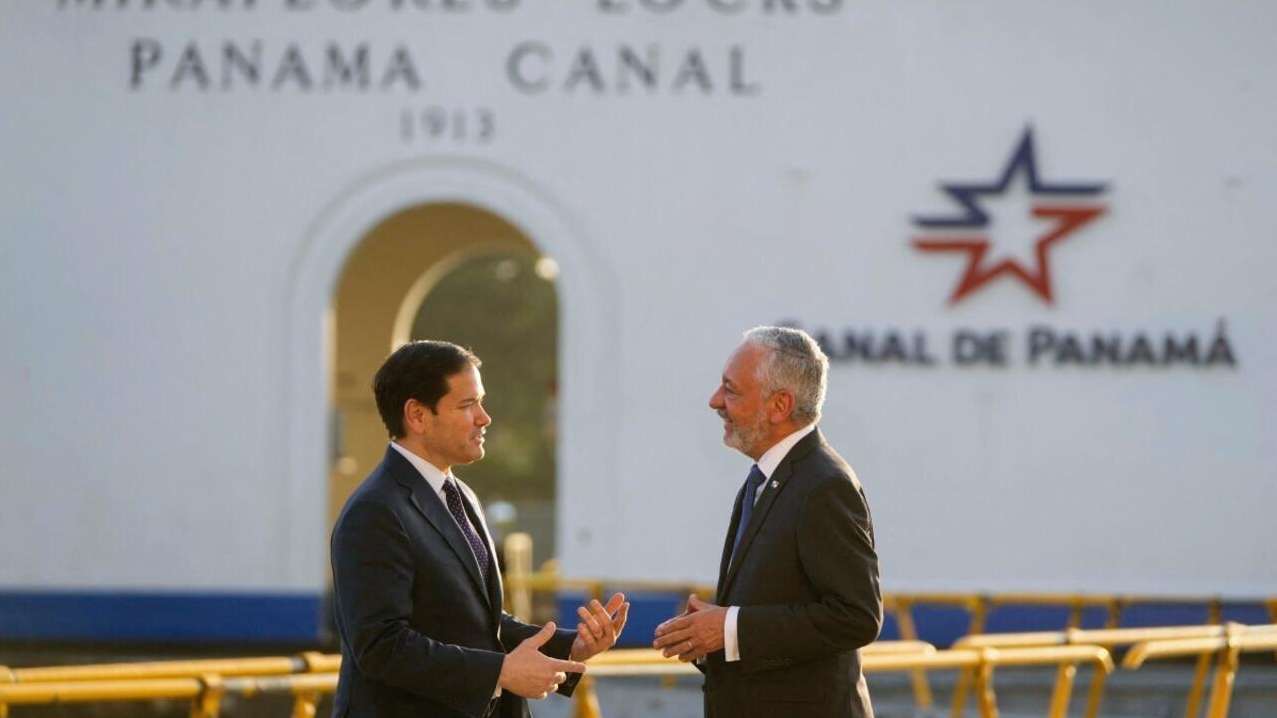
November is the month of the homeland in Panama. As is well known, the existence of Panama as a sovereign state is closely linked to the construction of the interoceanic canal, as well as to the rise of the United States as a world power destined for hegemony. Terms such as “manifest destiny,” “the carrot and the stick,” “gunboat diplomacy,” and “good neighbor” were woven in the early decades of the 20th century in the context of the Isthmus, shaping an imaginary that would spread across the entire region. While the dollar is the everyday currency of Panamanian society and economy, in November the Panamanian flag flies everywhere and festive, non-militarized parades fill the streets.
This setting gives rise to a type of polarization that today does not reach the point of straining patterns of coexistence, even though love and hate overlap as opposing signifiers. This year’s CIEPS survey on citizenship and rights, directed by sociologist Jon Subinas and presented during these dates, shows that 83.4% of respondents believe the canal should remain in Panamanian hands, even though 70.2% strongly disagree or disagree that its benefits are reaching Panamanian society, despite 70.4% feeling proud that the canal belongs to Panama. For 46.2%, the United States should be the ally par excellence, and today 39.4% still think that Americans administered the Canal better. Meanwhile, 69.5% believe that U.S. President Donald Trump truly intends to retake the canal.
Love and hate, in a country where, given its size, cultural and ecological diversity is enormous and territorial and socioeconomic inequality is the most marked in the region, blend with limited intensity, unlike the far more dramatic polarization experienced in neighboring countries. From the distant “homeland or death” to today’s sophisticated campaigns that cancel the opponent, polarization continues to incubate on the emotional side of existence. Hate speech ceases to be mere rhetoric. That old dream of reason once said to produce monsters is now relegated in the face of digital narratives where rational legality and deliberation are pushed aside.
Autor

Director of CIEPS - International Center for Political and Social Studies, AIP-Panama. Honorary Emeritus Professor at the University of Salamanca and UPB (Medellín). Latest books: "El oficio de politico" (Tecnos Madrid, 2020), "Huellas de la Democracy Fatigada" (Océano Atlántico Editores, 2024) and "Cuando la política dejó de ser lo que era" (Océano Atlántico Editores, 2025).