If this text had a subtitle, it would undoubtedly be “How to Govern Without Economic Growth.” The 0.3% growth recorded in Mexico in 2025 marks the starting point for 2026, a year in which even the most optimistic forecasts anticipate low and fragile growth, which could exacerbate economic, political, and institutional problems.
It will not be an easy year. In addition to the growth outlook, the renegotiation of the USMCA is still pending, in which the U.S. government will seek a rebalancing of the trade balance, which to date has favored Mexico. This could translate into a reduction in exports due to higher U.S. tariffs. Mexico’s Secretary of Economy has stated that Mexico will do the same, but with an effect proportional to the size of the two economies.

That imbalance is not explained solely by external factors, but also by the persistent mediocrity of growth, given that the Mexican government has been unable—due to reasons associated with the populist project—to fiscally absorb informality, increase productivity, and thereby sustain social mobility.
It is often said that when an economy does not grow sufficiently, politics becomes distributive rather than transformative. That is, the government manages scarcity because it does not generate wealth, which is reflected in low structural tax revenue, high social spending through social programs, and weak productive public investment.
This explosive cocktail generates a first-order political dilemma: the government must choose between reforming the fiscal system—which entails a high political cost—or continuing to finance its political project through greater indebtedness, cuts in public spending, or a gradual weakening of institutions.
During the administration of President Andrés Manuel López Obrador, Mexico’s external debt is said to have increased considerably, rising from approximately nine to seventeen trillion dollars. This increase requires resorting to further borrowing to cover that debt, without a solid structural backing to sustain it in the long term.
The 2026 expenditure budget, for example, foresees contracting more than one trillion dollars in debt. If this trend continues in the following years, the economic problem would worsen considerably. Added to this would be an additional problem of political legitimacy, since, in the absence of tangible results from the so-called Fourth Transformation project, the government would seek to sustain its legitimacy through a moral narrative, social polarization, and the constant construction of internal and external enemies.
For this reason, perhaps the government’s main challenge is to sustain legitimacy without clear economic results, which inevitably translates into low tolerance for criticism, a reduced willingness to accept pluralism, and an increasing use of the state apparatus as a political tool.
And this is already underway with the capture of the Supreme Court of Justice and the recent appointment of the new Attorney General of the Republic, Ernestina Godoy Ramos, who, just days after taking office, opened cases against political figures opposed to and critical of the Morena project under the argument of corruption.
Thus, if the economic forecast for 2026 is consolidated, a greater centralization of power and a weakening of institutional and media counterweights are highly likely. This is not a novel dynamic: the political management of crises usually indicates that when a government cannot distribute prosperity, it opts to distribute control.
This distribution of control will probably not imply an institutional rupture, but rather deeper cuts to public budgets, the maintenance of eroded autonomies, selective judicialization, and discretionary regulation. If this occurs, it will undoubtedly affect legal certainty and investor confidence, as investors have for some time been approaching their investment and reinvestment decisions with caution in light of the bias of a clearly politicized judiciary.
This would lead to a kind of syllogism: the greater the institutional uncertainty, the lower the investment; the lower the investment, the lower the growth; and the lower the growth, the greater the pressure on the institutions of the Mexican state.
Faced with this complicated scenario, the alternatives do not appear very promising. The year 2026 is politically important, as in the following year the composition of the Chamber of Deputies and sixteen states of the federation will be at stake. This will require a flow of public funds and a reduction in the levels of tension experienced in 2025, when significant sectors of Mexican society demonstrated noisily and reactions of low tolerance toward this diverse social opposition were recorded. For this reason, some analysts predict highly competitive and difficult elections in many regions, due to the rampant activism of organized crime groups.
Moreover, the room for maneuver of the government’s political operators is very narrow, which generates a tension that multiplies exponentially on social media and affects Morena’s political clienteles.
Equally important is the rightward shift of the electorate, which is accelerating in several Latin American countries and threatens to continue in Brazil and Colombia, where elections will be held in 2026. It is worth noting the psychological effect this has already had on electoral behavior, as seen in Argentina and Honduras, and which could impact an electorate deeply concerned about the economic crisis and the violence of organized crime.
Ultimately, the possible ways out depend on the willingness—greater or lesser—to implement a profound economic and institutional reform, which could involve a step back by the Judiciary, or on persisting in the management of scarcity and continuing along the path of greater political control.
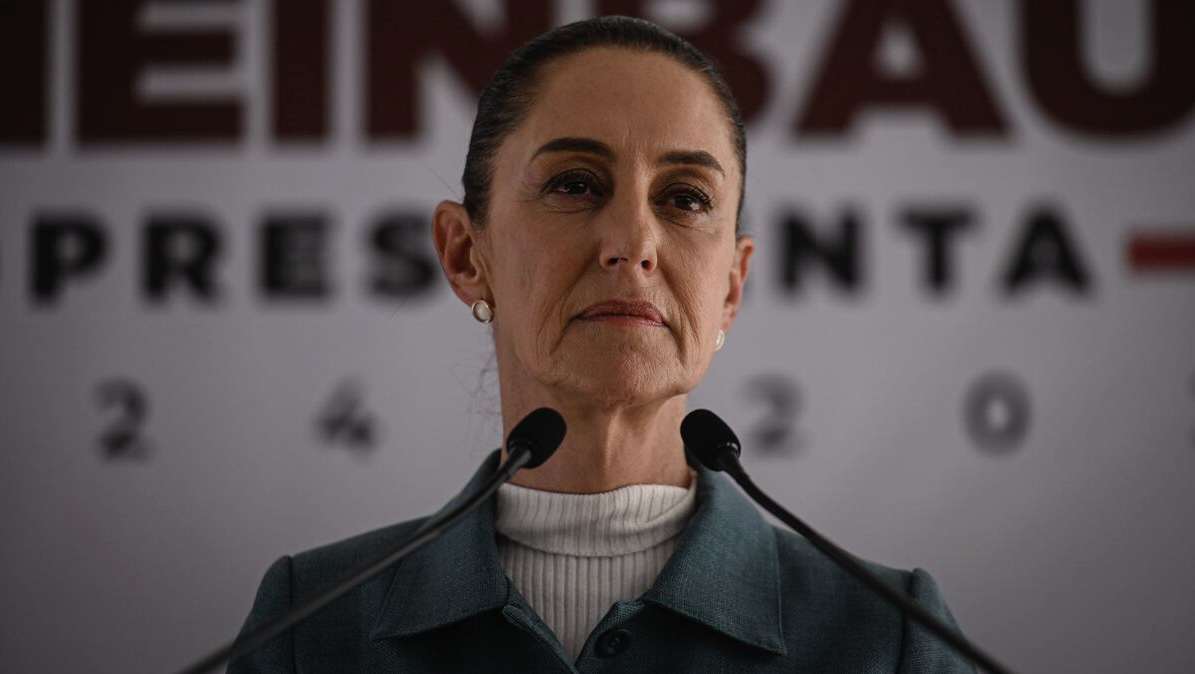
From the perspective of the author, and based on the decisions taken recently—especially the stance adopted by President Claudia Sheinbaum in the cases of Venezuela and Honduras, and also the positions taken in countries where “progressivism” has been defeated—it can be inferred that the decisions to be made at the National Palace will be guided more by ideology than by structural considerations. That is, the country will continue to be governed without economic growth. And this has already been noticed by White House operatives, who pressure Mexico day after day.
Autor

Professor at the Universidad Autónoma de Sinaloa. D. in Political Science and Sociology from Universidad Complutense de Madrid. Member of the National System of Researchers of Mexico.