The United States’ military operation in Venezuela at the beginning of the year was not a surprise, strictly speaking, although the nature and apparent effectiveness of the operation were not anticipated by many. The capture of Nicolás Maduro—whether the result of internal betrayal, as some speculate, or of overwhelming technological military superiority—has few consequences for a democratic transition in Venezuela, one of the region’s main concerns over the past 20 years. However, regime change is not a priority for the Trump administration; rather, its focus lies on controlling Venezuela’s oil reserves and defending U.S. hemispheric hegemony in the face of China.
The reaction of Latin American states and the European Union to the U.S. military intervention and Maduro’s capture was divided—more so in Latin America than in Europe—and, overall, quite timid. Many years ago, Argentine intellectual Carlos Escudé developed the concept of “peripheral realism,” thinking specifically about Latin America (and his own country). If we assess reactions on both sides of the Atlantic to the U.S. intervention, it can be observed that, in several cases, responses fit well with the assumptions of peripheral realism; in some episodes, one might even speak of “opportunistic realism.”

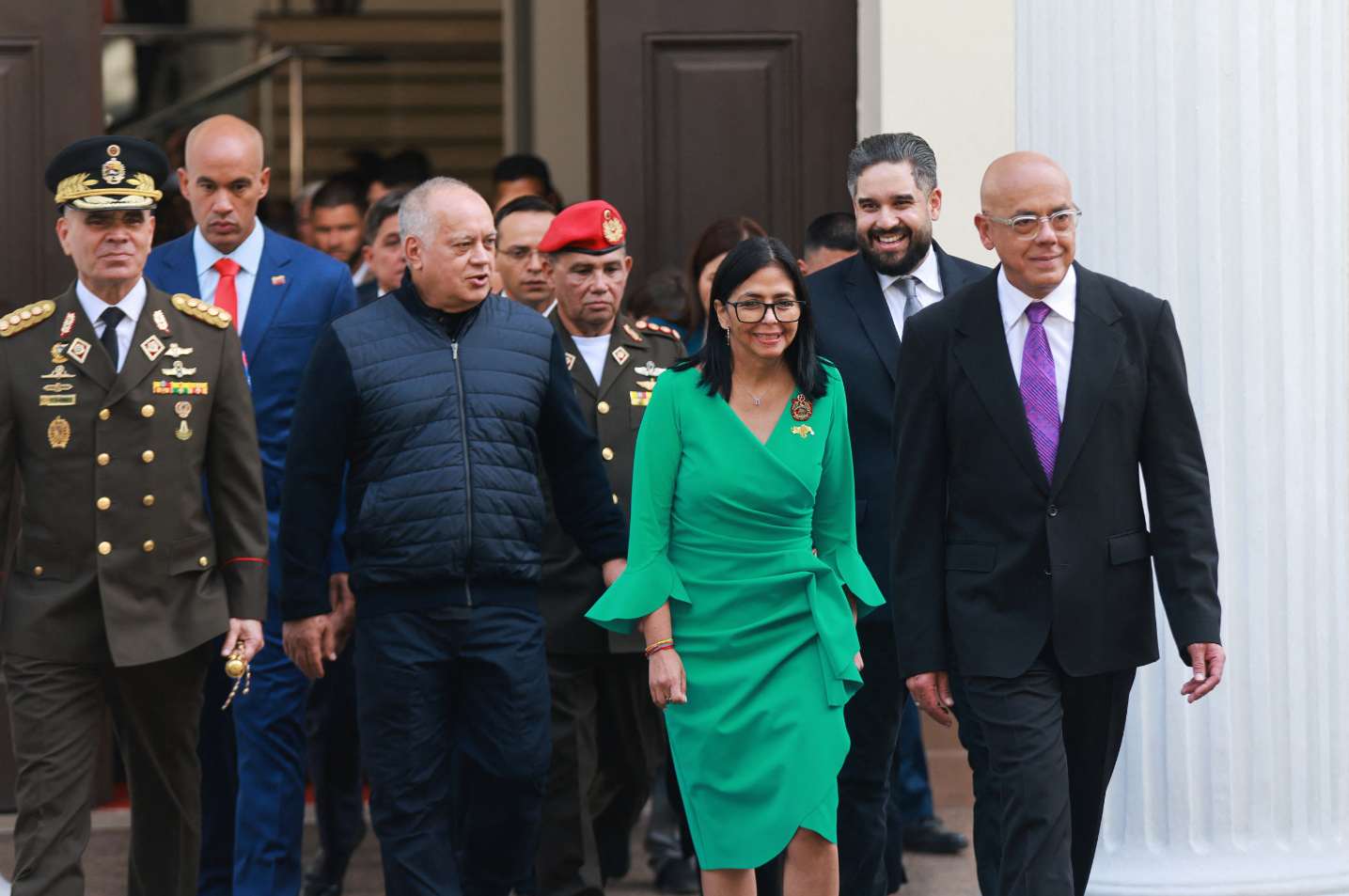
It is difficult to characterize the reaction of the Venezuelan regime following Maduro’s capture in any other way: on the one hand, it maintains an openly anti-imperialist and revolutionary rhetoric; on the other, it appears to hand over the management of oil to the United States. Hugo Chávez, inevitably, is turning in his grave. In practice, the priority of his heirs in the new context is not ideological coherence or the defense of the Bolivarian project, but clinging to power.
Another illustrative example is that of Colombian President Gustavo Petro. For a long time, he was one of Donald Trump’s most vehement critics in Latin America. However, after some veiled threats from the White House and a phone call with the U.S. president, he shifted in record time from confrontation to praise, highlighting political convergences with Donald Trump that he had until recently considered unthinkable.
Peripheral realism essentially holds that foreign policy must begin with the recognition of asymmetric power relations—in this case, vis-à-vis the United States—and that governments, when they prioritize the economic well-being of their population, adjust their external behavior to that reality. From this perspective, entering into an open conflict with Washington over the military action in Venezuela entails assuming costs with no realistic expectation of benefit.
This gives rise to two possible reactions. On the one hand, blind alignment—or, as it is said in English, bandwagoning—with the United States. On the other hand, the defense of the fundamental principles of international politics and international law, and efforts to influence a medium- and long-term solution to the conflict in Venezuela. The intervention is irreversible and Maduro will not return to Venezuela in the short or medium term, although it is also debatable whether the current Venezuelan government truly desires such a return.
Latin American multilateral institutions have so far failed to reach consensus even on a common official statement. The holding of a CELAC meeting on January 4, requested by Brazil and convened by Colombia in its capacity as pro tempore president, initially generated certain expectations. However, it soon became evident that persistent regional fragmentation remains, marked by the division between left- and right-wing governments, compounded by an additional fracture line between those aligning with the United States and those seeking to maintain greater autonomy.
The outcome highlights the effectiveness of Washington’s bilateral approach toward Latin American and Caribbean countries, based on offering “special agreements” to selected partners. Argentina led the opposition to a common declaration critical of the operation and was supported by Paraguay, Peru, Bolivia, Costa Rica, Ecuador, El Salvador, Panama, the Dominican Republic, and Trinidad and Tobago. As elections were held, some countries modified their positions. The most striking cases are Chile and Honduras, where the recently elected presidents, Kast and Asfura, who will soon take office, expressed their support for Trump, in contrast to the positions of the outgoing presidents, Boric and Xiomara Castro.
The OAS Permanent Council met on January 6, but likewise failed to agree on a common statement. Similarly, Argentina, Ecuador, Paraguay, and El Salvador supported the military operation, while Brazil, Chile, Colombia, Mexico, and Honduras criticized it. Argentine ambassador Carlos Bernardo Cherniak stated that “Argentina appreciates the determination shown by the President of the United States and his administration in the actions undertaken in Venezuela,” while Brazilian ambassador Benoni Belli affirmed that “the attacks on Venezuelan territory and the kidnapping of its president cross an unacceptable line. These acts represent a serious affront to Venezuela’s sovereignty and threaten the international community.” This illustrates the gap between the key positions of South American countries and explains why Mercosur has also failed to reach consensus on a joint response.
Although in recent decades the European Union has maintained an active policy of promoting and defending democracy, in the current Venezuelan crisis it currently lacks real capacity for influence and is largely relegated to the role of a mere spectator. Moreover, the EU is confronted with the threat by the U.S. government to annex Greenland and, at the same time, depends on Washington’s support in the Ukraine conflict, which limits its room for maneuver.
In this context, the EU acts in a manner similar to most Latin American countries, cautiously defending the principles of international law while avoiding an open conflict with the United States.
For example, in the statement by the EU High Representative—supported by all EU countries except Hungary—on the consequences of the U.S. intervention in Venezuela, it is stated: “we are in close contact with the United States, as well as with regional and international partners, to support and facilitate dialogue with all parties involved, leading to a negotiated, democratic, inclusive, and peaceful solution to the crisis, led by Venezuelans. Respecting the will of the Venezuelan people remains the only way for Venezuela to restore democracy and resolve the current crisis.”
This is a position that can be shared by both the European Union and Latin American states and could serve as a basis for coordinating activities regarding the situation in Venezuela. Although the EU and like-minded governments in Latin America do not have the same level of influence over the Venezuelan regime as the United States, they can condition their cooperation with a government lacking democratic legitimacy on concrete progress in the release of political prisoners, the opening of spaces for political participation, and the presentation of a clear and credible timetable for a democratic transition.
Autor

Associate Professor at the Pontifical Catholic University of Rio de Janeiro (IRI/PUC-Rio) and collaborating professor at the Federal University of Latin American Integration (UNILA).

Research associate at the German Institute for Global and Area Studies - GIGA (Hamburg, Germany). He was Director of the Institute of Latin American Studies and Vice President of GIGA.