For decades, geopolitics has constituted a field of study devoted to analyzing how location, territory, natural resources, and geographic features influence the power and strategy of states, whose evolution was seen as being intimately linked to them. The relationship between space and politics—considering economic, military, and cultural factors that shape international projection and competition for global influence—has been its raison d’être. Without fundamentally questioning it, the changes in the international landscape crystallized over the past year have generated serious doubts about the foundations of that conception, insofar as a gradual transformation is underway in the very essence of nation-states, marked by obsessive nostalgias and abusive leaderships.
Specifically, since the consolidation of the Trump doctrine set forth in the National Security Strategy, three significant moments have been recorded, manifested in different forums. This indeed unfolds within the exceptional context of the counteraction of Canadian Prime Minister Mark Carney, articulated in Davos through his criticism of a scenario that represented a rupture rather than a transition—something the German chancellor Friedrich Merz reaffirmed three weeks later at the 62nd Munich Security Conference when he declared that “the international order no longer exists as we knew it.”

Carney is now leading talks between the EU and a major Indo-Pacific trade bloc made up of Canada, Singapore, Mexico, Japan, Vietnam, Malaysia, and Australia, after calling on these middle powers to join forces in favor of one of the largest global economic alliances, which would create a new trade bloc of 1.5 billion people.
The first moment took shape at the Munich event—the great historical temple of transatlanticism—where Marco Rubio assumed a starring role, softening his president’s coarse and confrontational language. However, the substance of his words remains discouraging. With unusual (naïve?) frankness, he appealed to a shared identity with Europe (“for us Americans, our home may be in the Western Hemisphere, but we will always be children of Europe”), the product of a supposedly glorious past that created an “exemplary civilization” without fissures, built upon “the Christian faith.”
From this, one could only feel pride, because “in Europe were born the ideas that sowed the seeds of freedom that changed the world.” The denunciation of the dangers of mass migration was the singular culmination of the simplistic narrative aimed at unifying fear—a fear that will shape the servile identity of broad majorities anguished over their survival. If the lure worked with regard to crime in favor of the publicist Nayib Bukele, why not now with the demonization of the outsider, with the exaltation of “remigration”?
The second moment was the formal launch on February 19 of the Board of Peace, initially conceived as a “transitional administration” for Gaza, but whose scope the White House now seeks to globalize. For its operation, the United States—once Congress approves it—will contribute ten billion dollars. The meeting was attended by members of Trump’s family (his son-in-law Kushner), businessmen (Witkoff), figures from the entertainment world (Infantino), members of his cabinet (Vance and Rubio), and representatives of 27 countries, united by private interests and bonds of loyalty, who came to pay homage and to formalize the burial of multilateralism—none of whom, for now, has reimbursed the one billion dollars required for membership in the new club.
In his welcoming speech, Donald Trump addressed the only two Latin American presidents present with words whose meaning requires no further comment: “Where is President Milei? I supported him. I’m not supposed to support people, but I support those I like… He was a little behind in the polls. In the end, he won in a landslide.” Then, “President Peña of Paraguay is here. Thank you very much. He is a handsome young man. It’s always nice to be young and handsome. That doesn’t mean we have to like him. I don’t like handsome young men. I like women. That doesn’t interest me. You are also doing an excellent job.” Javier Milei was not given the floor, but Santiago Peña was, and he effusively thanked the host for his words.
Finally, Trump has convened a group of Latin American presidents to a summit in Miami on March 7, just weeks before his trip to Beijing. The initial list of confirmed invitees included Milei (Argentina), Paz (Bolivia), Noboa (Ecuador), Bukele (El Salvador), Asfura (Honduras), and Peña (Paraguay). This is the most loyal court in the region within the new imperial order. Shortly thereafter, Molino, president of Panama, also managed to be included on the list. The summit will focus on countering Chinese influence in the hemisphere under the shelter of Trumpist rhetoric of closed regionalism.
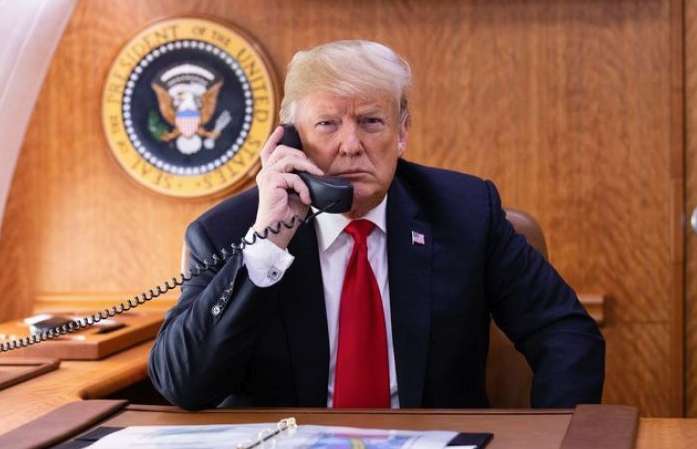
If, for analysts such as Ian Bremmer, this type of discourse reflects the consolidation of an era of “transactional geopolitics,” where alliances are increasingly measured in terms of concrete interests, I prefer to focus on the more individualistic and autocratic profile of the current moment of vassalage. The U.S. president, as others among the heads of state just mentioned, concentrates power in his own hands because Congress has ceded its own to him, having also passed fewer laws than at any time since the mid-nineteenth century. Moreover, he has managed to turn his current spokesman, Marco Rubio—who eight years ago called him a fraud unfit to be entrusted with nuclear codes—into someone who, in a personal betrayal, adorns his servility for the maximum satisfaction of the presidential ego. The situation represents the height of the geopolitics of the self, for Trump’s constant narrative of past, present, and future events is always delivered in the first person singular.
Autor

Director of CIEPS - International Center for Political and Social Studies, AIP-Panama. Honorary Emeritus Professor at the University of Salamanca and UPB (Medellín). Latest books: "El oficio de politico" (Tecnos Madrid, 2020), "Huellas de la Democracy Fatigada" (Océano Atlántico Editores, 2024) and "Cuando la política dejó de ser lo que era" (Océano Atlántico Editores, 2025).