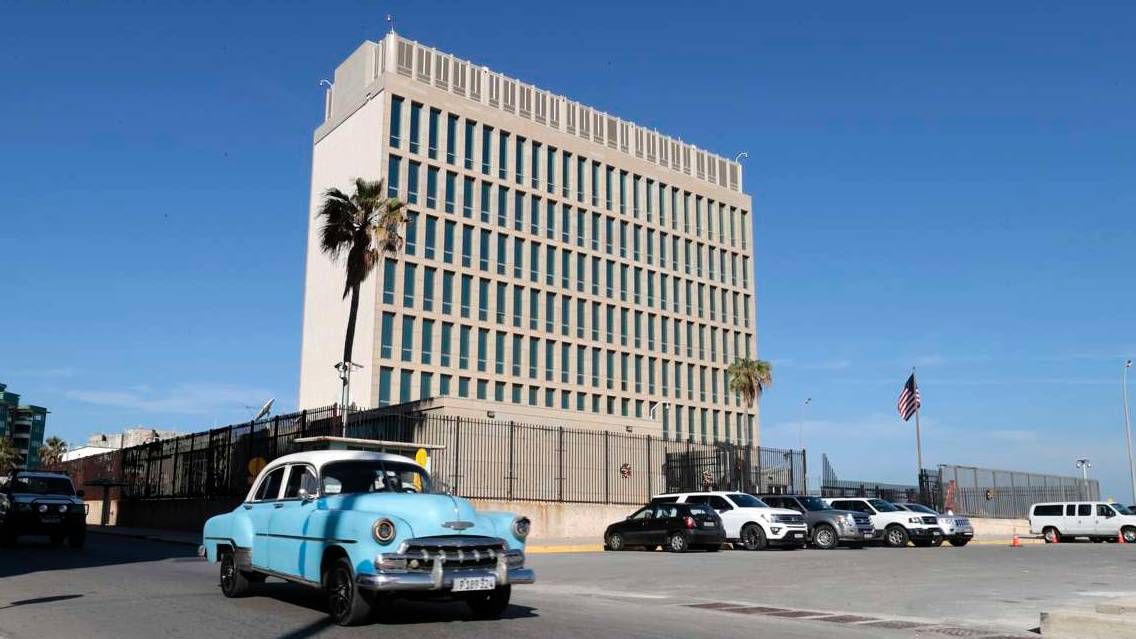
The recent talks between representatives of the U.S. and Cuban governments have drawn the attention of international actors and generated intense media coverage. This avalanche of information has produced a wide range of public opinions and has even accentuated polarized positions regarding the likely scenarios of the supposed “negotiation” and the interests of the actors involved.
For the Cuban regime, an adverse geopolitical and regional context, a persistent structural crisis and its systemic effects, the “Venezuela effect,” and the energy blockade triggered by Trump’s executive order of January 29 have outlined an unprecedented scenario of isolation and vulnerability. This has forced the island into a limited “negotiating” opening under conditions of maximum coercive pressure.

We are in the presence of a tactical dialogue, not a strategic negotiation, given the absence of a “core of possible agreement.” Autocracies are averse to negotiation, and when constraints force them to engage in dialogue, their preference is inelastic: to survive through controlled adaptation of the political model.
I propose focusing the analysis on the actors capable of exerting strategic influence over the negotiation. First, the statements from the U.S. presidency, particularly those of Secretary of State Marco Rubio, the architect of the exchange, and, eventually, President Trump, as well as government spokespersons, legislators, and senators. This flow of information has not always been coherent or constructive in dialogical terms.
Marco Rubio’s statements have moved from optimism about “economic liberalization,” given the regime’s “structural incapacity,” to the normative conditionality of “democracy as a non-negotiable condition.” This reflects the persistent tension between strategic interests in regional stability and the political pressure of the Cuban exile community, especially its hardline maximalist sector.
Moreover, there is another, more moderate sector of the exile community, with a pragmatic, business-oriented outlook, that seeks economic investment as a condition for gradual political liberalization. The influence of this veto player—the exile community—explains the duality and oscillation between pragmatism and maximalism in the U.S. government’s approach, more driven by domestic political dynamics than by a consistent international strategy.
From a communicative standpoint, the radical tone of Trump’s statements—“It will be a great honor to take Cuba… I can do whatever I want with it”—misinforms and raises the costs of a potential negotiation, generating a perverse effect that legitimizes the regime’s political closure, intra-elite cohesion, and the reinforcement of anti-imperialist narratives.
It is well known that the regime holds an absolute monopoly over information in Cuba. Recent statements by President Miguel Díaz-Canel have been defensive reactions that engage with “rumors” circulating on digital platforms and in international media. Some important decisions have even taken the Cuban president by surprise; for example, the sudden replacement of the former Minister of Economy. Given the opacity and verticality of the regime, we may assume that strategic decisions are made by a small civilian-military elite led by Raúl Castro and figures with longstanding ties, primarily within the military.
Their limited calculation is offset by the presence of two negotiators who are members of the historical leader’s family, Alejandro Castro Espín and Raúl Guillermo Rodríguez Castro, and is later publicly ratified within state institutions and the Cuban Communist Party (Political Bureau, Central Committee, National Assembly). The Foreign Ministry is responsible for their international dissemination, and the official press for their domestic communication.
As is well known, the Cuban position has fluctuated from “silence” to “denial,” and from acceptance of “constructive dialogue” to rejection of the terms of negotiation. This shows that Cuban negotiators are willing to engage in dialogue on common “technical” issues (security, migration, drug trafficking, etc.), including economic investment and minor concessions on human rights, but not on structural reforms that would entail decisive changes in the regime’s economic and political nature.
In this sense, negotiation or dialogue for the Cuban regime means a defensive interaction oriented toward authoritarian survival. In other words, the regime tolerates economic deterioration, perceives structural reforms as risks, and rules out political change as a likely option. Its priority is not to maximize economic welfare, but to minimize the risks of collapse and loss of political control, activating its resources of adaptive authoritarian resilience.
While it is true that economic sanctions function as mechanisms of pressure that alter the costs and benefits of certain political decisions, comparative studies on authoritarianism have demonstrated the capacity of some regimes to survive prolonged crises by activating mechanisms of limited adaptation, institutional control, and selective repression. In this regard, the current interaction between both governments could be defined as a case of negotiation under coercion in conditions of structural asymmetry, rather than a process of normalization.
The United States seeks to capitalize on Cuba’s systemic vulnerability to induce structural economic and political changes, while the Cuban regime responds with controlled economic reforms aimed at preserving political continuity.
Everything suggests that the United States’ strategy of sustained structural coercion produces a strategic effect of resistance bargaining on the part of the Cuban government. If Marco Rubio adopts structural political change as a principle of negotiation, and the Havana regime sets an absolute red line—“the political system is not negotiable”—we are facing an asymmetric negotiation with no intersection of preferences (or no zone of possible agreement), whose outcome will be an unstable equilibrium between coercion, resistance, and limited dialogue.
This fragmented and unstable negotiation tends to produce partial, reversible, and contingent agreements, whose likely outcome would be economic adaptation, tactical concessions, and the regime’s political continuity. The great paradox, then, will be whether the strategy of sustained structural coercion can produce structural political change in Cuba—or whether it instead reinforces the regime’s defensive logic.
Autor

Professor and researcher at the Iberoamericana University (Mexico City). PhD. in Political Science from FLACSO-Mexico. Specialized in republican institutional history in Cuba, political transition and democratization.