In Yaoundé, Cameroon, away from the official spotlight of the World Trade Organization’s 14th Ministerial Conference (MC14), a subtle yet transformative realignment quietly began to take shape. Africa and Latin America, long considered peripheral players in the global economy, are emerging as engines capable of reshaping trade patterns for decades to come.
This is not mere rhetoric. Discussions at MC14 reflected a growing recognition that the Global South is no longer a passive observer in international commerce. Africa and the Latin America & Caribbean region are increasingly asserting themselves as dynamic forces, influencing production, investment, and trade flows. The economic synergies, cultural affinities, and shared business logics of their business communities reveal a vast reservoir of opportunities poised to transform the global economic landscape.

According to the WTO, South–South trade has grown from roughly 10% of global trade in the mid-1990s to around 25% today. With nearly 90 countries, over 2 billion people, and more than $10 trillion in combined GDP, Africa, Latin America, and the Caribbean have the potential to move from distant outposts to central hubs shaping global commerce.
Yet trade between these two regions remains minimal. Exports from the 33 members of the Community of Latin American and Caribbean States (CELAC) to Africa account for just 0.3% of global trade, while flows in the opposite direction are even smaller. Latin American shipments largely comprise processed agri-food products and light manufacturing goods—dominated by Brazil—whereas African exports are primarily raw materials and minimally processed agricultural products. This imbalance highlights the opportunity to build more diversified, mutually beneficial trade relationships.
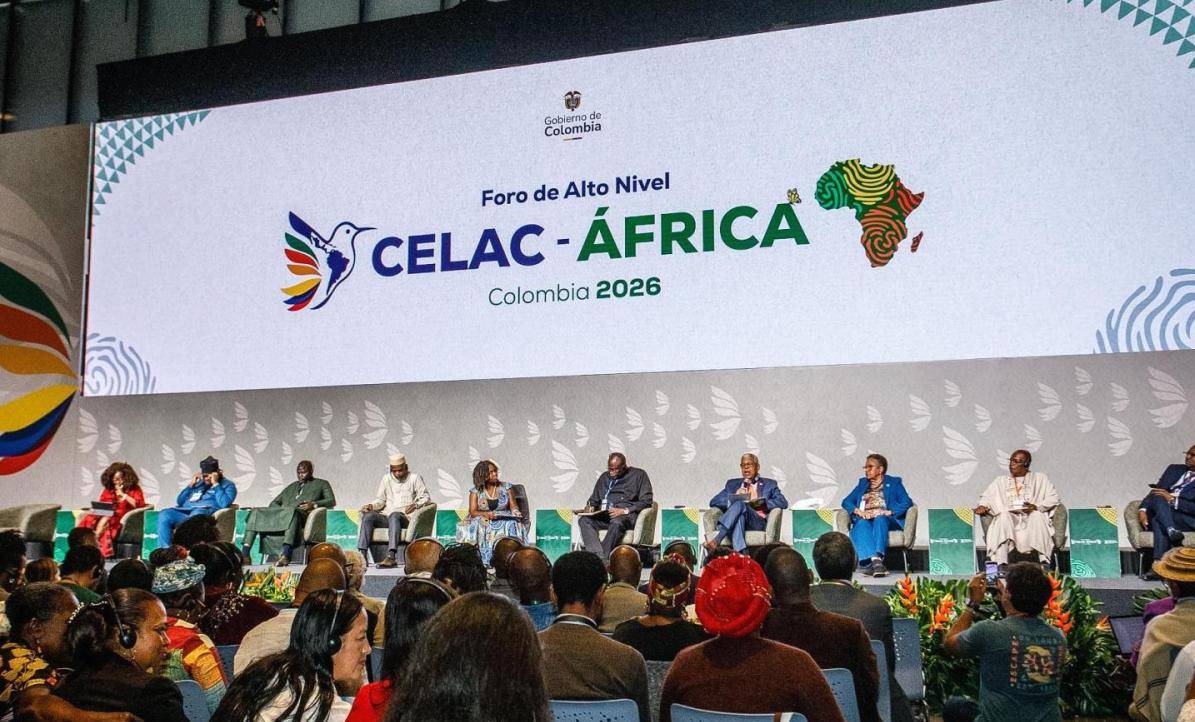
Political momentum is rising. Several Latin American countries are deepening ties with African partners, while initiatives aimed at strengthening interregional connectivity are multiplying. New maritime routes—such as the maritime shipping pact signed by the Foreign Ministers of Ghana and Colombia—signal a determined push to weave the two regions closer through commerce.
My research, Connecting the Souths: Identifying Strategic Sectors for Africa–Latin America Trade, industrial and Value Chain Cooperation, conducted jointly with Sebastian Galindo Cantor of the Latin–Africa Chamber of Commerce, identifies opportunities for collaboration among business communities, investors, and industrial actors in both regions. It also addresses a critical blind spot in conventional analyses of Africa–Latin America trade: connectivity.
Despite their economic potential, the continents remain poorly linked. Direct shipping routes are scarce, air networks limited, and digital infrastructure fragmented. Trade struggles to grow—not because of geographic distance, but because transport and digital links connecting these regions are weak, costly, and unreliable. Economically, distance is not measured in miles; it is defined by the strength—or fragility—of the connections that bind one region to another. Even the most promising partnerships cannot scale without efficient logistics, reliable transport corridors, and integrated digital systems.
Yet similarities are abundant. Economic life across Africa and Latin America is relational, adaptive, and deeply rooted in informal networks that coexist with formal markets. Commercial exchanges are often shaped as much by trust, cultural affinity, and shared practices as by formal contracts. These underlying affinities provide a solid foundation for structured economic cooperation.
Sectoral opportunities for collaboration are substantial. Agri-food systems offer pathways to build resilient value chains that enhance food security and diversify exports, moving from raw commodities to higher-value processed goods. Energy resources—including renewables and bioenergy—present opportunities for joint industrialization and greater energy self-reliance. Light manufacturing, such as textiles, apparel, and assembly-based industries, can support industrial upgrading and job creation. Digital services and logistics platforms enable firms to improve productivity, expand market access, and integrate into broader South–South value chains. With targeted policies and cross-regional partnerships, these strengths can be converted into sustained economic cooperation.
This is why the proposals emerging from MC14 are so critical. New maritime corridors, expanded air networks, and integrated digital platforms are not mere upgrades; they are the future conduits along which South–South commerce will accelerate. Yet infrastructure alone is not enough. To deliver meaningful impact, these corridors must be anchored in joint collaborative projects that link production systems across Africa and Latin America. By aligning value chains in agriculture, agro-processing, energy, and light manufacturing, countries in both regions can turn latent synergies into concrete industrial cooperation.
Connectivity, in this sense, becomes a strategy for reorganizing production across continents. Fragmented trade flows can evolve into integrated, mutually reinforcing economic ecosystems. If successfully implemented, these initiatives could do more than expand trade volumes—they could catalyze new value chains shaped by Southern priorities rather than by demand from Northern economies. For decades, Africa and Latin America have occupied similar positions in the global economy: as commodity exporters and peripheral actors in global value chains, reliant on external markets. That paradigm is now shifting as South–South linkages deepen and diversify.
The rise of South–South trade is reshaping global economic geography. As production, consumption, and innovation decentralize, Africa and Latin America have an opportunity to emerge as resilient, diversified centers of a new economic order. Realizing this potential requires three fundamental shifts:
First, Infrastructure as foundational. Ports, shipping lines, air routes, and digital platforms are preconditions for trade, not optional enablers.
Second, trade agreements and regulatory harmonization matter, but policies must also engage the relational fabric of these economies: supporting SMEs, leveraging diaspora networks, and building trust across business communities.
Third, connectivity gaps—physical, digital, and relational—must be recognized as decisive constraints that determine whether economic potential can be realized.
The implications extend far beyond bilateral trade. Closing connectivity gaps and fostering coordinated development across agri-food, energy, manufacturing, and digital sectors can create new industrial clusters and regional value chains. Doing so would reduce dependency on traditional Northern markets, strengthen resilience, foster innovation, and generate employment. Moreover, enhanced economic integration would amplify Africa and Latin America’s collective voice in global trade governance, allowing them to negotiate from positions of strength and to shape international rules in line with Southern priorities.
South–South cooperation is no longer a theoretical possibility—it is a historic opportunity. By combining infrastructure development, value chain integration, and strategic collaboration, Africa and Latin America can not only expand trade but also redefine the architecture of global commerce, asserting Southern-led priorities at the heart of the 21st-century economic order.
Autor

Doctor in Jurisprudence by the University of Salerno. Executive director of Desiderio Consultants (Nairobi), senior specialist in customs and trade and senior associate of the Institute of Economic and Social Policy of the Horn of Africa (HESPI).