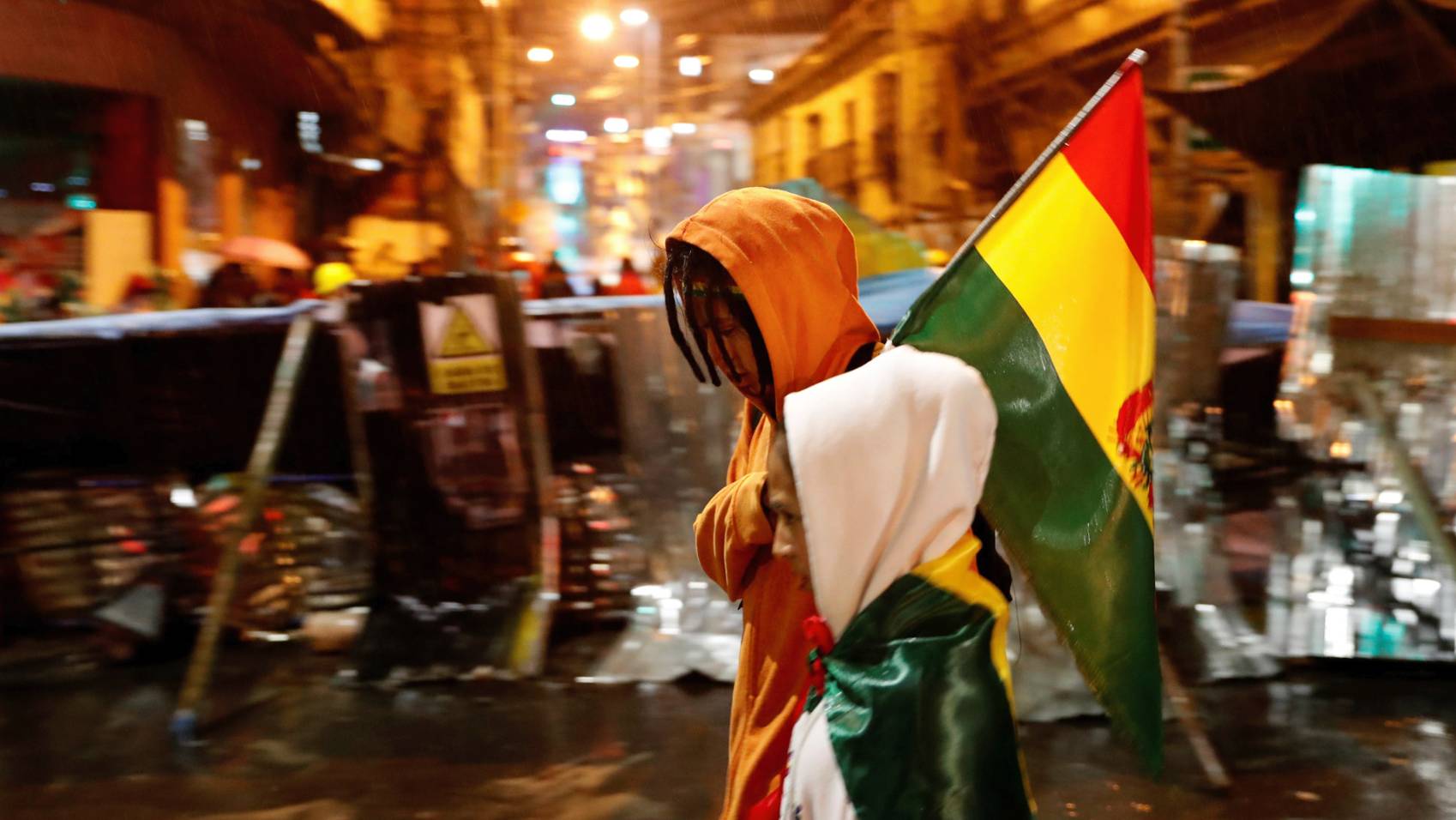
Just over six months after taking office as president, Rodrigo Paz is facing a political crisis that threatens his ability to remain in power. For the past three weeks, groups mobilized under the leadership of the Bolivian Workers’ Center (Central Obrera Boliviana) have blocked road access to the city of La Paz, committed acts of vandalism and looting, damaged public property, and mistreated people who have nothing to do with the conflict. All of this has taken place under the demand for the resignation of the country’s head of state. As a result, Bolivia has entered a period of political uncertainty whose outcome will determine the future of the country’s democratic process.
Although this new conflict can be explained from several perspectives, there are three fundamental factors. The first is that the political system is experiencing a crisis of representation. The electoral process held in 2025 produced a fragmentation of the vote, not only among three opposition forces to the MAS (PDC, Libre, and UN), but also between two candidates emerging from the MAS camp itself, Eduardo del Castillo and Andrónico Rodríguez, who performed poorly, receiving 8.51% and 3.17% of the vote respectively. What was surprising was the null vote, a campaign promoted by Evo Morales weeks before the election, which reached 19.8% of all ballots cast.

The second factor is the economic deterioration. By November 2025, Luis Arce had left office amid a fuel crisis, a GDP contraction of 1.48% by the end of his term, and inflation of 20.40%, the highest recorded in the country in four decades. This crisis was partially addressed by Rodrigo Paz’s administration, which, on December 17, 2025, more than doubled gasoline and diesel prices through a Supreme Decree. Although this measure did not initially provoke major mobilizations, its failure to be accompanied by other policies capable of cushioning the economic decline experienced by the poorest sectors has generated social discontent that has now found expression in the streets.
The third factor is that, during these few months in office, Rodrigo Paz has failed to establish channels of communication with the social organizations and sectors that supported him in the runoff election and that belong to areas that had been MAS electoral strongholds: La Paz and El Alto. No public policies have been directed toward these groups, and instead a strong anti-MAS discourse was adopted, portraying the previous government as a “sewer state” where, according to Paz, only corruption and inefficiency prevailed. Thus, this has not only been a case of misreading the support base that brought Paz to power, but also an inability to establish intermediaries—political brokers—capable of connecting Paz with the popular sectors.
It is worth highlighting several elements that may help in assessing the future evolution of this crisis. On the one hand, the mobilization is concentrated almost exclusively in La Paz and El Alto; in the other departments, daily life and economic activity continue more or less normally. On the other hand, the protests have failed to generate public sympathy and have even sparked rejection among the population, which has criticized attacks on pedestrians, looting, and damage to both public and private property, in addition to the resulting food shortages.
Finally, the protesters do not appear to have an alternative political project, nor does there seem to be a clear leadership structure; in fact, no one has emerged as the legitimate spokesperson for the movement.
Paz’s government is under pressure from the protests, especially given the maximalist demand for his resignation, but this does not mean it is cornered. So far, it has managed the containment of the demonstrations effectively, partially reopening the routes into La Paz for brief periods and containing street violence without significant costs in terms of injuries or loss of life. Nevertheless, the situation remains extremely fragile.
Governing is about managing timing, and this is something Rodrigo Paz must do quickly and effectively; what is at stake is the continuity of democracy in Bolivia. That is no small matter.
Autor

Political scientist. Professor and researcher at San Francisco Xavier University (Sucre, Bolivia). PhD in Social Sciences with mention in Political Studies from FLACSO-Ecuador.