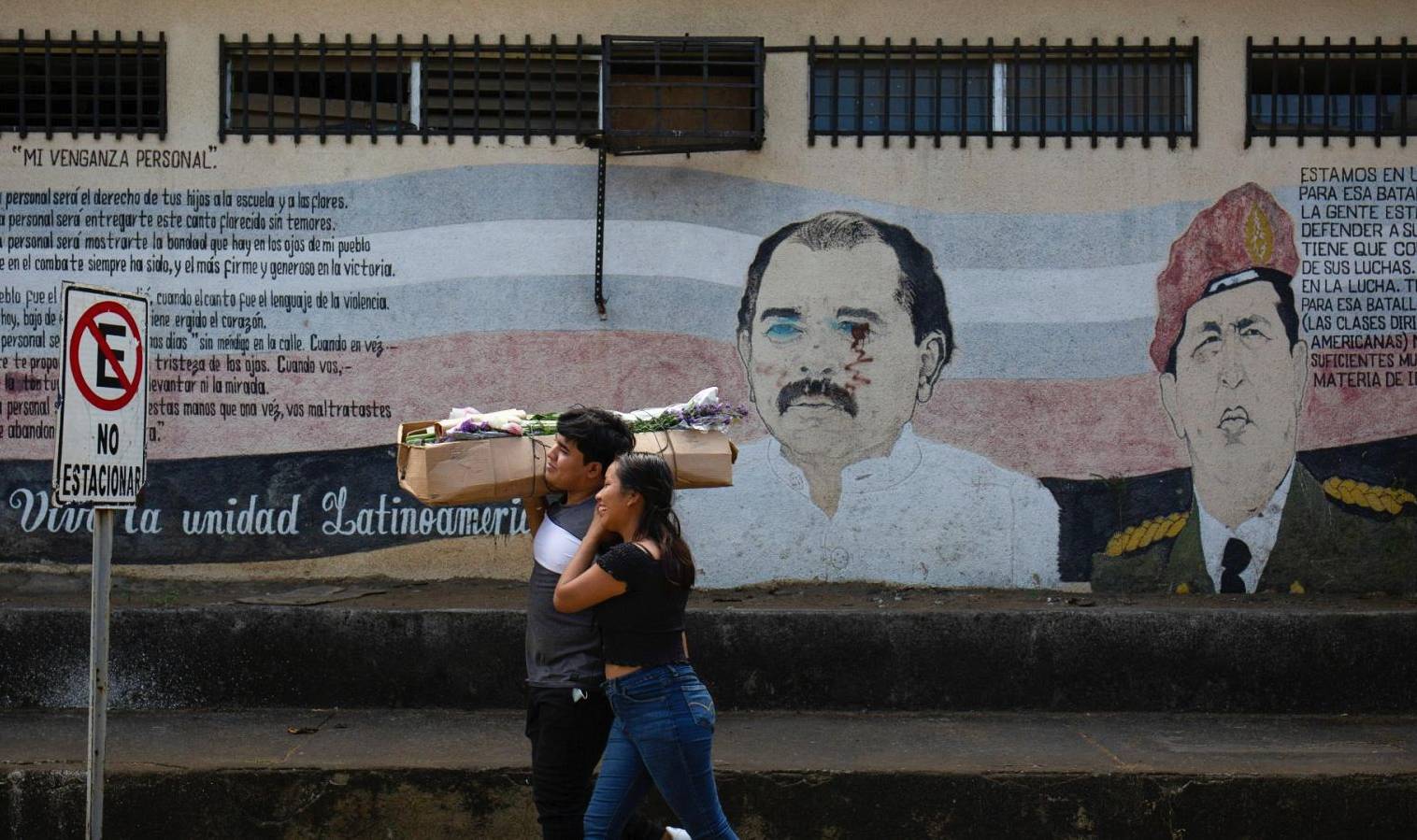
Over the past several years, Nicaragua has ceased to be—even as a small player within Central America’s political architecture—and has instead become a geopolitical problem managed from the outside. Not because of its strategic weight, but because of its persistent inability to integrate into the minimum rules of the contemporary international system. The Sandinista regime’s foreign policy no longer pursues national objectives, nor even development or economic integration goals. It is designed for a much narrower purpose: ensuring the regime’s political survival.
This shift has profound consequences. In the new hemispheric geopolitical context, marked by the reconfiguration of relations between the United States and Latin America, technological competition with China, and the return of security as a central organizing principle, Nicaragua increasingly appears as a void. It does not participate in discussions on supply chains, regional security, orderly migration, energy transition, or democratic cooperation. Its absence generates little diplomatic tension because the country has ceased to be relevant to strategic decision-making.

The regime has confused sovereignty with permanent confrontation. Under the banner of a worn-out anti-imperialist rhetoric, it has progressively dismantled the relationships that once allowed Nicaragua to maintain room for international maneuver. Its withdrawal from regional organizations, disregard for multilateralism, and closure of traditional diplomatic channels do not constitute a bold foreign policy. Rather, they reflect a defensive strategy of self-imposed isolation. The result is a country politically dependent on a handful of authoritarian allies without receiving, in return, substantial investment, technological transfer, or long-term economic integration.
In geopolitics, small states survive by being predictable. Nicaragua has become unpredictable. Not because of strategic audacity, but because of the arbitrariness of the power that governs it. For major global actors, such unpredictability carries a cost: investment is avoided, dialogue is reduced, and engagement is limited to what is strictly necessary. The country thus becomes a file to be managed rather than a partner for dialogue.
This phenomenon becomes even clearer when viewed against the regional backdrop. Central America, despite all its institutional fragilities, is moving—unevenly—toward new forms of economic and political integration. Even governments facing severe internal challenges understand that remaining outside cooperation and trade networks means mortgaging the future. Nicaragua, by contrast, appears to have embraced a geopolitics of static resistance. It builds no strategic alliances, diversifies no relationships, and projects no clear vision for international integration.
Its alignment with Russia, China, or Iran does not stem from a development strategy or a project of structural autonomy. It is a transactional, short-term alignment centered on political protection and symbolic cooperation. Within this framework, Nicaragua is not a strategic partner but a secondary piece. When global priorities shift, secondary pieces can be discarded without consequence.
The deeper problem is that this isolation is not automatically reversible. Even in a scenario of democratic transition, the damage has already been done. International credibility erodes far more quickly than it can be rebuilt. Any future government will inherit not only a profound institutional crisis but also a dismantled foreign policy, lacking robust diplomatic networks, accumulated trust, and a reputation unavoidably associated with systematic human rights violations.
There is also a dimension that is rarely discussed: strategic irrelevance reduces international incentives to pressure the regime. Countries that matter are those whose collapse generates regional instability. Nicaragua’s tragedy, devastating in human terms, no longer alters the hemispheric balance of power. That structural indifference—not an external conspiracy—is one of the regime’s greatest policy failures.
From the Sandinista perspective, isolation is portrayed as a form of dignity. From a geopolitical perspective, it is a deferred defeat. States do not disappear only through external intervention; they also fade when they voluntarily disconnect themselves from the political, economic, and normative flows that define their historical era.
Nicaragua is not trapped between great powers. It is trapped within an obsolete narrative that confuses ideological loyalty with strategy and resistance with stagnation. While the region redefines its place in a more fragmented and competitive world, the country remains motionless, defending a narrative that no longer convinces even many of its former allies.
Escaping this situation will require far more than elections or institutional reforms. It will demand the reconstruction of a foreign policy based on predictability, openness, and cooperation—one capable of restoring Nicaragua to a modest but meaningful place within the international system. Until then, the country will continue to exist geographically while remaining absent from the board where the region’s future is being decided.
Machine translation, proofread by Ricardo Aceves.
Autor

President of Ipades, trained in Administration and Political Science from the University of Costa Rica. Researcher and strategist in democratic governance and human rights, with international experience and youth leadership in public advocacy and regional institutional strengthening.