Against an increasingly uncertain international backdrop, Latin America once again faces the challenge of achieving growth without losing momentum. The report Latin America and the Caribbean Economic Update: Revisiting Industrial Policy – Strategic Options for Today, published by the World Bank in April of this year, projects that the region will grow by just 2.1% in 2026, down from the previously estimated 2.4%. More than a simple economic forecast, the report warns of the impact of geopolitical tensions and makes clear that the region is confronting not only a growth problem but also the urgent need to redefine its productive strategies in an increasingly competitive and uncertain world. The underlying question is whether Latin American countries are prepared to meet this challenge or whether, once again, they will arrive too late to a transformation that is already underway.
To international uncertainty, the armed conflict in the Middle East, the war in Iran, and the structural weaknesses that afflict the region must be added its vulnerability to external shocks stemming from its role as a supplier of primary commodities, its dependence on markets outside the region, and the persistent tariff uncertainty imposed by the U.S. government. Even so, Latin America and the Caribbean continue to post lagging aggregate performance compared with other emerging regions such as South Asia (6%), East Asia and the Pacific (4%), and Sub-Saharan Africa (4%).

Those that are growing
In this context, Argentina stands out, with projected growth of 3.6% this year, driven by the implementation of fiscal policies focused on reducing public spending, labor market flexibility, economic deregulation, privatization, and state reform. Nevertheless, Argentina continues to suffer from extremely high inflation, the loss of around 320,000 jobs, the closure of domestic companies, and a regressive income distribution that has led to a deterioration in living conditions for the population.
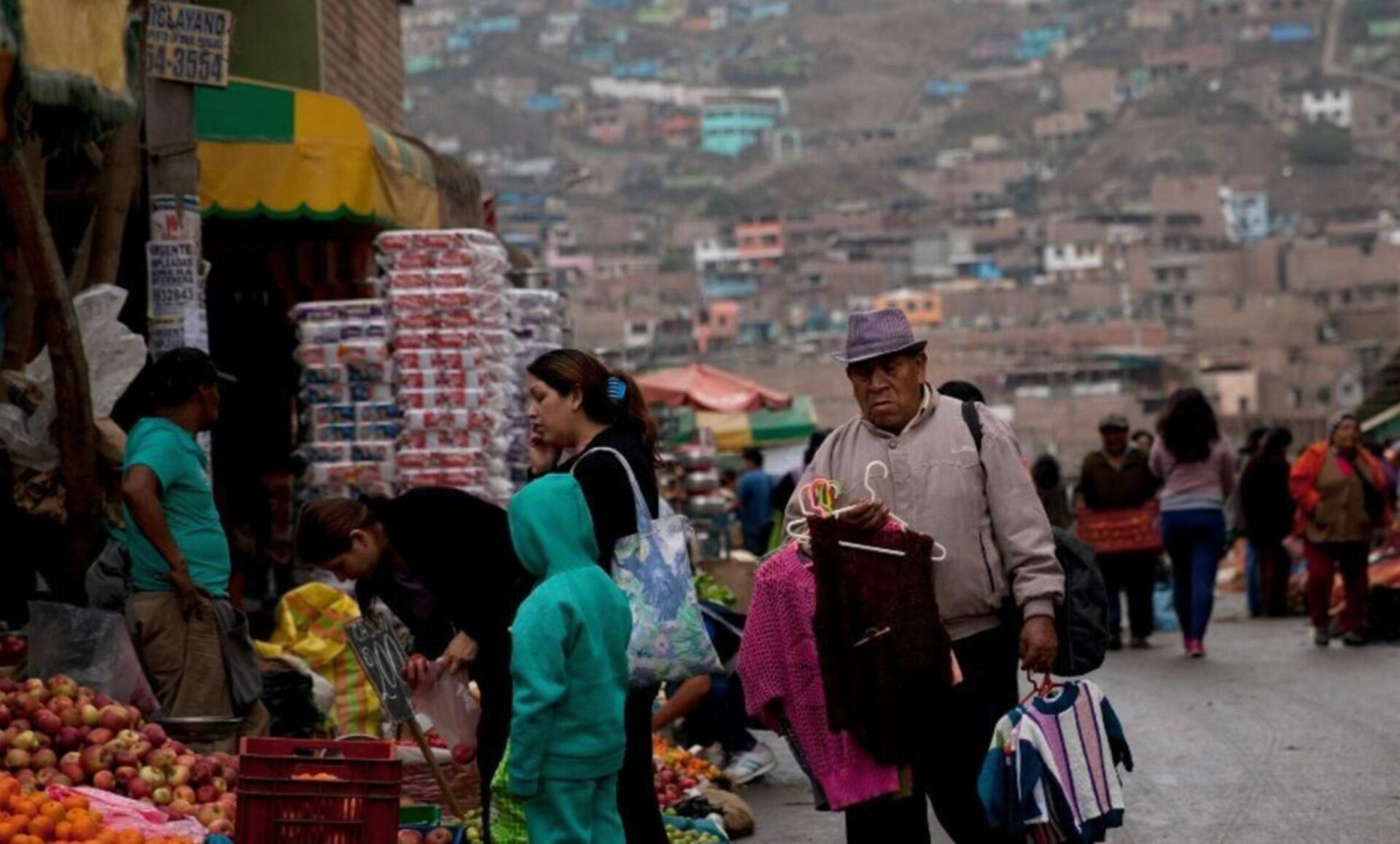
Meanwhile, Paraguay is expected to grow above the regional average (4.4%), a performance attributed to agricultural exports—mainly destined for Brazil and Argentina—as well as expanding electricity generation and macroeconomic stability. According to the World Bank (WB), Chile and Peru are also expected to outperform the regional average, posting what it describes as “moderate economic performance,” with growth rates of 2.4% and 2.7%, respectively. Chile’s growth is attributed to higher investment and private consumption, together with rising real wages and lower inflation. Peru, by contrast, while praised for its GDP performance, presents a stark contrast with its social economy and the advance of poverty in a country where the richest 1% controls 47% of the nation’s wealth. The country is experiencing a profound political crisis and a devalued “democracy.”
In Guyana, major discoveries of “high-quality” oil and gas reserves have fueled rapid growth, with the economy projected to expand by 16.3% in 2026 after growing 43.8% in 2024. Suriname’s projected growth of 4% is likewise attributed to its natural resources, particularly oil and gold.
Those that are slowing down
By contrast, Mexico and Brazil are experiencing slower economic growth due to restrictive financial conditions, limited fiscal space, and uncertainty surrounding trade policy. According to World Bank data, Brazil is projected to grow by 1.6%, while Mexico is expected to grow by 1.3% in a 2026 marked by expectations surrounding the review of the United States–Mexico–Canada Agreement (USMCA) and pressure from the U.S. government.
However, the government of President Claudia Sheinbaum has implemented a robust social policy aimed at reducing poverty, backed by a historic budget of 836 billion pesos and social programs benefiting more than 30 million families. Likewise, public investment has played a vital role in generating employment, reviving domestic economic activity, and sustaining the dynamism of foreign direct investment.
In the Caribbean, Cuba faces a truly alarming outlook, with a sharp cumulative economic contraction (-15%) and declines in its main economic and social indicators, alongside high inflation, all of which have severely undermined purchasing power and the quality of life of the Cuban people, already greatly deteriorated. Tourism, a strategic sector, attracted only 1.8 million visitors, compared with 4.6 million arrivals in 2017. The country’s structural energy crisis, which has resulted in frequent and prolonged power outages, has worsened due to the tightening of the economic and energy embargo imposed by the United States.
In addition, Trinidad and Tobago is expected to grow by only 0.7%, Haiti by 0.6% amid a worsening food crisis and deteriorating access to basic services, while Jamaica, after being struck by a devastating hurricane, is projected to contract by 1.0%.
According to the World Bank, the standout performers in Central America are Costa Rica (3.6%), El Salvador (3.2%), Guatemala (3.7%), and Honduras (3.4%), which are considered dynamic economies thanks to remittances, exports (primarily services), and integration into regional value chains.
Beyond the figures presented in the World Bank’s report, however, the region is experiencing the effects of the structural crisis of the global capitalist order. This is an economic crisis compounded by food insecurity, climate change, and the energy crisis. The region is also witnessing an offensive by capital against labor, alongside the rapid expansion of the far right, whose objective is to further reinforce the subordination of Latin American economies to transnational capital.
Autor

PhD in Political Economy of Development, Benemérita Universidad Autónoma de Puebla (México). Member of the National System of Researchers of the National Council of Science and Technology (CONACYT).