In light of recent developments in Venezuela, a false dilemma has emerged: it seems as though democrats must choose between the Chavista dictatorship or Washington’s imperialism. Clearly, this is not a choice that needs to be made. Both types of usurpers of the legitimate, sovereign democratic will can—and must—be condemned.
Maduro has embodied a dictatorship that carried out blatant fraud in Venezuela’s most recent elections, usurping the political power that rightfully belonged to the winner of the vote, Edmundo González. In doing so, his became an illegitimate government, unrecognized by the majority of the world’s democracies.

Once a government becomes illegitimate, the possibility of using force to replace it is opened. With the development of humanitarian law, the application of the responsibility to protect—held by populations subjected by force to a dictatorial regime—has gained traction. At both the global and hemispheric levels, it is legitimate to intervene in a country whose population is suffering illegal repression. However, such intervention requires strict conditions. On the one hand, the gravity of the situation must be clearly demonstrated; on the other, intervention cannot be carried out unilaterally by another country.
Both in terms of diagnosis and execution, it is internationally recognized organizations that, at the inter-American and global levels, have the authority to act. At the hemispheric level, the OAS has political and legal instruments such as the Inter-American Democratic Charter, which establishes measures to that effect (Art. 20). However, this collective instrument currently faces an objective difficulty: the Trump administration’s refusal to recognize it, despite its status as an international mandate grounded in shared norms.
At the global level, the authority to intervene in an internal conflict lies with the United Nations, either directly or through a coalition operating under UN auspices.
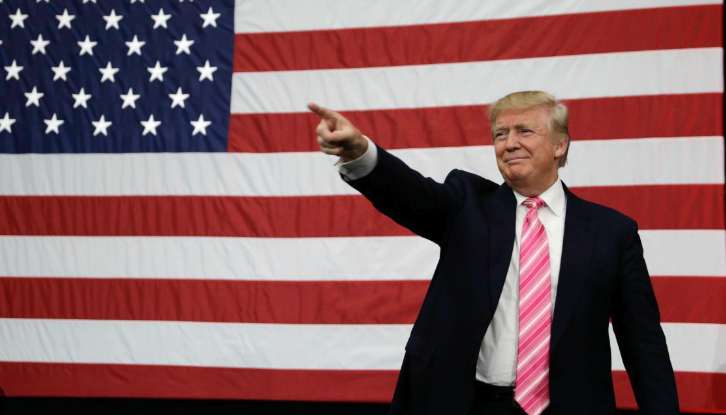
The unilateral military operation ordered by President Trump, which included the capture of Nicolás Maduro, entirely lacks legitimate authority. It therefore constitutes a usurpation of Venezuela’s sovereign power. As a basic principle of law dictates, the commission of one crime neither compensates for nor justifies the perpetration of another.
We must now ask what the immediate response should be to the accomplished fact of Maduro’s capture, which has had a powerful impact on the Venezuelan crisis. First, there seems to be little doubt that the commando operation benefited from internal support, at least in the realm of intelligence. However, it is still unclear whether this internal support is broad enough to indicate a deep rupture within the regime. To assess this, it would be essential to know the current state of the Venezuelan armed forces. It is obvious that they were unable to prevent the kidnapping of their commander-in-chief. But this fact should not be overstated as evidence of a mass defection within the military ranks in favor of maintaining the regime.
Be that as it may, from a democratic perspective there is only one legitimate demand: a rapid transition toward the establishment of a legitimate and sovereign government—either through the restoration to power of the winner of the last elections or through an agreement to swiftly convene new elections to constitute legitimate authorities.
This necessarily implies a categorical rejection of the proposals regarding the neocolonial regime that Donald Trump seeks to impose on Venezuela. The United States has no right whatsoever to place the country under tutelage while a transition process toward an elected government is negotiated—let alone to decree that U.S. oil companies should rebuild and modernize Venezuela’s oil infrastructure.
These proposals are so crude that they can hardly be accepted by Venezuela’s current leadership. They allow for no orderly or peaceful solution. It is therefore logical that Vice President Delcy Rodríguez was forced to retract the kind words she had exchanged with Secretary of State Marco Rubio in the midst of the U.S. military attack.
It is possible that Chavismo still retains some capacity for resistance and that the process unfolds more slowly than Washington anticipates. Trump has stated that a second intervention in Venezuela is planned should this occur. But a second intervention, in the form of an invasion, could lead to a considerably bloodier confrontation.
In any case, the traumatic events triggered by the U.S. attack on Venezuela will not only have short-term consequences, but also medium- and long-term ones. The return to the use of force by the United States could provoke a resurgence of anti-imperialist violence in a region that had managed to overcome that tendency.
*Machine translation, proofread by Ricardo Aceves.
Autor

Enrique Gomáriz Moraga has been researcher at FLACSO in Chile and other countries in the region. He was a consultant for international agencies (UNDP, IDRC, IDB). He studied Political Sociology at the Univ. of Leeds (England) wit R. Miliband.