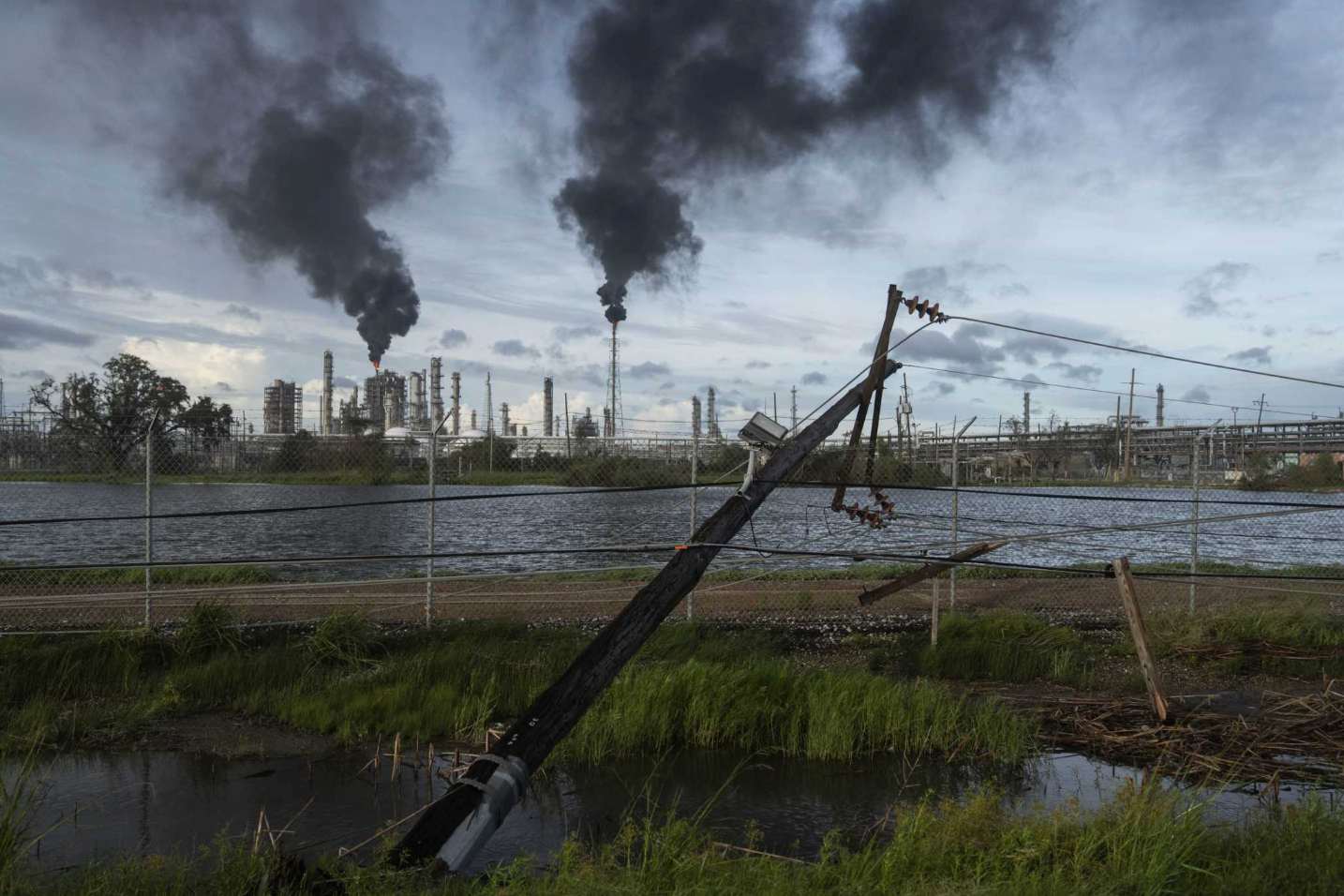
One of the most controversial points of the meetings that bring together the international community at the recently concluded climate conference—the Conference of the Parties (COP)—centers on the discussion about the need to leave oil and other fossil fuels behind and to move forward with reducing greenhouse gas emissions. Even though the decisive role of fossil fuels in global warming has been scientifically proven, numerous delegations continue to block any draft declaration that would mark the end of the oil era.
This type of initiative is not new. Let us recall that the issue, although absent from the 2015 Paris Agreement, was timidly addressed in Dubai (COP28). However, the need to begin leaving oil behind has started to be driven by various initiatives that have emerged over recent years: bans, moratoria, and other proposals seeking to end the exploitation of fossil fuels. Some of these proposals include the “Leave It in the Ground” collective (LINGO), the “Beyond Oil and Gas Alliance” (BOGA), and the proposal to move toward a “Non-Proliferation Treaty” regarding oil exploitation.

The remaining carbon budget to keep global warming below 1.5°C is 130 gigatonnes (Gt, billions of tonnes) of CO₂, a figure that is vastly exceeded by the various production projects currently underway—the so-called “carbon bombs.” According to data compiled by LINGO, if these new projects are carried out, emissions would reach 1,400 Gt of CO₂, exposing the planet to a true climate collapse. Meanwhile, the industry continues to propose capture and storage alternatives and other technologies of dubious reputation, all in order to carry on with business as usual.
The continuous natural disasters show that the problem is already upon us. Catastrophes impose heavy costs while the number of fatalities increases year after year. This situation is beginning to put pressure on governments, both fiscally (investments in adaptation, reconstruction costs) and in the need for long-term mitigation policies. Added to this are the risks associated with assets subject to loss of value as the transition accelerates. Indeed, to reduce risks the transition must advance, but this implies increasing the likelihood of significant asset losses for the oil industry and related sectors.
During COP30, Colombia launched the Belém Initiative, an initiative that calls for “working collectively toward a just, orderly, and equitable transition to abandon fossil fuels, aligned with pathways consistent with limiting the global temperature increase to 1.5°C.” At the summit, 88 countries decided to join in advancing what had been agreed in Dubai. Although important, this proposal was challenged by the delegations of Saudi Arabia and India, a stance that would receive the support of several other producing countries.
Added to this was the lobbying of the oil industry, which, in record numbers—more than 1,600 representatives—participated in the event, in contrast to the 2,500 Indigenous people who came to the COP and were barred from access to the deliberations. Financiers also stood out, promoting carbon markets—promises of transformation that ultimately sidestep solutions while increasing investors’ profitability. For environmental activists and non-governmental organizations, the city of Belém witnessed yet another farce; for the academic community, a COP disconnected from the reality of the planet.
In addition to joining the call for a roadmap from island states and other non-producing countries, several producing countries such as Colombia, the United Kingdom, and Nigeria also signed on. And despite the pressure exerted by the oil lobby, this collective raised the importance of including the issue in the final declaration (the much-discussed Muritâo decision), which ultimately did not happen. No transition or phase-out roadmap was agreed upon. The final agreement also makes no mention of deforestation, despite the various initiatives presented and the financing proposal introduced by the host country. The Belém meeting was meant to be “the COP of truth,” “the COP of the people,” but reality once again shows the inability to denounce the obvious, as well as the prevalence of the oil lobby.
COP30 leads us into despair, yet it also compels us to think about alternatives. One of them is the announcement by Colombia and the Netherlands to hold the first International Conference for a Just Transition and to leave fossil fuels behind, to be held in April in Santa Marta, Colombia. Another positive step could be the decision by the parties to introduce the issue of just transition into the 64 sessions of the UNFCCC subsidiary bodies to be held in June 2026, in order to operationalize a mechanism to be considered at the next COP31, to take place in Turkey.
Many others are also beginning to emphasize the need to recover the scientific spirit, for Conferences of the Parties to focus on resolving the urgency posed by our approach to the limits of humanity. One of the main measures to achieve this is to block access to the oil lobby, which, through its lies and delays, has been preventing any possibility of progress.
Lies and deceptions perhaps teach us to set aside the naïve view that many still hold, believing that the oil industry will become the architect of its own burial. Leaving fossil fuels behind is a political decision that must be adopted by governments. To achieve this, pressure from civil society is decisive.
Autor

Associate Researcher at the Center for the Study of State and Society - CEDES (Buenos Aires). Author of "Latin America Global Insertion, Energy Transition, and Sustainable Development", Cambridge University Press, 2020.