Dietary guidelines are not universal recipes, but political and scientific responses to concrete realities. When they are extrapolated to other countries without critical mediation, they stop guiding public health and begin to reproduce inequalities, cultural silences, and epidemiological errors. Nutrition, without territory, loses its meaning.
The Dietary Guidelines for Americans 2025–2030 are presented as a historic turning point. Their central message is clear: return to “real food” and drastically reduce the consumption of ultra-processed foods. The diagnosis underpinning them is severe and honest. The United States faces an epidemic of chronic diseases associated with its prevailing dietary pattern.
The document acknowledges that decades of nutrition policies were based on incomplete evidence. Many official messages prioritized isolated nutrients and neglected the cumulative effect of industrial food systems. The new narrative seeks to correct that course.
Up to this point, the proposal seems reasonable—indeed, necessary. The problem arises when these guidelines begin to circulate as an implicit model in other regions. There, the evidence is decontextualized. And nutrition becomes colonial.
A guide coherent with its own crisis
The U.S. guidelines respond to a very specific reality: a country with high caloric availability, massive consumption of ultra-processed foods, and a highly concentrated food industry. More than seventy percent of adults live with overweight or obesity. Prediabetes affects a growing proportion of adolescents.
In that context, prioritizing protein, reducing added sugars, and limiting chemical additives is a logical strategy. It is also reasonable to revisit the role of industrial oils and refined fats, whose consumption soared with the industrialization of the food system.
The scientific report underpinning the guidelines also acknowledges past methodological limitations. Many associations between diet and disease came from observational studies, vulnerable to bias and metabolic confounding. This recognition is an important advance.
But that advance remains internal. It is designed to correct errors within the U.S. system itself, not to be exported without adjustment to radically different realities. The coherence of a guideline depends on its territory. Outside of it, it can become a distortion.
When extrapolation erases reality
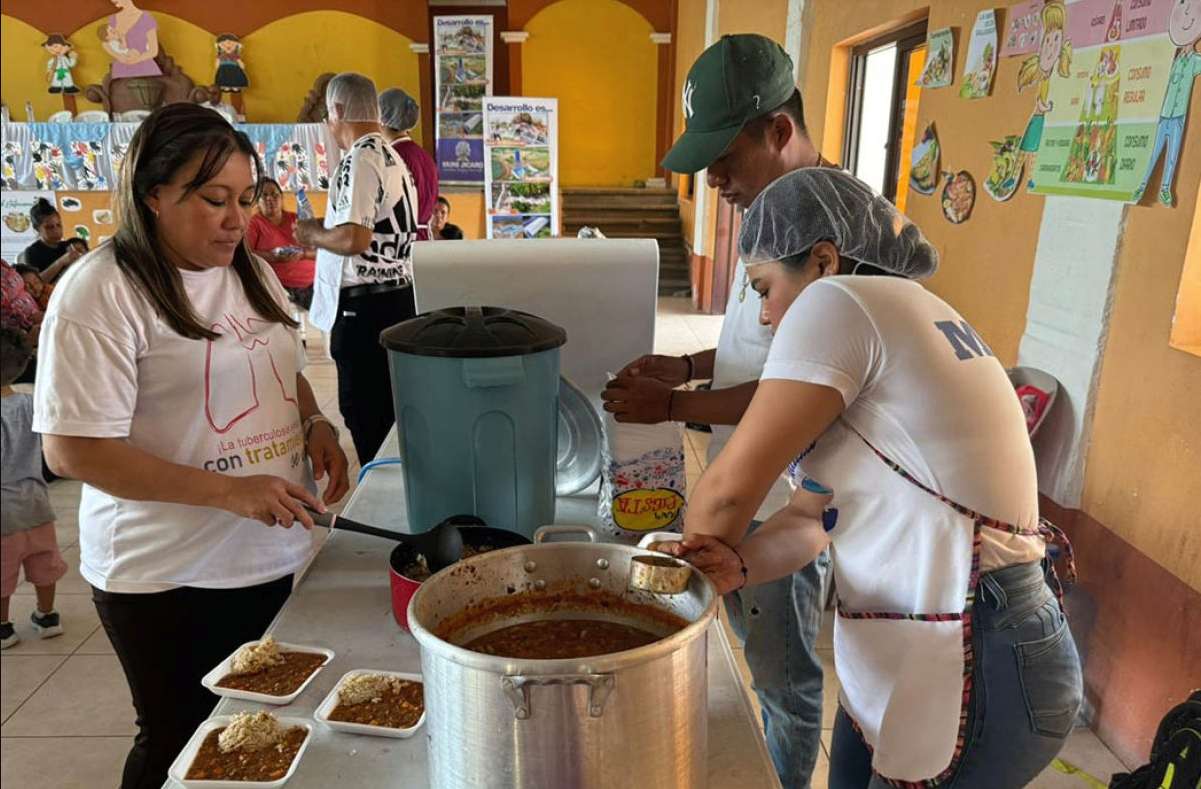
Latin America does not face the same crisis as the United States. In many countries, chronic childhood undernutrition, anemia, food insecurity, and obesity coexist. It is a double or triple burden. There is no homogeneous epidemic of caloric excess.
Extrapolating guidelines designed to reduce abundance can render structural deficiencies invisible. It can displace local foods, underestimate cultural practices, and reinforce commercial dependencies. This is not a technical problem; it is a political one. Nutrition does not occur in a vacuum. It occurs in bodies shaped by history, poverty, racism, and inequality. It occurs in territories with their own biodiversity, local agricultural systems, and culinary memories that do not fit into an imported pyramid.
From a decolonial perspective, knowledge is not neutral. When imposed without dialogue, it reproduces hierarchies. In the field of nutrition, this translates into the delegitimization of local knowledge and the homogenization of diets. Evidence without context can cause harm—even when presented as science.
References yes, copies no
Recognizing the limits of extrapolation does not mean rejecting global learning. The U.S. guidelines are a technical reference. So too are those of Brazil and Mexico, widely recognized for their cultural and social approach.
Brazil chose to build guidelines centered on food, not nutrients. It defended cooking, the act of eating, and the social dimension of food. Mexico integrated its epidemiological profile and its historical relationship with ultra-processed foods.
These countries did not copy external models. They engaged in dialogue with global evidence and translated it to their reality. That is the difference between reference and replica.
Dietary guidelines should inspire, not impose. They should open questions, not close debates. When replicated without adaptation, they lose social legitimacy and public health effectiveness. Healthy eating is not exported in documents. It is built within each country, with its people and its territory.
Nutrition, sovereignty, and the future
Dietary guidelines are tools of power. They define what is produced, what is consumed, and what is considered healthy. That is why they must be developed with care, participation, and historical awareness.
The U.S. report itself acknowledges that research must reflect “how people actually eat.” Applied to our region, that phrase is a direct challenge: research from our reality, regulate from our bodies, decide from our territory.
Latin America needs sovereign dietary guidelines—based on evidence, yes, but also on culture, biodiversity, and social justice. Guidelines that confront malnutrition in all its forms, not only excess.
Nutritional science does not lose rigor when it is territorialized; it gains it. Because it stops speaking in the abstract and begins responding to concrete lives. Guidelines from other countries can help orient the path, but they should not chart it. Food, like health, does not allow colonial shortcuts. And the nutrition of the future will not be universal. It will be situated, diverse, and deeply political.
Autor

Nutricionista por PUCE y Salubrista Público por USFQ, diploma en Políticas Públicas por FLACSO. Ha coordinado proyectos de salud reconocidos por OPS y trabajado como consultor internacional. Actualmente, es docente en PUCE, enfocado en nutrición comunitaria y salud pública.