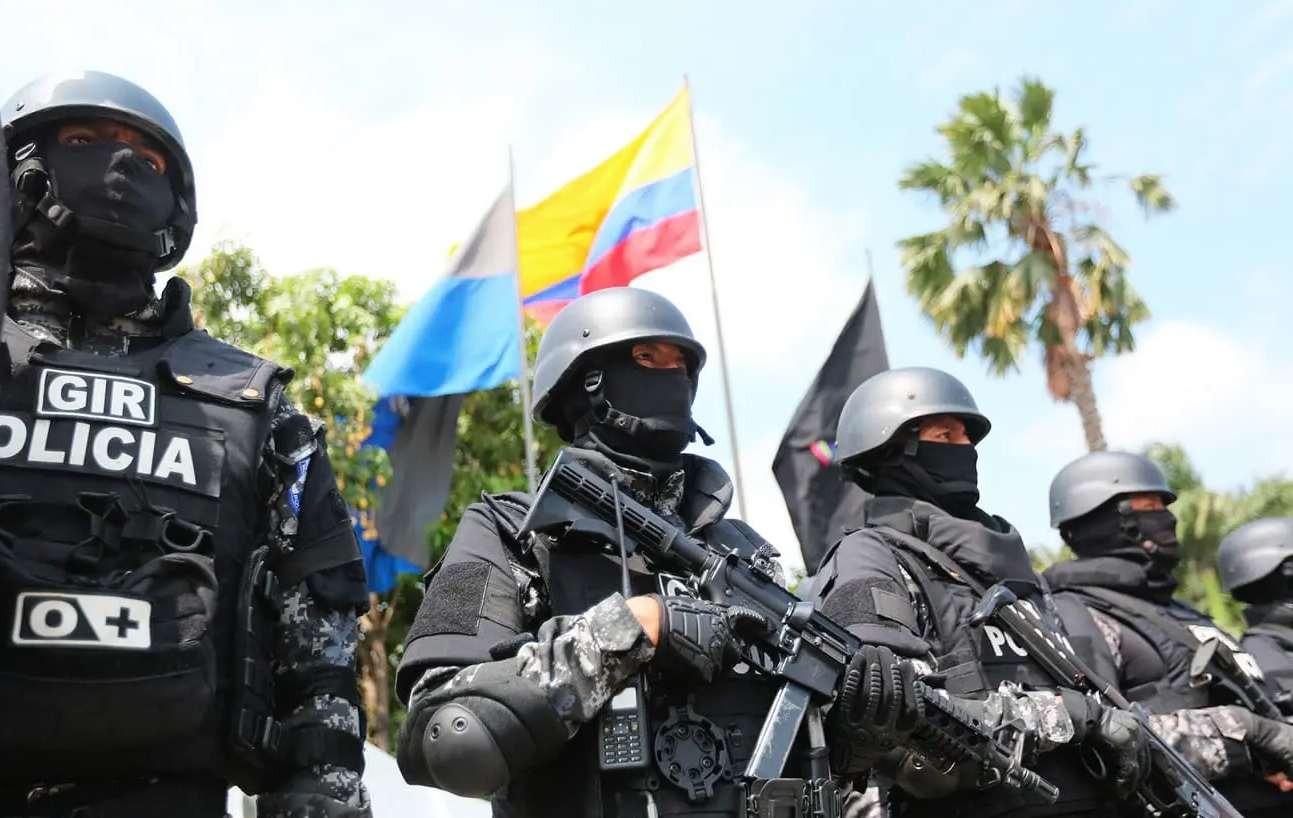
The political outlook in Ecuador for 2026 mirrors the context of 2025. The population’s top priority remains eliminating insecurity, as the previous year was the most violent in history: approximately 50 deaths per 100,000 inhabitants were recorded in the highest-risk areas, specifically the coastal provinces housing ports used for the stockpiling and distribution of drugs heading to Europe and the U.S., especially cocaine. Economy and unemployment rank as the second and third most pressing concerns, followed by health due to the crisis within the sanitary system.
The government of Daniel Noboa arrives weakened after the electoral defeat suffered in the November popular consultation (referendum). This vote proposed a drastic shift in governance, primarily driven by the interest in establishing foreign military bases to combat international organized crime, and the possibility of a new Constitution with a revamped institutional architecture and new free-market economic rules. The majority of the people said “no,” forcing him to rethink his strategy—which, notably, has not yet been communicated. Furthermore, there are no signs of significant changes in his cabinet; he continues to govern with his initial inner circle without seeing improvements in the most complex indicators.
The results of the last election proved that the President’s high approval rating did not translate into ballot-box support for a change of course. After two years in office, Noboa is playing a difficult “second half.” 2026 is an electoral campaign year, as the election of mayors and prefects approaches. This reconfigures political forces at the local and regional levels, especially in major cities like Guayaquil, Quito, and Cuenca, which are currently governed by the opposition. So far, the president lacks local authorities, as his party is recently formed, which will test his organizational muscle.
Regarding the relationship between the Executive and the National Assembly, it is currently under trial. Although the government holds an absolute majority, the behavior of its allies could shift as elections approach; additionally, the legislature’s agenda remains unclear. In terms of relations with other branches of the State, there are questions from the opposition and public opinion regarding his affinity with controversial authorities in the Judicial Council and the Council for Public Participation and Social Control, who face corruption allegations. In this scenario, if the President does not distance himself from these delegitimized authorities, his government could suffer further attrition.
There is also a highly complex internal front: the health and social security portfolios. These sectors struggle with corruption, medicine shortages in hospitals, a lack of specialists, and a collapsed management model. This is compounded by a high turnover of ministers and senior officials, preventing any continuity for initiatives from the Executive’s own party members. Simultaneously, the government has failed to configure a social plan that coordinates care for the most vulnerable sectors, who mostly reside in the rural areas of the three regions: Coast, Sierra, and Amazon.
Following the strike by indigenous sectors in the northern highlands and the support they received from various left-wing collectives, there are no signs of the implementation of agreements between the government and leaders that could de-escalate tensions in the medium and long term. Over the last 6 years, Ecuador has suffered three highly explosive political shutdowns (2019, 2022, and 2025) that resulted in a breakdown of the social fabric.
Nevertheless, Noboa remains optimistic regarding the economy. Macroeconomic figures reveal a drastic reduction in country risk to 460 points (down from 2,016 points two years ago), and an increase in international reserves to USD 9.975 billion. He has kept inflation controlled at 2.1% and a basic monthly salary of USD 482 (an 11-dollar increase). However, a fiscal deficit of USD 5.312 billion persists, with no clear plan for how it will be covered. At the same time, he enjoys the support of the International Monetary Fund due to his decisions to eliminate fuel subsidies, propose bureaucratic cuts, and achieve a notable improvement in tax collection.
The President’s foreign policy deserves separate mention as a trail of pragmatism: alignment with the actions of Donald Trump, and the search for and expansion of trade allies in various countries—the latter also aimed at aiding Ecuador in security, justice reform, and intelligence. Relations with neighbors Colombia and Peru, essential for proximity, trade, and historical ties, have been maintained despite ideological differences with Gustavo Petro and the political instability of the latter. There are many tasks to resolve in an intense year of broad citizen demands.
*Machine translation, proofread by Ricardo Aceves
Autor

César Ulloa is a political scientist and communicator. His latest books are The Challenges of Democracy in the Region (2024) and Ecuador: Dialogue and Minimum Agreements (2023).