Global trade is undergoing a structural reconfiguration that is reshaping the geography of economic power. Rather than converging into a unified system, Latin America and the Caribbean (LAC) and Africa are being integrated through fragmented and divergent pathways. The result is an emerging architecture of partial connectivity, where regions interact without achieving systemic alignment.
Africa’s external engagement reflects increasing diversification. Traditional ties with Europe and North America remain significant but are no longer exclusive anchors. Instead, Africa is engaging a broader set of partners, including China, India, and, selectively Russia, Turkey, and the Gulf states. These actors occupy differentiated functional roles in Africa’s diversified external architecture. China dominates infrastructure finance, India is expanding in pharmaceuticals and digital services, while Gulf states and Turkey are strengthening positions in logistics, ports, and energy-related investments. This configuration does not reflect increasing autonomy, but rather a reconfiguration of external dependence on multiple partners.
LAC presents a different but equally fragmented configuration. Despite comparable demographic and productive potential, it remains deeply embedded in established North–South production systems centered on the United States and the European Union. At the same time, its engagement with Asia has expanded unevenly, with China emerging as the principal trading partner for several economies (particularly Brazil, Chile, and Peru), increasingly shaping regional commodity exports.
This growing economic interdependence is reinforcing China’s role in South America’s external trade structure and positioning LAC within overlapping and sometimes competing external economic spheres. These dynamics are reshaping commodity chains, infrastructure investment patterns, and geopolitical exposure in highly asymmetric ways across countries. Rather than strengthening regional cohesion, they reinforce internal divergence, as trade and investment strategies become increasingly nationally driven, while regional coordination mechanisms weaken. This trend is evident in Mercosur, where member states are pursuing distinct external strategies, including bilateral engagement with external partners, as illustrated by Uruguay’s pursuit of a Free Trade Agreement with China.
A central constraint in LAC-Africa relations is the assumption of structural complementarity. In reality, both regions occupy broadly similar peripheral positions in global production networks, specializing in upstream commodity exports with limited integration into higher-value segments. This produces a paradox: rather than natural partners, they often function as latent competitors within overlapping value chains, particularly in critical minerals and resource-intensive sectors linked to the energy transition.
This similarity is reinforced by limited downstream diversification. Without expansion into processing, manufacturing, services, and digital integration, South–South economic relations remain constrained by overlapping export structures concentrated in carbon-intensive commodities.
These dynamics are being intensified by climate and trade regulation. The European Union’s Carbon Border Adjustment Mechanism (CBAM) is increasing compliance costs for carbon-intensive exports such as steel, aluminium, and fertilisers. This accelerates pressure for industrial upgrading and low-carbon production across both regions. As a result, green transformation is becoming a requirement for competitiveness rather than a strategic option.
These regulatory pressures also highlight the growing importance of collective bargaining at the regional level. For both Africa and Latin America, the strategic challenge is no longer only adaptation to external standards, but the capacity to shape them collectively. In this context, regional frameworks such as the African Continental Free Trade Area (ACFTA) and Mercosur could, in principle, function as coordinated platforms for negotiating environmental, digital, and trade compliance standards with major external partners. By aligning regulatory positions and technical standards, these blocs could reduce the risk of individual countries being singled out in regulatory negotiations.
At the same time, both regions are embedded in global supply chains for critical minerals essential to the energy transition. However, value capture will depend on their ability to move into processing, certification, and green industrial ecosystems. Without coordination, the transition risks deepening divergence rather than enabling convergence.
These dynamics reflect a broader transformation of global trade architecture. The system is fragmenting into overlapping integration logics that pull countries in different strategic directions. Africa is actively diversifying its external relations across multiple geopolitical poles, multiplying partnerships but without achieving deep systemic integration. By contrast, LAC is caught in a growing tension between its historically entrenched North American and European anchors and its rapidly deepening economic interdependence with China. The result is a widening structural dissonance in which external alignment strategies increasingly weaken internal and regional coherence.
In both regions, these fragmentation patterns are further reinforced by financial and institutional constraints that operate as accelerators of disconnection. High currency volatility, elevated sovereign risk, and limited long-term financing continue to discourage cross-regional investment, preventing the emergence of private-sector integration champions. Efforts such as BRICS Pay reflect attempts to reshape settlement systems, but remain constrained by fragmentation, limited interoperability, and divergent geopolitical priorities.
Domestic political volatility adds another layer of instability. In Latin America, electoral cycles frequently reshape trade policy. In Africa, governance fragility and security disruptions interrupt key connectivity corridors. These factors weaken the durability of integration and underscore the importance of system-wide resilience.
Against this backdrop, LAC-Africa engagement requires a shift from declaratory cooperation to operational infrastructure. This includes South–South clearing mechanisms to reduce currency risk, risk insurance facilities to de-risk investment, digital regulatory sandboxes for fintech governance, and integrated green value chains linking critical minerals, processing, and clean energy systems. Without such mechanisms, both regions risk remaining structurally linked but functionally disconnected.
From Fragmented Anchors to Emerging Architecture
The global trade system is becoming simultaneously multipolar and fragmented. Both regions remain disconnected not due to lack of complementarity, but because of commodity competition, financial constraints, weak inter-regional linkages, and persistent historical asymmetries.
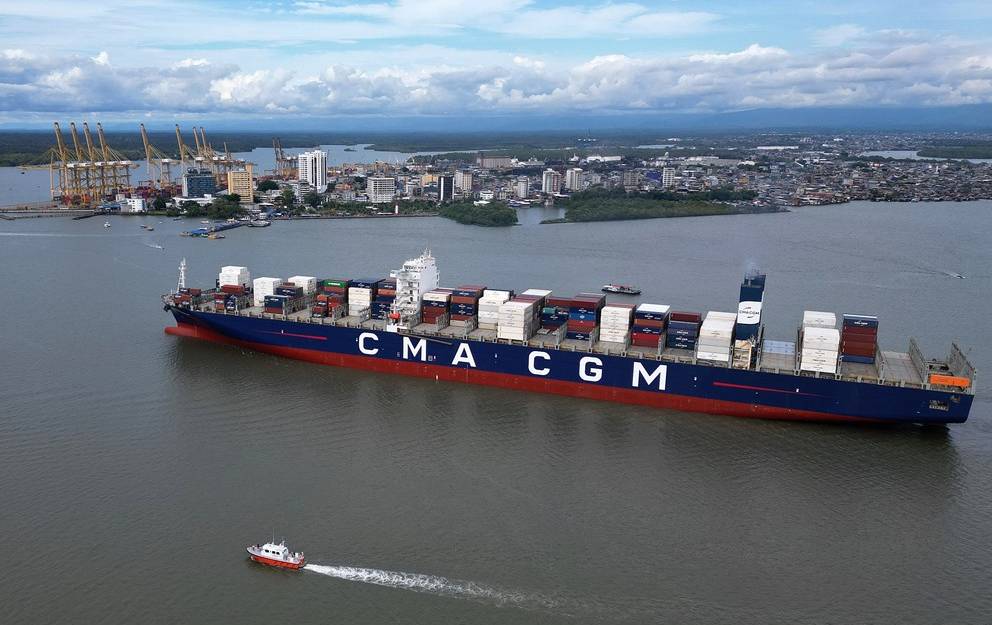
A parallel transformation is emerging through infrastructure-led connectivity. The Brazil–Africa logistics corridor developed by DP World reflects a new model of integration driven by logistics operators and infrastructure investors rather than states or formal trade blocs.
However, this represents functional connectivity without institutional coherence. While such corridors reduce distance and transaction costs, they do not resolve structural fragmentation in finance, regulation, or value-chain integration. More broadly, global trade is undergoing a risk-driven re-spatialisation, where geopolitical shocks and chokepoint vulnerabilities are pushing logistics actors to experiment with alternative South–South and inter-oceanic configurations. Trade geography is increasingly shaped by resilience as much as efficiency.
The key question is whether these emerging corridors can evolve from fragmented bridges into a coherent system. At present, they form the early scaffolding of a new architecture: expanding in scope, visible in form, but still institutionally incomplete.
Autor

Doctor in Jurisprudence by the University of Salerno. Executive director of Desiderio Consultants (Nairobi), senior specialist in customs and trade and senior associate of the Institute of Economic and Social Policy of the Horn of Africa (HESPI).