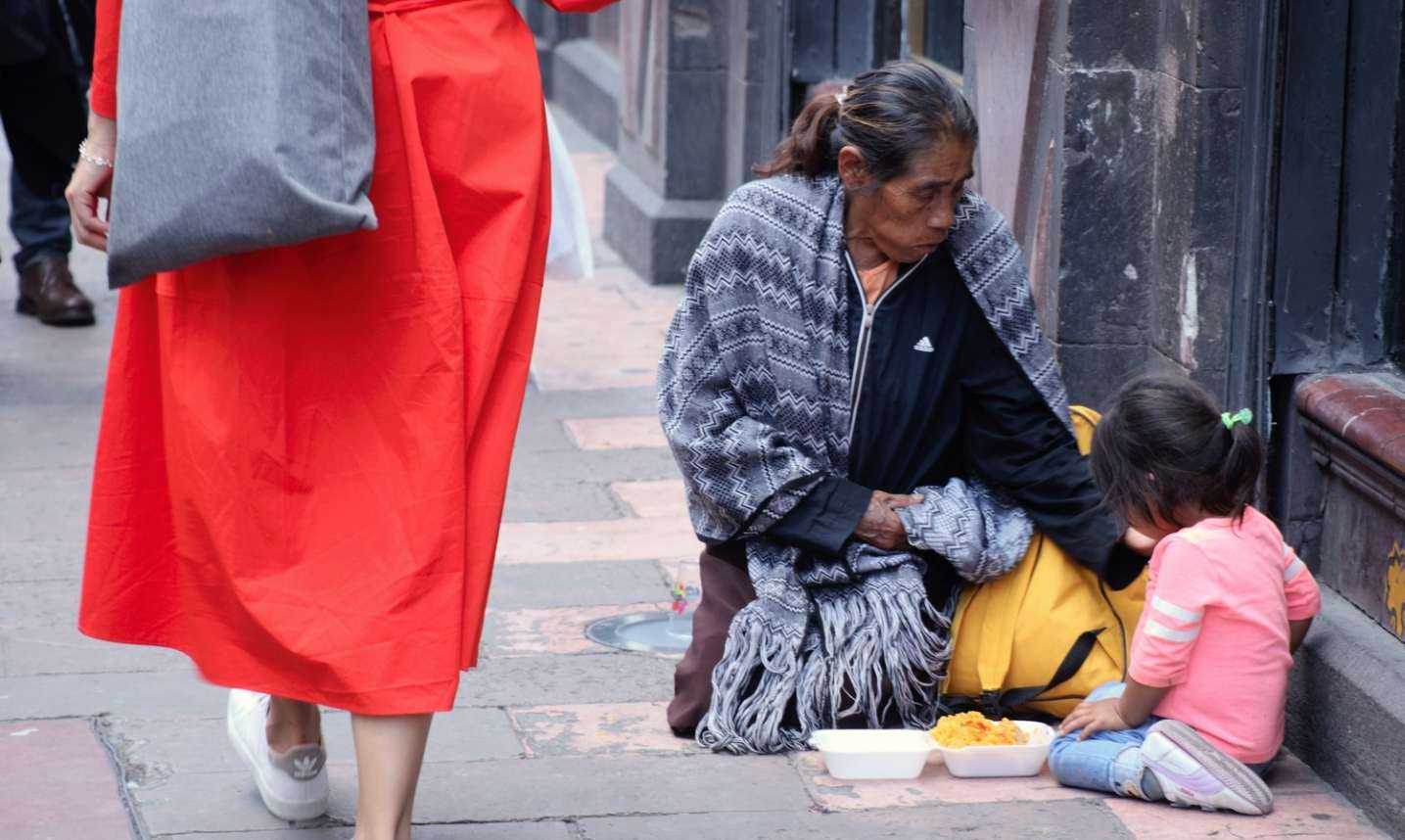
We live in an increasingly evident paradox. Never before has humanity produced so much wealth, knowledge, and technology, and never before has that abundance been so poorly distributed. While millions of people struggle daily to meet basic needs—food, housing, health care, or education—a progressively smaller group accumulates fortunes of a magnitude that is difficult to imagine. This growing inequality is not only a moral or economic issue: it is also a political and democratic problem that threatens social cohesion and the future of our societies.
Global inequality has reached historically high levels. As Branco Milanovic, one of the most influential voices in the study of inequality, has documented, this phenomenon reflects both the gap between countries and, increasingly, inequality within them. In many economies, recent growth has disproportionately benefited economic elites, while broad sectors of the population have seen their living conditions stagnate or even deteriorate. The result is a persistent global inequality that fuels social frustration.

The extreme concentration of wealth
One of the most troubling features of today’s inequality is the extraordinary concentration of wealth at the top. The recent Oxfam report, released in the context of the World Economic Forum in Davos, puts numbers to a reality we had already sensed. Since 2020, the combined wealth of billionaires has grown at a vertiginous pace, far outstripping the growth of the global economy. In simple terms: while most of the population was slowly recovering from the economic impact of the pandemic, the richest became even richer.
Latin America and the Caribbean offer a particularly extreme example of this phenomenon. Over the past decade—and especially in recent years—the region has recorded one of the largest increases in wealth concentration in the world. In a single year, the wealth of Latin American billionaires grew by nearly 39%, a pace that far exceeds the performance of national economies. This disconnect between the growth of great fortunes and the evolution of general well-being is no coincidence: it reflects economic and political powers that manipulate the system in their own favor.
Economists such as Thomas Piketty and Milanovic himself have been warning about this dynamic for years. In many countries, the richest 1% captures a disproportionate share of national income, and within that group, the top 0.1% concentrates most of it. The United States, Colombia, and Brazil show levels of concentration that are not only historically high but also troubling from an institutional standpoint. When such a small fraction of the population controls such a large share of resources, equality of opportunity becomes a fiction.
Economic inequality and political power
The concentration of wealth is not a phenomenon isolated from the political sphere. On the contrary: wealth and power tend to reinforce one another. Numerous studies show that high levels of economic inequality are associated with lower social cohesion, worse outcomes in education and health, lower social mobility, and less sustainable economic growth. However, the problem becomes even more serious when that inequality takes the form of an extreme concentration of wealth.
In these contexts, economic power easily translates into political power. Great fortunes influence the financing of parties, electoral campaigns, media outlets, and regulatory processes. The result is a capture of the state, in which the rules of the game are designed to protect and expand the interests of those who are already at the top. The Oxfam report is clear on this point: in Latin America, the concentration of wealth is closely linked to political and media control. It is no coincidence that a large share of these fortunes comes from strategic sectors such as energy, finance, or telecommunications, where public regulation is key.
Moreover, more than half of these great fortunes are inherited. This means that inequality is not only reproduced but also consolidated over time, undermining social mobility and the meritocratic principle often invoked to justify income differences. When economic position depends more on family background than on effort or talent, the promise of equal opportunity loses all credibility.
Weakened democracies and retreating middle classes
Comparative evidence suggests that societies with broad and solid middle classes tend to show better outcomes in terms of growth, political stability, and human development. The middle-class acts as a social anchor: it sustains domestic demand, invests in education, demands quality public services, and defends inclusive institutions. When it weakens, the social fabric begins to fragment.
The recent experience of numerous countries illustrates the risks of this fragmentation. From post-Soviet Russia to Trump’s United States, and across much of Latin America, the combination of high inequality and concentrated power has gone hand in hand with democratic deterioration. Polarization grows, trust in politics declines, and space opens for authoritarian leaderships or simplistic discourses that promise quick solutions to structural problems.
A false way out: less state, more privileges
Paradoxically, in the face of rising inequality, political projects advocating less regulation, lower taxes on the richest, and a weaker state have gained strength. These discourses, often wrapped in rhetoric about “freedom” or identity-based values, recycle old neoliberal prescriptions that have already demonstrated their limits: austerity, privatization, and cuts in social spending. The result is usually a further deterioration of public services and an additional transfer of power to economic elites.
This is not a solution to inequality but its deepening. A “freedom” understood as the absence of rules that mainly benefits those who already have the resources to influence, evade, or impose conditions. In that scenario, democracy is emptied of substance and becomes a mere formal procedure, incapable of guaranteeing effective rights for the majority.
Breaking the vicious circle
The extreme concentration of wealth and the concentration of political power feed one another in a vicious circle that threatens to drag down democratic institutions, freedom of the press, and even scientific autonomy. Breaking this dynamic requires bold political decisions: more progressive tax systems, an effective fight against tax evasion and avoidance, regulations that limit state capture, and sustained investment in education, health, and social protection.
This is not about punishing economic success, but about recognizing that a deeply unequal society is a more fragile, less free, and less democratic one. The true challenge of our time is not only to generate wealth, but to decide how it is distributed and for what purposes. Ultimately, the viability of our democracies and the possibility of truly inclusive development depend on it.
Autor

Profesor de la Univ. Autónoma de Barcelona. Doctor en Economía por la Univ. de Barcelona. Master en Desarrollo del Centro de Asuntos Internacionales de Barcelona (CIDOB). Especializado en econ. internacional y econ. urbana.