Although not new, anti-immigration rhetoric has gained prominence in electoral campaigns, legislative reforms and the so-called culture wars, especially since the rise of far-right parties and movements in recent years. In the United States, Europe and Latin America, anti-immigrant sentiment has been a catalyst for popular outrage. Through various narratives that seek to instrumentalize emotions and instill fear, immigration—especially that coming from the Global South—has been associated with economic crises, violence and social problems.
The spread of content that exposes or attacks immigrants, driven by digital platforms, has strengthened anti-immigration activism. Some of these activists act as influencers or maintain monetized accounts. Their content draws on conspiratorial narratives, such as the idea of a “reconquest” in the face of an alleged ethnic and cultural invasion.

There are also activists who use journalistic language to “report” on incidents involving immigrants, as well as ultraconservative movements that present themselves as pro-work, pro-housing or pro-security. Misinformation permeates this landscape, as in the case of the attack on an elderly man in Torre Pacheco, Spain, in July 2025, which triggered attacks against immigrants, especially Africans, and violent clashes known as “immigrant hunts.”
Within this context, a specific phenomenon stands out: individuals or groups of Latin American immigrants who support anti-immigration agendas and far-right movements. Portugal is illustrative. After the 2000s, the country began to be cited as a reference for more inclusive migration policies, but in 2025 it approved a new law restricting access to visas and family reunification and limiting job-search visas to highly qualified profiles, with direct effects on Brazilians, the largest foreign community in the country.
These legislative changes were supported by a significant portion of the Brazilian diaspora living in Portugal, who turned to social media to reproduce the government’s narratives and express their support for tightening the entry and residence rules for new immigrants. Chega, the far-right party that led the changes through an aggressive attack on migrant communities, includes Brazilians elected at both the local and national levels.
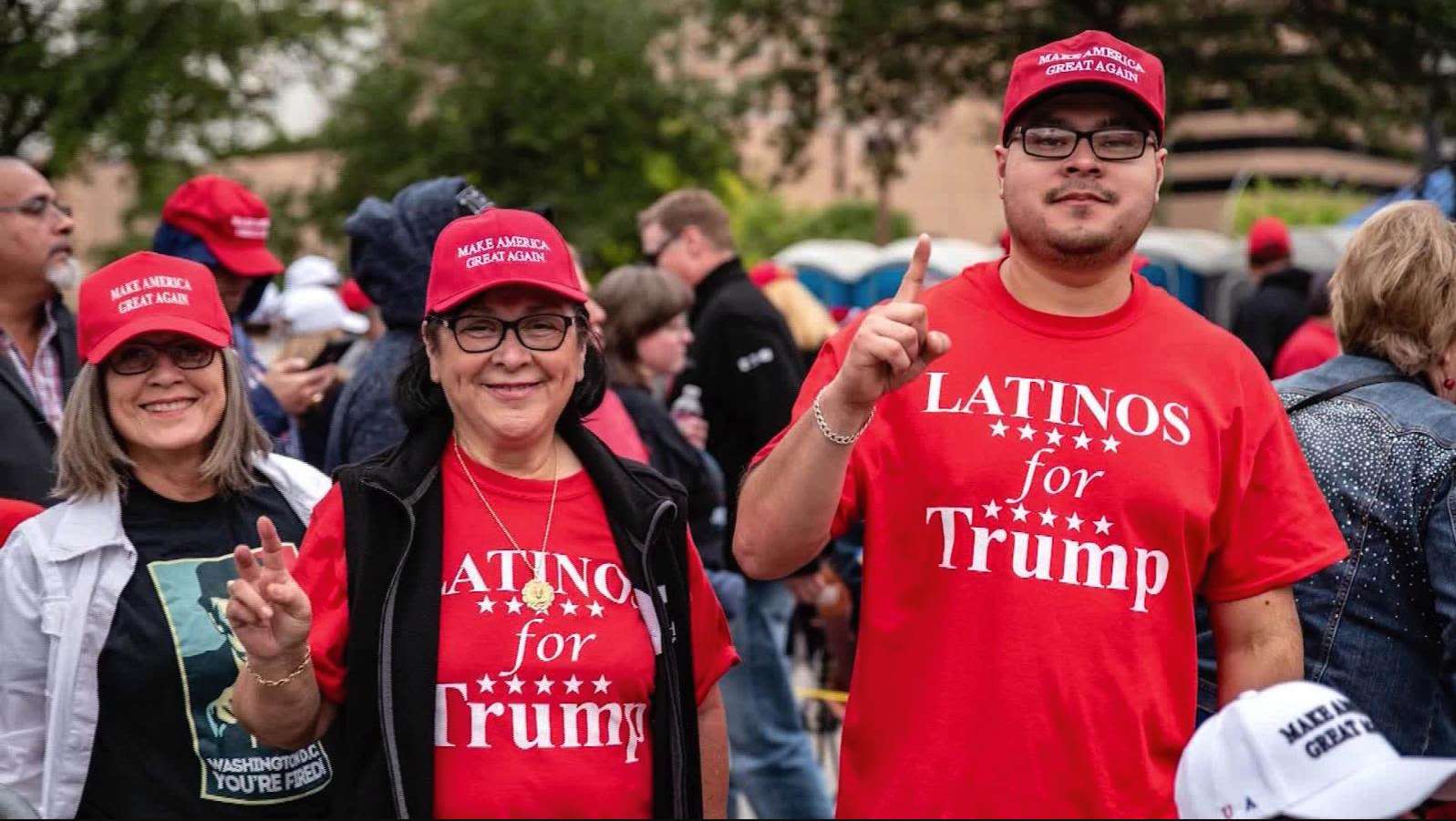
In the United States, segments of the Latin American electorate have supported Donald Trump’s anti-immigration policies, which include deportations, immigrant detentions and stricter border controls. In Chile, Venezuelan immigrants have expressed support for the far-right candidate José Antonio Kast, even though the politician based his presidential campaign on statements blaming Venezuelans for the rise in crime in the country, in addition to advocating proposals such as the “Border Shield,” a plan that provides planes for immigrants who wish to leave the country voluntarily. In all these cases, immigrants end up acting as legitimizers of exclusionary agendas, offering anti-immigration discourse an image that combines the experience of displacement with adherence to nationalist projects.
Why have these immigrants supported anti-immigration agendas?
The reasons are diverse, but the moral argument distinguishing between “good” and “bad” immigrants helps explain this support. In this framework, the “good migrant”—one considered deserving because they do not pose a risk to the host society—is presented as someone who entered the country legally or regularized their status, follows the rules and respects the laws, pays taxes, works without depending on the state, earns their place through individual effort and rejects the position of victim.
When a Brazilian in Portugal or a Venezuelan in Chile defends tightening migration policy, the discourse acquires a specific legitimacy: the moral authority of someone who “knows what it is like to migrate” and, precisely because of that experience, recognizes the need for stricter barriers and filters. This type of engagement gains strength in an environment marked by internal inequalities within the diasporas themselves. Narratives such as “we are already integrated,” “we follow the rules” or “we love this country” function both as assertions of identity and as symbolic boundaries toward newcomers, refugees or undocumented immigrants.
Research on Latin communities in the United States shows that segments with higher education, higher income or consolidated citizenship tend to express greater sympathy for control measures, especially when they perceive competition for jobs, pressure on public services or the risk of being associated with stigmatized identities. In these cases, adherence to anti-immigration discourse works as a signal of alignment with the national “we,” a kind of moral credential to demonstrate loyalty to the host country.
The influence of digital platforms
Digital platforms amplify this movement by favoring emotional content, moral antagonisms and simplified narratives about order and disorder. Ethnographic studies with anti-immigration activists linked to Chega show the intense circulation of content on platforms such as X, YouTube and TikTok that combines idealized historical references, colonial imaginaries and selective data on crime and the use of social policies.
Economic interests also intertwine with these dynamics. Immigrants who offer migration consultancy services, housing intermediation or assistance with documentation depend on the existence of complex bureaucratic systems. Situations in which regularization processes become more difficult create market niches for those who master legal language, administrative flows and networks of contacts. In certain contexts, immigrants who have achieved a consolidated position see restrictive policies as a way to organize the migration field to their advantage and turn it into a profitable business model.
“Good” and “bad” migrations
The heterogeneity of migrant communities, especially among Latin Americans, is another variable that explains the adherence of some immigrants to anti-immigration agendas. Differences in class, race, national origin, gender, language, cultural capital and support networks result in unequal access to rights and opportunities, shaping what the authors describe as migrant “castes.” At the top, white and educated profiles linked to middle or upper classes and multinational companies receive selective hospitality, with fast-track visas, advantageous tax regimes and facilitated access to housing, education and health. At the bottom, racialized groups, precarious workers, refugees and those with precarious migration status face greater institutional violence, stigma and access barriers.
The debate on “good” and “bad” migrations transcends partisan discourse and everyday and digital interactions within the communities themselves. When migration policies distinguish between multimillion-dollar investors and low-income workers, or between highly qualified visas and regularization queues, the message is clear: some bodies and trajectories are more desirable than others. The support of certain immigrants for anti-immigration policies reveals how the contemporary migration field is marked by internal hierarchies, distinctions and belonging strategies that redistribute privileges within the diasporas themselves.
*This text is part of the research project “Activismo migrante en plataformas digitales en apoyo a políticas de extrema derecha y antiinmigración” funded by CNPq (process no. 403377/2024-2) and FAPESP (process no. 2024/20729-0), and developed at PPGCOM ESPM.
Autor

Professor at Escola Superior de Publicidade e Marketing, ESPM (São Paulo). Coord. of the research group Interculturality, Citizenship, Communication and Consumption. Researcher at the Institute of Communication of the Autonomous University of Barcelona.

Post-doctoral researcher at the Escola Superior de Publicidade e Marketing, ESPM (São Paulo, Brazil), with a CNPq grant. PhD in Communication from Universidade Estadual Paulista (Unesp). Member of the research group Deslocar - Interculturality, Citizenship, Communication and Consumption.