In a world marked by massive displacement, increasingly militarized borders, and a multilateralism in crisis, the way states manage migration has become one of the most visible tests of the kind of international order that is emerging. Human mobility is no longer merely a humanitarian or administrative challenge: it is also a space where new norms, practices, and forms of global leadership are defined. In this context, Brazil occupies a relevant position. Its recent experience managing regional displacement, along with its diplomatic tradition and relatively progressive regulatory frameworks on migration, place it in an influential position to promote a more humane, rights-based migration governance that is sensitive to gender inequalities. However, Brazil faces significant gaps between its normative framework and the real experiences of migrants, especially women.
Human mobility in the 21st century is shaped by structural inequalities. For millions of migrants, moving implies crossing militarized borders, territories controlled by organized crime, or arbitrary administrative systems in accessing protection. Migration also means confronting fragmented, racialized reception systems, shaped by restrictive interpretations of who deserves protection and what kind of care states should provide.

Women face risks both during transit and in destination countries, including sexual and gender-based violence, barriers to accessing healthcare services, labor precariousness, and institutional obstacles to obtaining international protection. These vulnerabilities are the result of political decisions, governance gaps, and migration frameworks that still fail to fully incorporate the gender dimensions of human mobility.
Migration: A laboratory of the new global order
The relatively liberal and multilateral international system that dominated recent decades is undergoing a profound transformation, and migration has become one of its most visible arenas. In many ways, the governance of human mobility now functions as a laboratory of the new global order for three main reasons.
The first is the fragmentation of multilateralism. Although international institutions still exist, their capacity for coordination has weakened. In migration matters, this translates into increasingly unilateral responses by states, with restrictive policies that prioritize narrow interpretations of national interest. Stricter border controls, limitations on access to asylum, and more frequent deportations have made movement more difficult. Initiatives such as the Global Compact for Safe, Orderly and Regular Migration or the Global Compact on Refugees represent attempts at international cooperation, but their implementation largely depends on the political will of states.
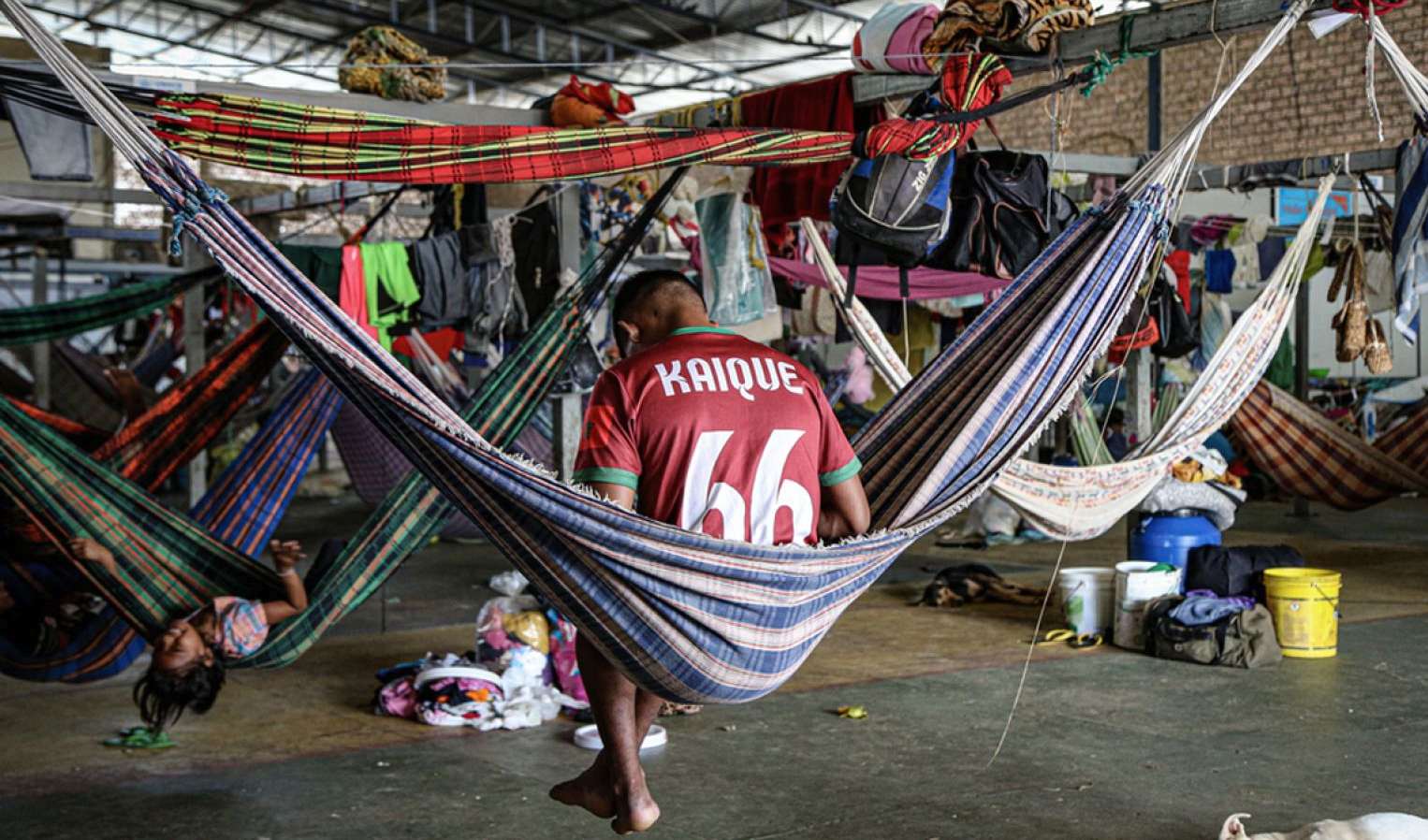
The second reason is the rise of securitized migration policies. In many regions of the world, migration is increasingly managed as a security issue. Contemporary policies develop in a context where human mobility is treated simultaneously as a humanitarian crisis and as a threat. Even humanitarian responses may coexist with control mechanisms that restrict migrants’ everyday autonomy. Reception programs, assistance systems, or accommodation centers designed to offer protection can also function as tools for managing and monitoring mobility. This tension reflects how states attempt to respond to humanitarian crises while reinforcing control over who can move, how, and under what conditions.
The third reason is that major displacement flows are increasingly being managed by countries of the Global South, which is reshaping the map of migration governance. Large displacement crises are no longer concentrated exclusively in Europe or the Middle East. The Venezuelan case is a clear example. More than seven million people have left Venezuela over the past decade, one of the largest contemporary displacements. The vast majority remain within Latin America, forcing countries in the region to develop real-time responses, often without precedent. In this context, Brazil, Colombia, and Peru have assumed a central role in the regional management of human mobility.
Brazil and regional leadership
Brazil occupies a particularly interesting position for several reasons. It is a regional power with diplomatic weight in the Global South and a long tradition of participation in multilateral forums, where it has acted as a mediator between different regions and political blocs. It also has experience managing large-scale regional displacement, particularly Venezuelan migration.
At the normative level, Brazil has relatively advanced frameworks in human rights and refugee protection, inspired by regional principles such as the Cartagena Declaration. In the recent Brasília Declaration, adopted during the 23rd South American Conference on Migration, Brazil articulated a regional rhetoric that combines shared responsibility with active diplomatic leadership, positioning itself as a reference point in migration governance in Latin America. It has also developed institutional responses to Venezuelan migration, particularly through Operação Acolhida, a program that combines humanitarian assistance, migration regularization, and internal relocation mechanisms. These initiatives have often been presented as examples of regional humanitarian leadership.
However, a gap persists between normative ambition and the everyday reality of displaced people. In many contexts, humanitarian responses coexist with control mechanisms that ultimately restrict rights and autonomy. Measures intended to provide protection may limit migrants’ ability to independently rebuild their social and economic networks.
Moreover, gender protection gaps remain significant. Many migration policies are designed under seemingly neutral assumptions that fail to recognize the specific risks women face during displacement. These limitations are visible in areas such as sexual and reproductive health, access to care, and exposure to gender-based violence.
If Brazil aspires to play a meaningful role in shaping the new global order, its leadership will not be defined solely by its economic weight or geopolitical influence. It will also be measured by its capacity to promote models of migration governance that combine protection, dignity, and autonomy for people on the move. In this context, the protection of migrant women is not a marginal issue: it constitutes a concrete test of how the principles of human rights and justice are translated—or not—into the real practices of global governance of human mobility.
Autor

Professor of International Politics at the University of Southampton. PhD in Politics and International Relations from the University of Warwick. Master in International Relations from the University of Miami and FLACSO-Argentina.

Researcher at the Department of Politics and International Relations, University of Southampton. PhD in Law from the Pontifical Catholic University of Rio de Janeiro, Brazil.