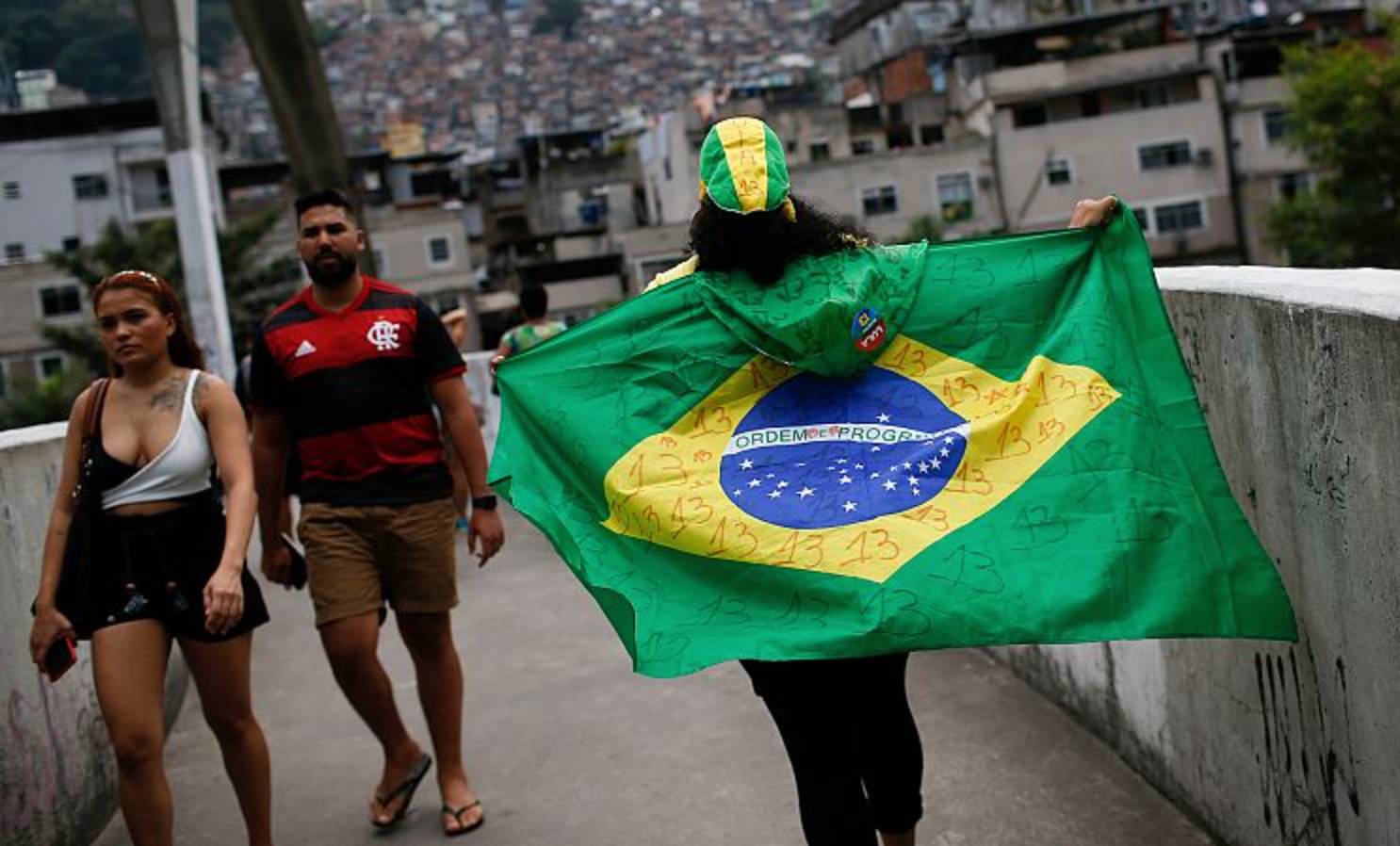
In the October 4 elections, even a possible re-election of the current president Lula would not mean an overwhelming advance of the left: Congress, the governors and the Centrão will maintain their strength and limit the margin of action of any government.
On October 4, 2026, presidential, national legislative, gubernatorial and state legislative assembly elections will be held simultaneously in Brazil.
The elections will probably not determine a fundamental ideological reorientation of Brazil. Rather, they represent a readjustment of the political balance that characterizes the country.
Many indicators suggest that Luiz Inácio Lula da Silva could win the presidency again and assume a fourth term. At the same time, conservative and center-right forces will maintain or even expand their institutional position. Therefore, Brazil’s central paradox remains intact: a predominantly conservative country in social and institutional terms could once again elect a left-wing president .
In addition to the president and vice president, the entire Chamber of Deputies (513 seats), two-thirds of the Senate (54 seats), the 27 governors and the legislative assemblies of the federated states (26 states and the Federal District of Brasilia) will be renewed.
If no candidate obtains an absolute majority in the presidential or gubernatorial elections, a second round will be held on October 25, 2026.
The most recent polls point to a continuation of the political polarization between the PT camp, led by Lula, and the Bolsonaro bloc. Lula leads in voting intentions with approximately 38% to 41%, depending on the polling firm, while Flávio Bolsonaro registers between 33% and 37%. Candidates from alternative right-wing or liberal-conservative currents are clearly lagging behind.
Political situation
Lula enters the election with a mixed record. The government has benefited from the stability of the agricultural sector, high export revenues, and a more active international role for Brazil.
However, many citizens continue to perceive unresolved everyday problems.
Security is considered by many citizens to be the most pressing political issue. Transnational criminal organizations have expanded their influence and in numerous regions control vast areas, shaping local economies and openly challenging state authority. The conservative opposition benefits from this situation, as it is traditionally associated with security policies, policing, and the fight against crime.
Corruption is also a relevant issue. However, criticism is no longer directed primarily at specific parties, but at the political system as a whole. Many voters consider corruption a structural problem in Brazil and not a characteristic exclusive to any particular political movement.
Although the economic situation is more stable than during the final years of Bolsonaro’s government, dissatisfaction with government services remains high. Furthermore, many Brazilians perceive a growing disconnect between the political elites in Brasília and the challenges of local life.
The polarization between Lula and Bolsonaro defines the country’s political life. Lula continues to dominate in the Northeast, a structurally more vulnerable region, and among lower-income sectors. Flávio Bolsonaro obtained his best results in the South and Southeast, among evangelicals and higher-income voters.
Lula, the favorite in a conservative country
Luiz Inácio Lula da Silva remains the favorite for reelection. However, his lead is considerably smaller than at the beginning of the year.
Lula’s political strength cannot be explained solely by the PT. His personal credibility extends far beyond the party base. For many Brazilians, Lula symbolizes social stability, opportunities for economic advancement, and political experience.
Herein lies the central paradox of Brazilian politics: the country maintains conservative traits on numerous sociopolitical issues, yet Lula continues to enjoy high levels of public trust. Many voters consciously distinguish between Lula’s figure and ideological support for the left. A voter can hold conservative positions on security, the economy, or family and still vote for Lula.
The weakness of the opposition
The main challenge for the conservative camp currently lies not in a lack of social support, but in its fragmentation. Although Flávio Bolsonaro leads the political legacy of his father, he must compete with other conservative candidates.
Ronaldo Caiado (PSD) and Romeu Zema (NOVO), both linked to the Centrão political sphere, represent different variations of a liberal economic vision and a conservative political one. They both have strong regional bases and attract conservative voters who do not fully identify with Bolsonaro’s ideology.
While Lula manages to keep the left relatively united, various conservative figures are splitting the votes of the center-right. This currently gives the incumbent president a strategic advantage.
Power relations: Executive and Legislative
The Senate elections are of particular importance. Several studies suggest that conservative parties could increase their representation. If so, the 2026 elections could permanently alter the balance of power between the executive and legislative branches. Since senators are elected for eight-year terms, the effects of these changes would extend far beyond the next legislative session.
Agribusiness continues to be one of the most influential political actors in the country. The so-called Rural Caucus has a solid organizational structure and represents the interests of export-oriented agriculture. Its influence is particularly strong in states like Mato Grosso, Goiás, Mato Grosso do Sul, and Paraná.
Added to this is the growing influence of evangelical churches. These churches have a significant capacity for mobilization and focus their political agenda on issues related to family, religion, and public safety. In almost all of these areas, they hold predominantly conservative or even ultraconservative positions.
Conservative governors as regional centers of power
Brazil’s conservative structure is particularly evident at the state level.
In São Paulo, Governor Tarcísio de Freitas represents economic modernization, infrastructure investment, and a firm security policy. In Goiás, Ronaldo Caiado has established himself as a champion of fiscal discipline and policies favorable to the agricultural sector. Meanwhile, Romeu Zema, in Minas Gerais, has promoted a liberal economic reform agenda and is seen as a symbol of pragmatic conservatism. However, his party, NOVO, is often classified as ultraconservative.
Governors manage significant budgets, police forces, and extensive regional networks. Many are already considered potential presidential candidates for the post-Lula era. Even if the current president is re-elected, they will remain important checks and balances on the federal government.
The Centrão, true center of power in Brazil
International observers often focus on the polarization between Lula and Bolsonaro. However, in practice, the Centrão often determines the effective capacity to govern.
It is composed of parties such as MDB, PSD, União Brasil, Progressistas (PP), and Republicanos. These groups have strong regional networks and numerous governors, mayors, and legislators. What unites them is not so much a shared ideology as a marked political pragmatism. Brazilian media speak of an informal alliance between the government and the Centrão. This relationship is based on political participation, ministerial positions, state resources, and parliamentary budget allocations.
Currently, many political decisions are already being made with an eye toward the next elections, which further increases the influence of the Centrão.
*Article originally published in Diálogo Político.
Autor

Director of KAS Brazil. Exdirector of the workshop in Venezuela. Spanish Filology Study with Latin American Studies and Portuguese-Brazilian Studies in Berlin, as well as International Relations and African Studies in Madrid.