Nothing on the night of the first round of voting on October 4 foreshadowed that, three weeks later, the streets of Brazil’s largest cities would be swept by a “red wave.” And yet Lula da Silva, the octogenarian president of the largest nation in the Southern Cone, put the finishing touch on a narrow victory in a runoff that defied all analyses and shattered the post-first-round atmosphere of defeatism. Lula secured a lead of more than 4.4 million votes, marking the first time since the return to democracy that the candidate who finished second in the first round went on to win the runoff. However, this victory should not be viewed solely through the epic lens of the reviravolta (dramatic turnaround), but also in terms of how he will have to govern during his fourth presidency.
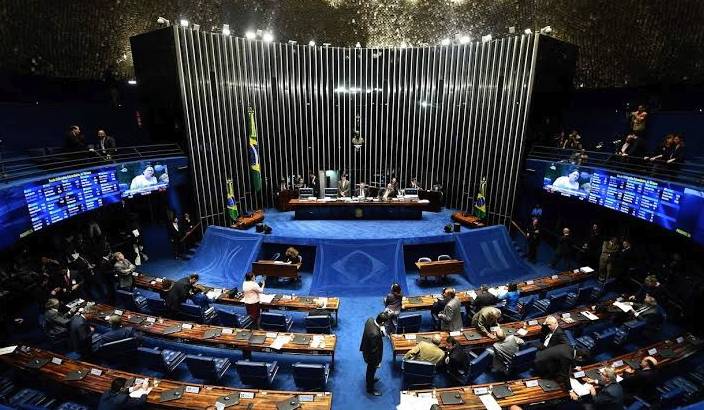
Lula will govern with a Congress dominated by the right, where the Liberal Party is the largest force, holding 121 of the 513 seats in the Chamber of Deputies and 28 of the 81 Senate seats, with the Centrão (centrist bloc) still wielding considerable influence and the left controlling just 4 of the 27 state governorships. Added to this is institutional wear and tear. Flavio Bolsonaro refused to accept the result, drawing support from a chaotic election night during which a Supreme Court justice ordered voting to be extended by two hours, although his party, the Liberal Party, acknowledged defeat.

Beyond the obvious medium-term challenges, Lula and Brazil’s left may find themselves facing extremely narrow margins for political maneuvering very quickly. Public finances are in the red, a situation compounded by recent measures such as debt forgiveness for microentrepreneurs and an increase in Bolsa Família benefits, while security has emerged as Brazilians’ greatest concern—a policy area in which the opposition accuses him of weakness. The concrete limits of a progressive project are thus becoming apparent, requiring changes to its composition and the direction of its proposals, along with a strategy that addresses the younger generations without losing sight of the interest groups that backed anti-Lula sentiment.
In short, Lula won because he is Lula, and because Flavio’s campaign declared victory too soon. But the confrontation ahead could produce a catastrophic stalemate between a minority PT (Workers’ Party), urgently needing to reformulate many of its historic positions, and a Bolsonaro movement with majorities in Congress and across the country’s territories. Its project may be postponed, but it remains very much alive domestically.
The second constraint is external, with its epicenter in Washington. Hours after the result was confirmed, Trump sowed doubts about the integrity of the vote count, claiming that Brazil had just applied “the Joe Biden playbook.” Without offering any evidence, of course. This was not an isolated outburst. He had celebrated Flavio’s performance in the first round as a “very, very big victory.”
Furthermore, Trump imposed 50% tariffs on Brazil in 2025 and a new 25% levy this year, in addition to sanctions against judicial officials over the trial of Jair Bolsonaro, who was sentenced to 27 years in prison for attempting a coup. In the face of this pressure, Lula made sovereignty his rallying cry, echoing the speech he delivered on September 22 at the 81st session of the United Nations General Assembly, where he declared that Brazil does not belong in anyone’s “backyard”—a message he reiterated after his victory.
The result also reshapes the regional landscape. With Milei in Argentina, Kast in Chile, Paz in Bolivia, Noboa in Ecuador, Fujimori in Peru, and De la Espriella in Colombia, Brazil remains South America’s leading left-wing government. Nevertheless, almost all Latin American presidents congratulated the winner, including right-wing leaders such as Kast, Paz, and Keiko Fujimori—even Delcy Rodríguez!—who prioritized economic ties over ideological affinity. Javier Milei stood apart, aligning himself with Trump’s position.
Lula’s government faces numerous challenges, as well as deep-rooted forces, both domestic and external, that it will have to confront. Brazilian society is increasingly shifting to the right, with an oppositional mindset shaping its political decisions. Added to this complex domestic front is a markedly adverse regional landscape. Latin America no longer offers the sympathetic environment of the past; instead, it has become the playing field for a more ambitious strategy pursued by the hemisphere’s right. The influence of the Trumpist current in the region has evolved: its aim is no longer simply to shape allied governments to suit its interests, but to build a deep, coordinated network of intervention across the continent that fundamentally challenges the autonomy project led by Brazil.
Ultimately, Lula’s victory is not just the story of a comeback, but also that of a president entering his fourth term more constrained at home and more influential across the region.
Autor

PhD in International Relations. Independent Researcher at the National Scientific and Technical Research Council (CONICET) and a professor of International Relations Issues at the Faculty of Political Science and International Relations of the National University of Rosario, Argentina.

Degree in International Relations. Researcher and international analyst for the portal Fundamentar.com, member of the Malvinas Studies Group at the National University of Rosario, and a radio and television columnist.