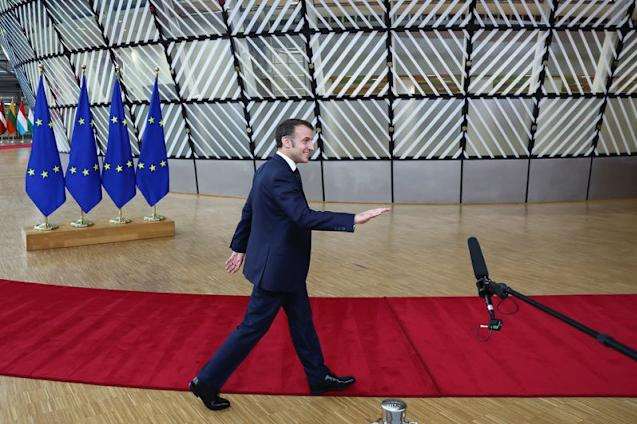
The Agreement between Mercosur and the EU is entering its final stretch. Between December 16 and 19, European states will vote in Brussels with the new reinforced safeguards, after which approval by the Council of the European Union by qualified majority is expected, despite opposition from France and Poland. If this occurs, the official signing will take place on December 20 at the Mercosur Summit in Foz de Iguazú. Finally, in the first quarter of 2026, the European Parliament will have to ratify it. In turn, the Mercosur countries—except Bolivia and Venezuela, which are not part of the negotiation—must submit it to their respective parliaments, and as each state ratifies it, the agreement may be activated. But what benefits will the agreement bring to South American countries?
The first benefit for Mercosur is clear: greater access and export competitiveness. The agreement will significantly reduce European tariffs on agro-industrial products, processed foods, meats, fruits, oils, coffee, ethanol, and biofuels. Many of these tariffs will be reduced to zero, enabling a substantial expansion of exports from countries that already enjoy consolidated comparative advantages. European consumers demand high-quality, traceable, and sustainable products, and this is where South American producers can position themselves strongly.

In this context, the strengthening of sanitary and phytosanitary controls should not be interpreted as an insurmountable obstacle. South American agriculture has demonstrated a remarkable capacity for technological adaptation, and these requirements can serve as an incentive to improve standards and traceability systems. Brazil, Argentina, and Uruguay, among others, have already incorporated precision agriculture, integrated pest management, and low-emission technologies. Meeting European requirements will not only open commercial doors but will also strengthen the region’s reputation for sustainability and food quality. Moreover, diversifying export destinations is key in a global context marked by geopolitical tensions and logistical disruptions.
The second beneficial aspect is the boost the agreement can give to the industrial competitiveness of Mercosur countries. While some industrial sectors fear that opening up to Europe will generate competitive pressures, the agreement establishes extended tariff-reduction schedules that prevent major impacts. This transition period represents an opportunity to modernize production processes, incorporate new technologies, and attract European investments interested in leveraging the region’s energy, logistical, and natural resource advantages.
The automotive, chemical, pharmaceutical, metalworking, and capital goods industries could be revitalized by the arrival of investments aimed at integrating transnational value chains. Europe needs reliable suppliers and markets with macroeconomic and regulatory stability. If Mercosur succeeds in consolidating a more predictable business climate, the agreement can become a driver of foreign direct investment that promotes skilled employment and technology transfer.
The third benefit—and perhaps one of the least visible in the public debate—is the institutional modernization required by the agreement. Alignment with European standards entails improvements in areas such as technical regulations, intellectual property, digital trade, logistics, regulatory transparency, and public procurement. These changes are not merely formal requirements: they can generate real improvements in the functioning of Mercosur by reducing internal regulatory fragmentation and lowering the cost of doing business. The stability and predictability provided by regulatory alignment are central assets for any long-term development strategy.
A fourth point of relevance is Mercosur’s geopolitical repositioning. In recent decades, the South American bloc has fallen behind, limiting its influence. The agreement with the European Union makes it possible to break this stagnation and send a signal to the rest of the world of openness and willingness to integrate. For the bloc’s countries, it is a way to insert themselves into a rapidly reconfiguring trade system, where staying on the sidelines means losing irreversible opportunities.
In this context, the bilateral entry-into-force clause introduces a novel dynamism within Mercosur. It will no longer be necessary for all countries to move at the same pace. Each state will be able to activate the commercial component once its parliament ratifies it. This prevents the internal political difficulties of one country from paralyzing the whole and, at the same time, encourages each government to speed up its internal processes so as not to fall behind its own partners.
A fifth benefit appears on the environmental agenda. Although some criticisms point out that European requirements are overly strict, they can become a strategic advantage. International markets are moving rapidly toward more stringent environmental regulations, and countries that adapt first will be better positioned. Mercosur could demonstrate regional leadership by showing that its production is capable of meeting demanding standards. This would also open the door to green financing and innovation projects linked to the bioeconomy, renewable energy, and sustainable management of natural resources.
The agreement can also help improve Mercosur’s internal political cohesion. Recent years have been marked by tensions among governments over external openness, bloc flexibility, and coordination of internal policies. The fact that all presidents have confirmed their attendance at the December 20 signing is a sign that it is still possible to build minimum consensus. External integration, if properly managed, can become a point of unity rather than conflict.
Finally, the agreement offers a unique opportunity to reactivate intraregional integration, which has lost momentum in recent decades. Preferential access to the EU can encourage productive coordination among Mercosur countries themselves, especially in sectors where natural complementarities exist. The automotive industry between Argentina and Brazil, the meat and agricultural chains between Uruguay and Paraguay, or shared river logistics are cases where regional integration can be strengthened if European demand acts as an external driver.
In summary, although decisive formal steps remain—the European vote, the signing in Foz de Iguazú, and parliamentary ratification in 2026—the potential benefits for Mercosur are too significant to be overlooked. The agreement is not without challenges, but it offers a platform for economic, institutional, and geopolitical modernization that can define the region’s place in the coming decades. In a global landscape undergoing reordering, Mercosur needs strategic decisions that project it into the future. This agreement, if it ultimately comes into force, is one of them.
Autor

Economist and MBA from ICADE, Comillas Pontifical University, Spain. Member of the University Institute for Research in Latin American Studies (IELAT)-University of Alcalá.

Director of the Institute of International Business of the Catholic University of Uruguay and coordinator of the thematic axis on Economy, Trade and Investment of Redcaem. Doutor in International Relations from the National University of La Plata (Argentina).