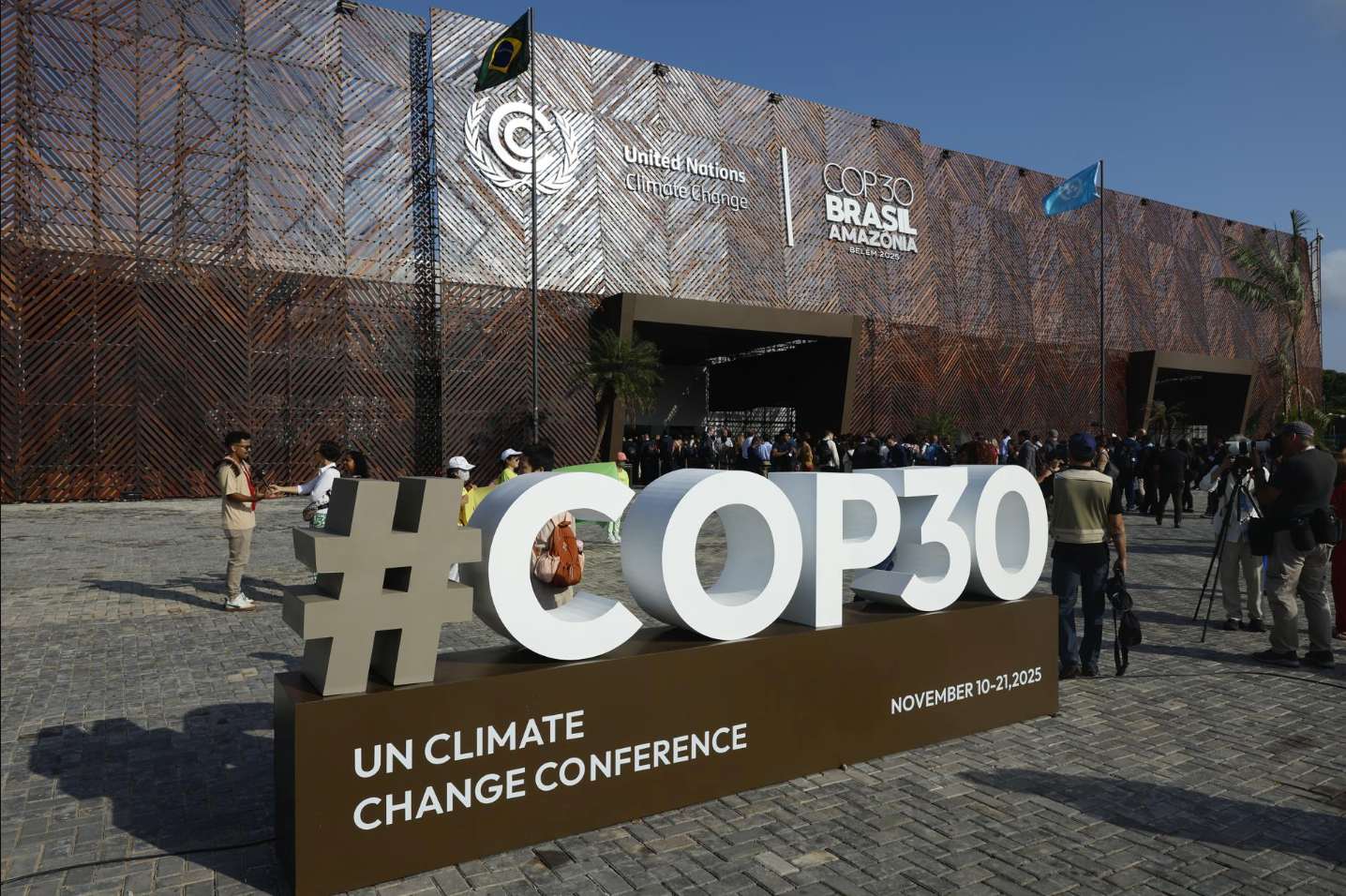
The 30th United Nations Climate Change Conference (COP30), held in the city of Belém, in the heart of the Amazon rainforest, may go down in history for something that goes far beyond technical negotiations on emissions and international targets. The conference finally put on the table the debate on access to information, digital literacy, and the informational rights of marginalized communities.
This is no small matter. For decades, climate conferences have addressed science, economics, geopolitics, and energy transitions, but they have rarely addressed the question that defines the lives of millions of people: who actually has access to the information needed to confront the climate crisis?

In the approved documents—especially the Declaration on Climate Change Information Integrity and the final text, known as the Global Working Group—the UN acknowledges that disinformation, denialism, attacks on science, and inequality in access to information are central issues on the contemporary climate agenda.
This movement is important because it legitimizes, on an international scale, something that researchers and community communicators have long known: climate change has a greater impact where information reaches less. By admitting this, COP30 takes an important symbolic step, recognizing that information is also a tool for survival.
The solution is left to the voluntarism of governments
But the initial enthusiasm soon collides with harsh political reality: despite citing crucial issues, COP30 does so using timid verbs without normative force, such as encourage, support, invite, and promote. There are no obligations, deadlines, monitoring mechanisms, funding, or binding targets. The UN describes the problem with precision, but leaves the solution in the hands of governments’ voluntarism.
This gap is not a detail; it produces concrete and profoundly unequal consequences. When a global document does not establish practical actions, the impact of this absence is not distributed evenly. On the contrary, the burden falls precisely on those who already live on the front lines of the climate crisis.
The Climate Conference mentions Indigenous peoples, Black populations, women, children, migrants, and local communities. But naming is not the same as prioritizing—much less guaranteeing action. By failing to turn this recognition into operational policies, these populations remain underrepresented, no longer through total omission, but through superficial inclusion. The UN speaks about them, but not from their perspective.
Latin American favelas, especially Brazilian ones, are a stark portrait of this gap between discourse and reality. These territories, marked by the absence of the state and persistent inequalities, concentrate some of the groups most affected by the climate crisis: women, children, Black populations, migrants, and older people. It is in these spaces that information inequality becomes even more evident.
Talking about “access to information” in regions that coexist with unstable internet, limited mobile phones, a lack of computers, and inaccessible public platforms is not merely a technical challenge, but a political one.
These are what I identify as information deserts: places where information flows are scarce, interrupted, or distorted; territories where scientific knowledge about climate arrives too late—or simply does not arrive at all. Where an intense rainfall alert is lost amid a weak signal, an app that won’t open, and meteorological data written in a language that does not adapt to everyday life.
Maintaining privileges
The absence of practical measures exposes the logic that Bruno Latour (2020) had already identified: disinformation and the lack of public policies are not accidental; they function to maintain privileges. When the UN avoids committing to binding mechanisms, it reinforces the perverse symmetry of the climate crisis, in which those who pollute least continue to be the most affected, and those who pollute most continue to decide the pace of global responses.
Ultimately, COP30 repeats a classic pattern of multilateral negotiations: it advances in discourse but leaves practice for later. A “later” that never arrives for those living on the edge of survival.
This distance between what is declared and what is done maintains a gap between the main international negotiators and the populations in the territories. The norms advance, the language becomes more sophisticated, documents multiply, but life in peripheral communities continues to be marked by a lack of infrastructure, a stable power grid, sanitation, connectivity, and solid territorial policies. There is much talk of resilience, but little about the material and informational conditions that make it possible.
COP30 opened an important and necessary debate: it recognized that information is an instrument for social and climate justice. However, we still live in a world where the speed of international discourse is infinitely greater than that of public policies. The risk is that COP30 will go down in history as yet another important meeting that spoke about inclusion, but in practice failed to include those who suffer most from the climate crisis. And without inclusive action, there can be no climate justice.
Autor

Doctor in Communication from the Universidad Federal Fluminense (UFF) and master in Creative Economics, Strategy and Innovation from the Escuela Superior de Publicidad and Marketing (ESPM). He is a researcher and consultant in Community Communication in Favelas.