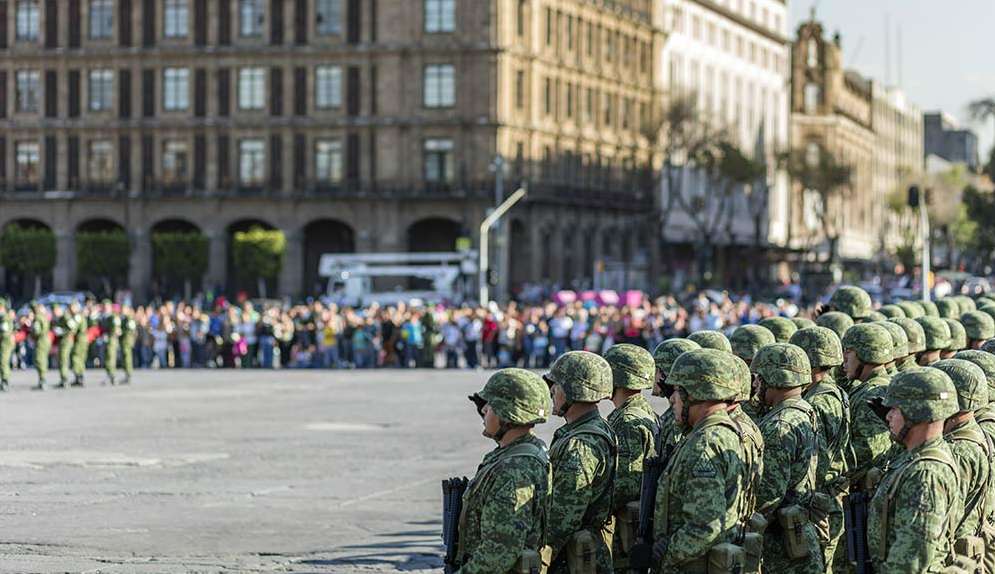
“Without security there is no development, and without development there is no security,” stated former U.S. Secretary of Defense Robert McNamara in 1966. From that moment on, this idea became carved in stone within the Latin American National Security Doctrine. Its influence has been so strong that it was naturally incorporated into the notion of human security, to the point that even the Development Bank of Latin America and the Caribbean, in its Strategic framework for security and justice for development published in 2025, echoes the same formulation.
When historian and political analyst Edward M. Earle introduced the concept of national security in 1938, and later developed it in 1941 together with Albert K. Weinberg and other colleagues at the Institute for Advanced Study at Princeton University, they were pointing out—within a context of global conflict—that national security should not rely solely on military efforts, as had traditionally been the case when speaking of national defense, but also on citizens with other professional profiles. Academics in that context were essential to analyze situations and anticipate problems, while the military remained reactive. Both professional profiles were conceived as complementary in guaranteeing a nation’s security.

However, political scientist Hans J. Morgenthau’s 1948 vision of national power—centered on interests, objectives, antagonisms, and risks—gave momentum to the U.S. military and to the newly created Brazilian War College (Escola Superior de Guerra, 1948) to redefine national security in a way that reversed what the Princeton scholars had originally envisioned. From this perspective, national security implied that the military would guarantee—and in some cases even lead—national governance. At its core, this concept responded to the same ends that Hobbes had identified as the very raison d’être of the state.
With the end of the Cold War, the need emerged to replace the concept of national security with that of human security, adopted by the United Nations in 1994. The former appeared focused on the interests of the nation-state, while the latter emphasized those of the individual. This second definition was interpreted as a model that respected citizens and democracy. Under this view, the national concept became stigmatized by the negative consequences produced when autonomous militaries defined what national security meant within a nation-state. One unavoidable question is who defines the national interest. In most societies with weak political institutions, it is the military—and the people have no say whatsoever: “They are neither present nor expected.” The impact of concepts such as internal security, the internal enemy, the fight against “insurgencies,” “guerrilla movements,” or “political antagonists” condemned this vision in the eyes of the international system.
By promoting the concept of human security, it was assumed that the problem had been resolved. Latin American diplomats went even further by coining the concept of multidimensional security in a 2003 OAS declaration, which sought to advance a definition capable of replacing the traditional military concept.
At its core, however, nothing changed. In societies with weak political institutions, the idea of multiple threats to citizens’ security turned the concepts of human security and governance into synonyms. For politicians, it became very easy to demand that the military—still enjoying significant degrees of functional and operational autonomy—take on governance tasks.
Given what we have seen, it is now widely argued that the militarization of many governance functions weakens democracy. Yet, as has historically been the case, it has been politicians themselves who have demanded military involvement. Could it be that the lack of democracy, the authoritarianism of political elites, or the operational incapacity of states with very low democratic quality has invited this new wave of militarization in Latin America? The classic question of which comes first, the chicken or the egg, seems particularly apt under these conditions.
We must stop linking security to development while including the armed forces in the equation. Democratic societies must build the state and make use of the diverse professional profiles of their citizens. Political elites must stop looking the other way and take seriously the management of citizens’ real problems and the construction of democratic societies.
National security and human security become synonyms if both imply that the military manages societies’ governance problems. Democratic consolidation, citizen well-being, and good governance can only be achieved by building an efficient state, composed of citizens with complementary and specialized professional profiles. A state subject to democratic oversight and the rule of law, capable of efficiently supporting this vision.
Security management in Mexico
Let us consider a concrete example: Mexico. The problem of insecurity in this country is not a lack of development. It has to do with state capture and the presence of organized crime groups controlling territories. The government’s strategy has been to transfer resources to mitigate poverty, create a militarized National Guard, and neglect local governments. The result has been an increase in both homicides and disappearances (even if statistics are manipulated), as well as heightened fear at the local level.
Successful cases of territorial recovery from organized crime in recent years have occurred in places such as Baja California Sur, in some municipalities of Nuevo León, and in specific areas of major cities. These outcomes were not achieved solely through military presence—which cannot cover all spaces at all times—but through the strengthening of municipalities and their surveillance and intelligence capacities, alongside coordination among business actors, civil society, and political authorities. A closer look shows that these successes align with Earle’s original idea of combining citizens’ efforts to confront conflict, rather than shifting responsibilities onto military professionals—a move that condemns us to reactive and short-term actions.
Autor

National Researcher Level II affiliated with El Colegio de la Frontera Sur. PhD in Political Science and Sociology from the National University of Distance Education, Madrid.