Every December 18, International Migrants Day invites the world to reflect on a reality that often remains on the margins of public debate. This is not merely a matter of figures or migration flows, but of people who move because, in their places of origin, the minimum conditions for living with dignity have ceased to exist.
In a global context marked by overlapping crises, human mobility exposes a central tension of our time: the urgency facing millions of people contrasted with the slowness—if not the indifference—of political responses.
Today, more than 281 million people live outside their country of origin, and at least 122 million are forcibly displaced due to conflict, violence, economic crises, and environmental disasters. These figures do not represent an isolated phenomenon. They reflect a global system that structurally produces exclusion and, at the same time, fails to offer effective mechanisms to manage the mobility it generates.

The United Nations has made progress through resolutions and frameworks that recognize migration as an inherent feature of human development. The Global Compact for Safe, Orderly and Regular Migration marked a milestone by promoting cooperation, a rights-based approach, and shared responsibility. However, in practice, the gap between international commitments and national policies remains profound, especially in regions such as Latin America and the Caribbean.
Latin America: A region in constant motion
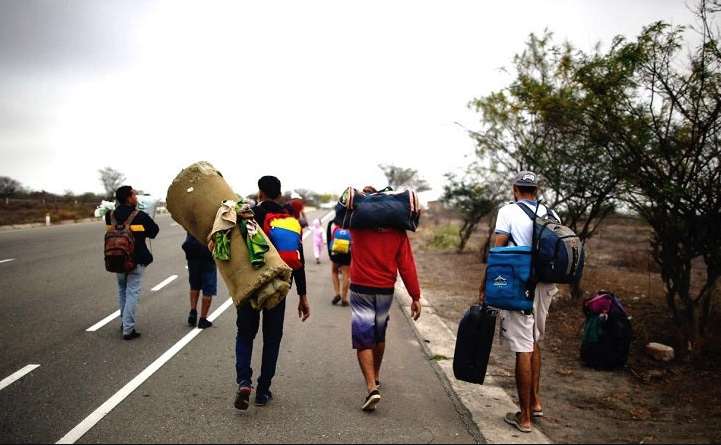
Latin America and the Caribbean currently concentrate some of the most complex migration dynamics in the world. The region is simultaneously a place of origin, destination, transit, and return. This condition challenges the traditional categories that still underpin many public policies. The Venezuelan displacement is the most visible example. More than seven million people have left their country, and 85% remain within the region. Colombia hosts nearly one third of this population, followed by Peru, Brazil, Chile, and Ecuador. After years of massive arrivals, the phenomenon has entered a phase of prolonged settlement that demands structural responses.
It is no longer only about humanitarian assistance. The central challenge is socioeconomic integration: access to formal employment, education, healthcare, and sustainable regularization mechanisms. However, a significant portion of the migrant population remains trapped in informality. In Colombia, around 82% of the Venezuelan population works under verbal contracts, according to figures from the National Administrative Department of Statistics (DANE), reproducing precarious conditions and limiting their full contribution to the economy.
Added to this are the massive transit flows toward the United States and the increase in extraregional migration. Central America, the Caribbean, and Mexico face growing pressure along migration corridors exposed to transnational organized crime. In many cases, the region responds with limited resources and with international cooperation that does not always match the scale of the challenges.
Forced returns, diaspora, and unfinished cycles
Forced returns have become a constant in the recent migratory experience of Latin America and the Caribbean. Far from signaling the closure of a process, these returns often reinsert people into contexts marked by the very precarity, insecurity, and lack of opportunities that originally drove migration. Thus, the diaspora does not represent a concluded cycle, but rather an open process, shaped by successive displacements, family ruptures, and an uncertainty that persists over time.
While some migrate, others return. Return has become an increasingly visible dimension of human mobility, yet it remains insufficiently addressed. In 2024 alone, more than 17,000 people were deported to Colombia, mainly from the United States, according to figures from Migration Colombia. Many returned without preparation, without savings, and without support networks. Existing regulatory frameworks were largely designed for voluntary returns. They do not adequately account for the impacts of forced return, nor for the specific needs of those who come back after years abroad. The result is an institutional vacuum that leaves thousands of people in a situation of high economic and social vulnerability.
This phenomenon is not exclusive to Colombia. Countries throughout the region face the same dilemma: how to reintegrate people who return with different experiences, skills, and expectations, but without clear mechanisms of support. Return, far from closing the migratory cycle, opens a new one of exclusion when productive reintegration policies are absent.
By contrast, the Latin American diaspora continues to sustain economies from abroad. According to the Inter-American Development Bank (IDB), in 2024 remittances to the region exceeded 160 billion dollars, becoming a key source of income for millions of households. These transfers alleviate poverty and stabilize local economies, but they also reveal a structural dependency.
Beyond remittances, the diaspora represents strategic human capital. Professionals, entrepreneurs, scientists, and skilled workers generate knowledge, networks, and innovation. When policies exist that recognize this potential, migration can become an asset for development. However, in many countries, these efforts remain fragmented and poorly articulated.
Urgent decisions in a scenario that has already changed
Human mobility is not a temporary crisis, but a structural feature of today’s world. Persisting with approaches focused exclusively on control and security has proven ineffective: closing borders does not stop flows; it only makes them more dangerous and more costly in human terms.
The most successful experiences show that migration management requires a combination of policies: humanitarian assistance, socioeconomic integration, regular mobility pathways, international cooperation, and the strengthening of local capacities. It also requires improving the quality of information. Fragmented data on migrants, returnees, and diasporas hinders decision-making and limits the evaluation of the real impact of public policies in host countries.
Updating legal frameworks is another urgent challenge. Many regulations were conceived for contexts of temporary mobility, not for prolonged migration or massive forced returns. International Migrants Day should serve for more than declarations. It is an opportunity to recognize that human mobility is here to stay. Between the urgency of those who migrate and the indifference of those who decide, there is still room for more responsible, humane, and coherent policies.
Autor

Master in International Affairs from the Universidad Externado de Colombia. Consultant and researcher on foreign policy and international relations. Member of the Colombian International Relations Network Corporation REDINTERCOL.