“Indigenous women who access political power in Latin America simultaneously transgress two systems of domination: the patriarchy that denies authority to women, and the colonial-racial order that has historically excluded Indigenous peoples from state decision-making spaces. For this reason, the political violence they face is qualitatively distinct, systematic, and frequently rendered invisible.”
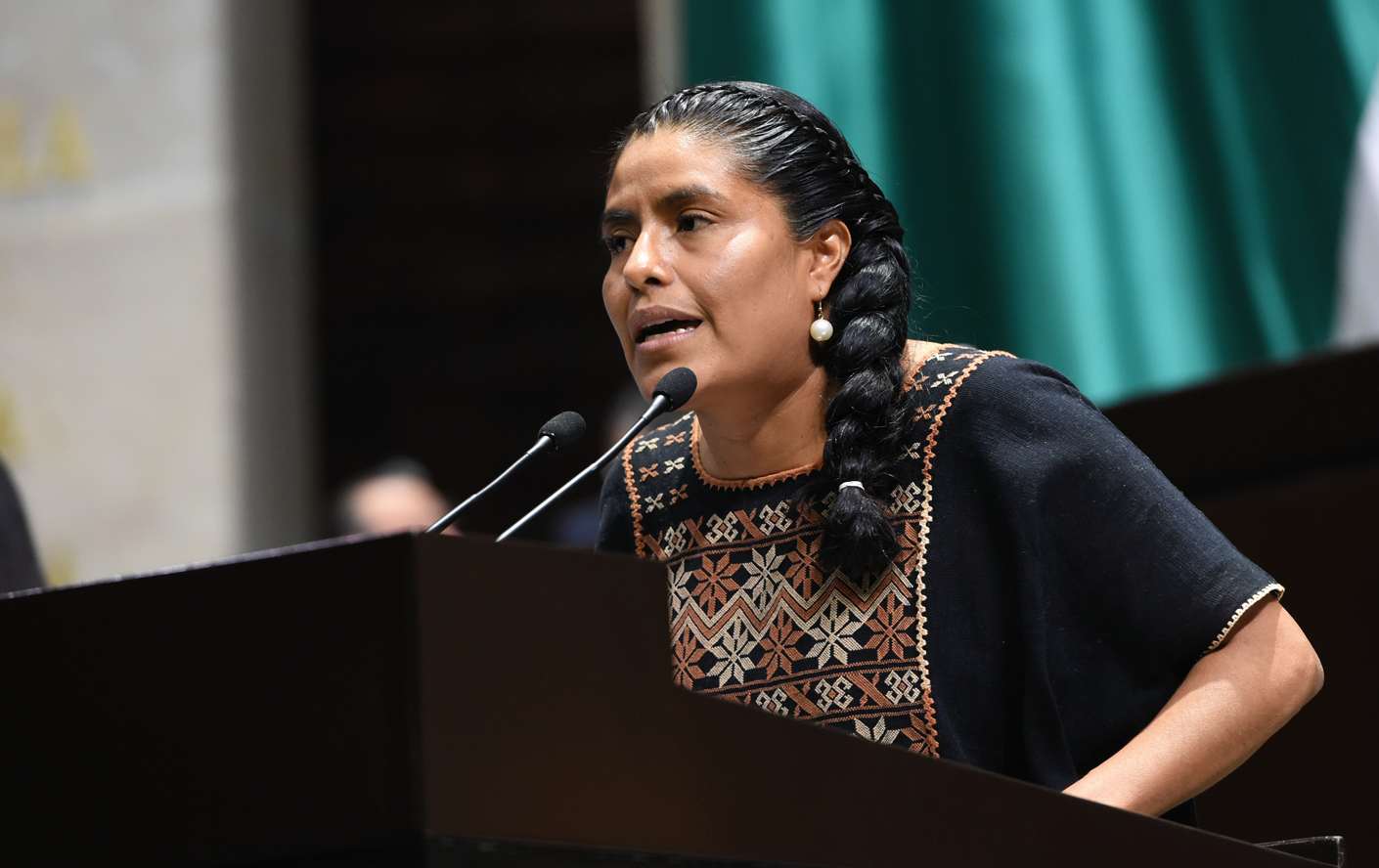
In 2007, the Zapotec woman Eufrosina Cruz Mendoza won a popular election for the municipal presidency of Santa María Quiegolani (Oaxaca, Mexico), but the Municipal Assembly annulled her victory, arguing that “according to customs and traditions, women cannot hold positions of authority.” This resulted in threats that forced her to leave her community, and Mexico’s National Human Rights Commission documented her case as discrimination based on gender and ethnicity. Her story illustrates the persistent gap between formal recognition of rights and their actual exercise for Indigenous women, showing how interconnected systems of oppression operate simultaneously to produce specific forms of marginalization that cannot be understood through single-axis analysis.
Today, almost two decades later, the regional landscape shows notable institutional progress: In Bolivia, Law No. 243 of May 28, 2012, against harassment and political violence toward women, was a global pioneer (Plurinational State of Bolivia, 2012). In Mexico, on April 13, 2020, the legal framework was reformed to explicitly recognize political violence against women on the basis of gender (Diario Oficial de la Federación, 2020). In Ecuador, the February 2020 reform of the Democracy Code classified political violence as a serious electoral offense (National Electoral Council of Ecuador, 2020).

These legal advances have coincided with an increase in the number of Indigenous women candidates. However, this formal improvement coexists with a paradox we cannot ignore: political violence against Indigenous women persists, intensifies in certain contexts, and remains systematically invisible in official records. In an analysis of five Latin American countries—Bolivia, Mexico, Guatemala, Peru, and Ecuador—none disaggregate their official records of gender-based political violence by ethnicity. Mexico’s National Electoral Institute reported 345 sanctioned individuals from 2020 to May 2024, but without specifying how many victims were Indigenous women (National Electoral Institute, 2024). In Bolivia, although the Democratic Parity Observatory of the Plurinational Electoral Body reports 514 cases of political harassment and 406 of political violence between 2012 and the first half of 2025, it does not disaggregate by ethnic affiliation. In Guatemala, the Indigenous Women’s Ombudsperson’s Office acknowledges that despite high numbers of femicides, there are no statistics on Indigenous women who are victims of political violence. Ecuador and Peru follow this same pattern.
This omission is not accidental; it reflects information systems designed without intersectional criteria that systematically render invisible the realities of historically excluded communities. The absence of ethnic disaggregation constitutes what critical race theorist Kimberlé Crenshaw identifies as a specific form of violence faced by women at the intersection of multiple systems of oppression—violence that remains invisible when categories of analysis are mutually exclusive. This statistical invisibilization is not technical but political, reflecting hierarchies regarding which lives and which forms of violence are deemed worthy of counting. Without disaggregated data, the specific prevalence, differentiated patterns, and particular manifestations of political violence against Indigenous women remain in the shadows. What is not measured does not exist in terms of public policy, and what does not officially exist receives neither adequate attention nor resources.
Indigenous women in politics also face what could be termed a “double political estrangement”: they are constructed simultaneously as “too different” to legitimately belong to the modern state, and as “not legitimate enough” to represent their own peoples when they seek political office. This double estrangement reveals the “coloniality of gender”—how modern categories of “woman” and “political citizen” were constructed through colonial logics that structurally exclude Indigenous women. Another important point is that in several contexts, violence intensified after the implementation of gender parity. This phenomenon—known in gender-reform literature as “backlash” or “structural resistance”—operates with particular intensity in intersectional contexts.
Violence and institutional barriers
Violence against Indigenous women goes far beyond physical aggression or explicit threats. It takes forms that current legal frameworks fail to capture adequately. One systematic manifestation is the combination of gender stereotypes about women’s rational capacity with colonial-racist stereotypes about Indigenous peoples. This form of violence operates through multiple mechanisms: infantilization through condescending treatment; exclusion from topics or negotiations considered “complex”; cultural essentialization that reduces their political proposals to “Indigenous worldview”; attribution of their achievements to others; and erasure of their own agency.
Violence also takes symbolic form: when they appear in the media, it is often in folklorized ways—emphasizing their traditional clothing or community origin while erasing their political thought, proposals, or managerial capacities. Institutional barriers likewise emerge from their intersectional position: the absence of interpretation services in Indigenous languages in electoral and judicial institutions (despite constitutional recognition in several countries); the concentration of courts in capital cities; and the residence of many Indigenous women in rural communities. These distances imply days of travel, prohibitive costs, and the need to abandon caregiving responsibilities that fall disproportionately on them.
The cost of exclusion: incomplete democracies
In Latin America, we take pride in having adopted gender parity before many democracies of the Global North. But if Indigenous women continue to be systematically pushed out of political spaces through violence that remains invisible and unaddressed by institutional frameworks that fail to consider their intersectional realities, our democracies operate with structural exclusions.
Eighteen years separate Eufrosina Cruz from the current landscape: laws have changed, candidacies have increased, but violence persists, transforms, and adapts. Some women resist at immense personal cost; others abandon politics, exhausted from fighting simultaneously against institutions, parties, communities, media, and a society that systematically constructs them as “out of place” in spaces of power.
The fundamental question is not whether we can transform these structures. It is whether we can continue calling ourselves democracies while Indigenous women face systematic, unchecked, and invisible violence when attempting to exercise political rights that are formally recognized.
As long as this contradiction persists, our Latin American democracies will be formally inclusive but materially exclusionary. #NotWithoutIndigenousWomen
Autor

Postgraduate Program in Political and Social Sciences at the National Autonomous University of Mexico (UNAM). Network of Women Political Scientists #NoWithoutWomen.