Brazil held the first round of its presidential election this Sunday in a Latin American context dominated by right-wing governments, particularly those of the far right. Against this backdrop, it is possible to identify trends that go beyond national specificities: what does this new political swing really mean? Some consider it the end of progressivism, attributing electoral defeats to the sin of excessive moderation (a criticism also leveled at Democrats in the United States), endless concessions (as in the case of Brazil’s Workers’ Party), or the definitive abandonment of Marxist orthodoxy (as with Chile’s Communist Party), among other factors. Thus, with every shift in electoral preferences, Latin America seems to usher in a new era, a new wave, or a different political tide.
The challenge is to identify recurring patterns in these phenomena in light of recent victories by right-wing candidates in Chile, Colombia, Peru, Costa Rica and Honduras, which have once again raised the prospect that Latin American progressivism has run its course. In Honduras (Libre), Costa Rica (Broad Front) and Bolivia (MAS), left-wing parties suffered crushing electoral defeats. But another interpretation is possible: what we are witnessing is less the end of an era than a recurring regional phenomenon—alternation in power, which under certain circumstances can translate into punishment for those in government.

Recent results allow us to revisit this hypothesis. In Peru, Keiko Fujimori won the presidency in the runoff with just 50.1% of the vote, compared with 49.9% for left-wing candidate Roberto Sánchez. Something similar happened in Colombia, where Abelardo de la Espriella secured around 49.7%, compared with 48.7% for Iván Cepeda. In Argentina, Peronism received 44% of the vote, while in Ecuador, correísmo—the political movement associated with former president Rafael Correa—secured 44.4%.
We can speak of electoral victories for the right, but it is much harder to argue that progressive movements have disappeared from the electoral landscape. Even Chile presents a different picture: José Antonio Kast won comfortably with 58.2% of the vote, but governing coalition candidate Jeannette Jara still secured around 42%. It should be noted that this analysis does not include the authoritarian regimes of El Salvador, Venezuela, Cuba or Nicaragua.
Mexico is an exception to this broader pattern, as Morena enjoys overwhelming electoral dominance. In that sense, the question should be a different one: what would have to happen for us to speak of the genuine end of a political cycle?
As this analysis suggests, not all recent victories for the right represent a change of government following a progressive administration. Daniel Noboa was reelected in Ecuador in 2025 as the incumbent president, while Laura Fernández came to power in Costa Rica promising continuity with Rodrigo Chaves’s administration. In Paraguay, Santiago Peña kept the Colorado Party in power. Voters, therefore, do not punish incumbents simply for being in office, but when they fail to address what matters most to the electorate. Right-wing governments campaigning on law-and-order platforms survive, while left-wing governments with strong economic performance can lose elections.
Chile ended 2025 with economic growth of 2.5%, annual inflation of 3.5% and a 2.4% increase in real wages. In Colombia, poverty fell from 36.6% in 2022 to 28.0% in 2025, and other social indicators improved. Nevertheless, incumbent governments lost where public security, organized crime and migration had become prominent electoral issues.
What emerges is that voters are increasingly willing to replace governments when they believe their expectations have not been met. The result is a pendulum effect: opposition forces on the right can gain ground when the left is in power, while a progressive coalition can grow when the right governs.
In many of the cases considered here, a pattern of pronounced electoral volatility has taken shape, as neither political camp has managed to build a sufficiently stable social majority to establish its hegemony. In Argentina, Milei is perhaps the clearest example of a far-right leader seeking to come closest to achieving this. From this perspective, the recent defeats of Latin American progressivism do not signal its demise. Rather, they reveal one of the region’s most democratic phenomena: alternation in power.
But the pendulum only works if the winner does not dismantle the conditions that make losing possible. In other words, the uncertainty inherent in electoral outcomes must be preserved. The threat to democracy no longer comes from military barracks, but from executives themselves, through forms of competitive authoritarianism based on co-opting courts, changing electoral rules or enabling reelection. El Salvador’s authoritarian regime under Bukele demonstrates that democracy can be brought to an end without a coup d’état.
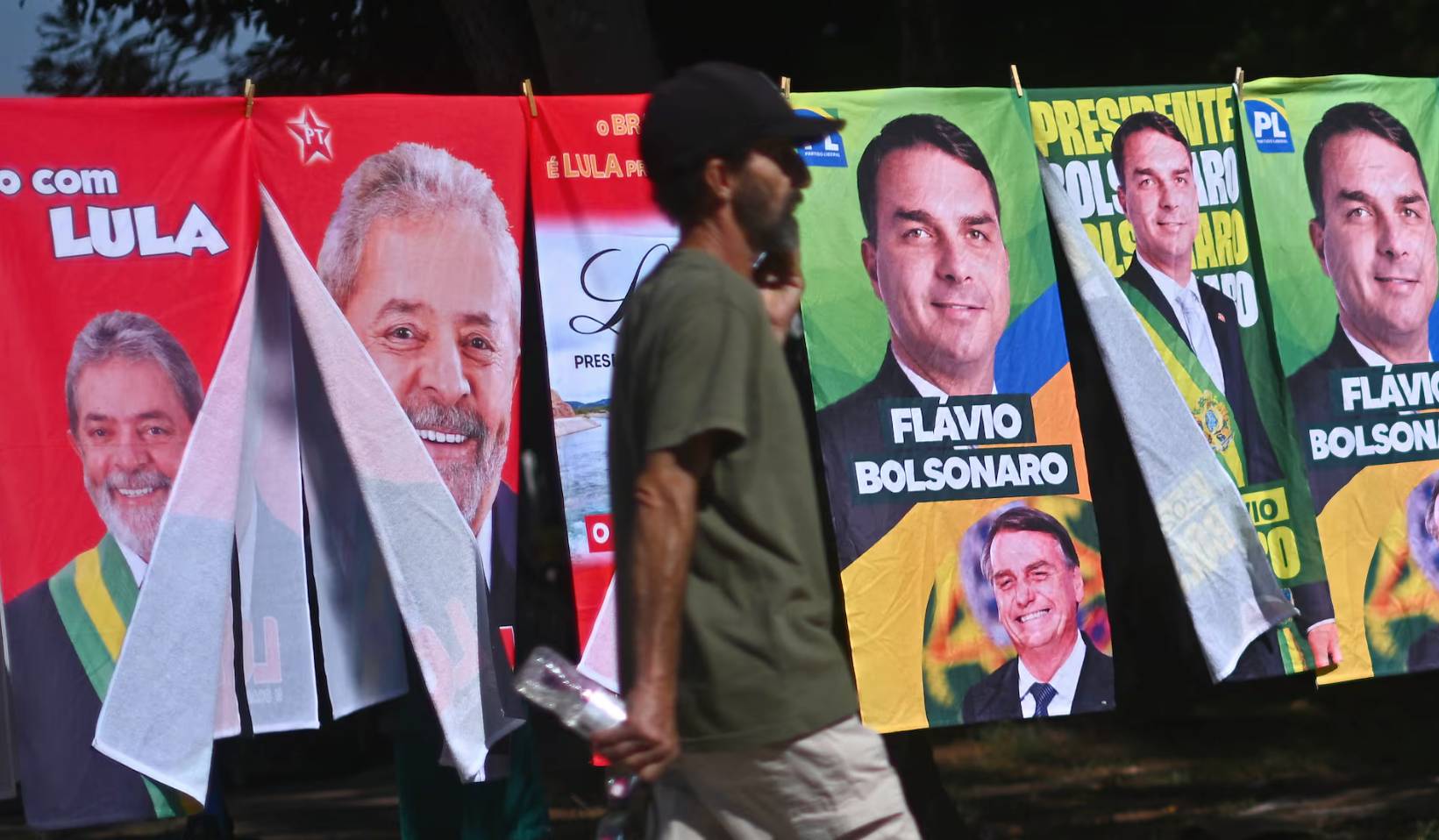
In Brazil, ahead of the November runoff, Lula is seeking a fourth term. The initial results show that a progressive government can retain an electoral majority, with 45.2% of the vote. His defeat, therefore, would not in itself be enough to announce the electoral demise of progressivism.
In political systems characterized by weak institutionalization and fragmented party systems, material improvements and good governance can coexist with political dissatisfaction, and vice versa. What we are witnessing, therefore, is not the end of a wave or a specific ideological shift, but the consolidation of a far more electorally competitive form of Latin American politics.
Autor

Cientista Político. Profesor e investigador asociado de la Universidad Federal de Goiás (Brasil). Doctor en Sociología por la Univ. de Brasilia (UnB). Postdoctorado en la Univ. de LUISS (Italia). Especializado en estudios comparados sobre América Latina.