Sometimes the world works like this: one person shouts for decades from the riverbank that the water is polluted, but no one pays attention. Until one afternoon, men arrive with microphones, a little chart, an official seal, and announce—with the air of a discovery—that the water is polluted. Then come the reports, the statements, and the conferences. And those who had been shouting look on from the riverbank as if to say: It was not a microphone that was needed; it was willingness.
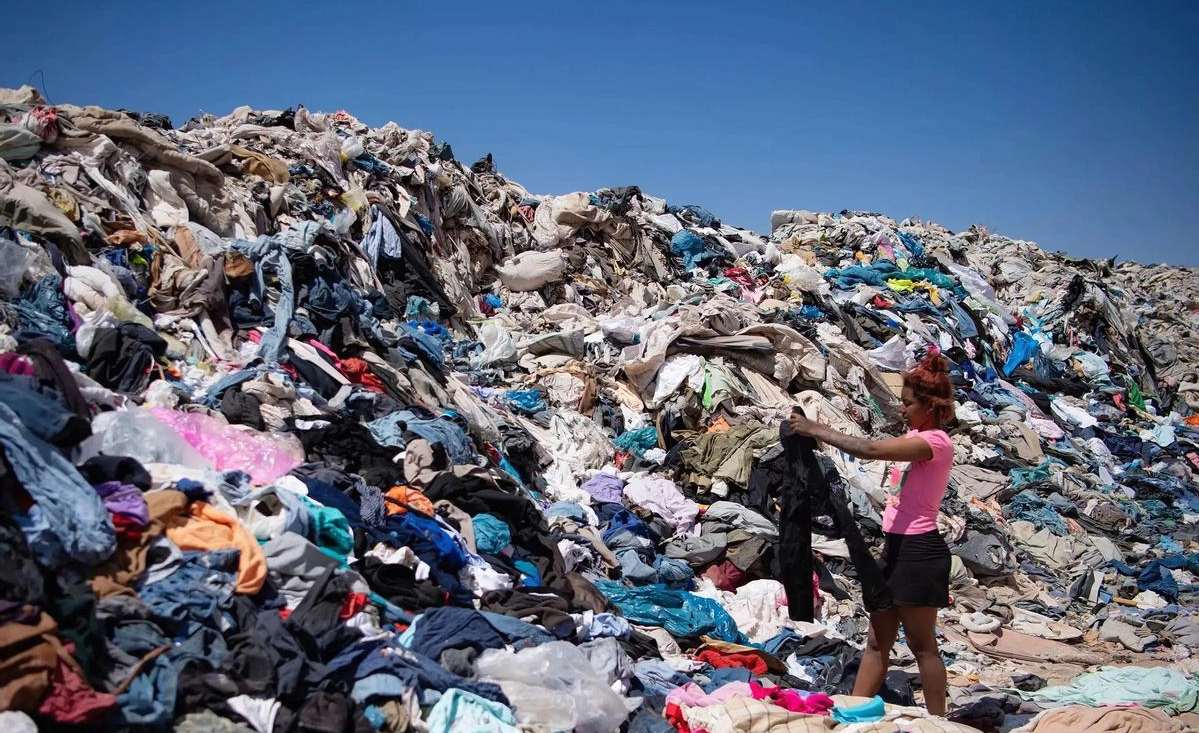
This week, something similar happened. More than 150 governments approved a report that clearly states what Indigenous peoples in our region and around the world have been saying for a long time: the obsession with growth measured in GDP is destroying nature. It is not a metaphor; it is an official conclusion of IPBES—the Intergovernmental Science-Policy Platform on Biodiversity and Ecosystem Services—approved in plenary, with minutes, venue, and photo, and repeated by global media that love the phrase “historic turning point” when the “turn” is, in reality, a belated return to the obvious.

What is presented as a scientific revelation reveals, above all, a deep epistemic inequality: who has the legitimacy to name what counts as knowledge. Because this truth—that growth at all costs destroys the very base that sustains it—did not originate in Manchester or in the offices where it now circulates; it was born in territories that have, for generations, warned that a model that devastates rivers, forests, and soils cannot be called progress because it threatens life. But the world only listens when the warning arrives with a chart, a logo, and simultaneous translation.
The report reminds us that all economies depend on free environmental goods that appear in no budget: water filtered by forests, free pollination, and a climate that buffers extremes. And it points out that measuring progress with an indicator that ignores these foundations is a form of organized blindness, an accounting fiction that turns destruction into profit.
Meanwhile, real money—the kind that drives the machinery—keeps flowing elsewhere. In 2023, US$7.3 trillion financed activities that harm nature, and only US$220 billion were allocated to protect it: a ratio of 30 to 1.
This is not a technical imbalance; it is a political decision
And there the uncomfortable word appears: political hypocrisy. Because many of the governments that sign these reports are the same ones that relax environmental regulations, maintain regressive subsidies, or criminalize those who defend the land.
But hypocrisy does not occur in a vacuum: it occurs in an economy where power is concentrating at a pace that contradicts any narrative of austerity. In 2025, the wealth of the world’s billionaires grew three times faster than the average annual rate of the previous five years. In Latin America, the number of billionaires rose to 109, with a combined fortune of US$622.9 billion, almost equivalent to the GDP of Chile and Peru combined.
While a few accumulate power at that speed, others—those who sustain life in their territories—pay the price. In 2024, 146 environmental defenders were killed or disappeared, 82% of them in Latin America. Colombia was once again the deadliest country. Guatemala saw killings increase fivefold compared to the previous year.
Violence is not an accident: it is a mechanism functional to a concentrated economic model. In the region, the richest 1% holds more wealth than the remaining 90%, while the poorest 50% share just 3%. In that context, defending a river, a forest, a mountain means stepping into the line of fire of those who see nature as an asset, not a home.
And yet, the same communities that face threats for defending their territories are now appearing in reports like those of IPBES—not as footnotes, but as legitimate subjects of Indigenous and local knowledge, crucial for guiding global action.
In this contradiction lies an opportunity
Because when a system that has always dismissed those forms of knowledge begins to cite them—even belatedly—it means the dominant narrative is cracking. And when a narrative cracks, it is time to write another.
That is, in fact, the core of this moment: the dispute over a new narrative. Not just another environmental manifesto, but a shift in the story we tell about what it means to develop, to prosper, to move forward. An opportunity for the narrative to stop justifying destruction and begin enabling life.
Five narrative shifts help imagine that path:
1. From growth to well-being within limits
If GDP is weakening as a compass, then it is time to fight for its replacement with measures that actually capture what matters: the health of water, soil fertility, urban resilience, care time. IPBES already speaks of systemic risks to the economy, opening a window to move the conversation from the margins to the center. What was once “alternative” can become common sense.
2. From goodwill to rules that prioritize life
Enough of expecting companies to act out of moral conviction. The report is clear: without regulation, without mandatory disclosure of risks and impacts, without eliminating harmful subsidies, there will be no real transition. The narrative must insist that this is not a matter of individual ethics, but of institutional design.
3. From “anti-development” to pillars of care
For decades, those defending rivers and forests were accused of holding back progress. Today we know they sustain the very platform on which any economy depends. The narrative must show that caring is not romanticism: it is a strategy for collective survival.
4. From decorative biodiversity to material risk
The 30-to-1 gap between investment in destruction and in protection tells a story in itself. Framing the ecological crisis as a financial risk does not dilute the message—it makes it unavoidable for those who make budget decisions. Every dollar extracted from the future today will be paid back many times over tomorrow.
5. From symbolic consultation to co-governance
It is not enough to “include” Indigenous voices: power must be shared. IPBES explicitly recognizes the relevance of their knowledge. What comes next is moving from gesture to agreement: co-design of projects, fair distribution of benefits, binding decisions. Not only because it is just—though it is—but because it works.
In short: the IPBES report did not bring us a new truth; it brought a megaphone for truths we already knew. Its merit lies not in revelation, but in the crack it opens. A crack in authority, a crack in the narrative, a crack in the certainty that the economy can only be understood as a sum of numbers.
Within that crack, a new story can emerge: one in which progress is no longer measured by what is extracted, but by what is sustained. One in which those who stood on the riverbank—shouting for decades that the water was polluted—are no longer a footnote, but a central voice.
The official story has only just caught up. The opportunity is that, this time, the narrative changes in time.
Autor

Communications Coordination for Oxfam in Latin America and the Caribbean