The dreamer Walt Disney could never have imagined that his creatures and fantasy realms would end up embodied in characters and stories so real.
“How to Read Donald Duck: Imperialist Ideology in the Disney Comic” is a book from the 1970s written by the Argentine-Chilean Ariel Dorfman and Armand Mattelart, a Belgian sociologist and leading figure in communication studies, who passed away on October 31 at the age of 89.
First published in Chile during the government of Salvador Allende, with a foreword by the Argentine sociologist Héctor Schmucler, Mattelart and Dorfman critically analyzed Walt Disney’s comics, arguing that they operated as capitalist and imperialist propaganda for the United States. They maintained that the power of Disney comics lay in their apparent neutrality and innocence, that humor and fun served as vehicles for exporting a worldview in which peripheral or underdeveloped countries played the role of providing raw materials and treasures that characters—like Uncle Scrooge McDuck—exploited and transported back to the U.S.

Through stories and children’s tales, a way of seeing the world was transmitted and a “battle for hearts and minds” of children and adults was waged. In these cartoons, the ducks traveled to other countries and territories called “Bananalandia,” “Southern Patagonia,” “Tropicolandia,” “Aztecland,” “The High Plain of Abandonment,” “Inca-Blinca,” or “Unstable-stan,” caricatured versions of the Third World where the inhabitants appear naïve, childish, and superstitious. Donald and his nephews arrive from the civilized “center” to teach them, trade, or extract treasures. In this interpretation, the comics symbolically reproduced relations of subordination and dependency between the United States and Latin America.
This is how they analyzed it: “In Uncle Scrooge’s enormous piggy banks (not to mention Mickey, who never stores anything, and Donald—there’s no need to speak of him), there is never the slightest presence of a manufactured object, even though we have seen that in adventure after adventure he brings some piece of goldsmithing home. Only bills and coins. As soon as a treasure leaves the country of origin and touches Uncle Scrooge’s money, its form disappears, swallowed by dollars. It loses that last trace that might link it to people, to time, to places. It ends up being odorless gold, without homeland and without history. Uncle Scrooge can bathe in it without the edges of the idols pricking him. Everything is alchemized mechanically (without machines) into a single monetary pattern that extinguishes all human breath. And what is more, the adventure that led to the relic vanishes along with the relic itself (already weak in form). As a treasure in its native land, it pointed toward the past, however remote; and as a treasure in Duckburg, it pointed toward the lived adventure, however remote it might have been. Uncle Scrooge’s personal memory fades as the historical memory of the original people grows dim. It is history that melts in the crucible of the dollar. The educational and aesthetic value of these comics is therefore false: they present themselves as a journey through time and geography, helping young readers learn about human history (temples, ruins, etc.). That history exists only to be demolished, to be returned to the dollar, which is its only parent and its tomb. Disney kills even archaeology, that science of dead artifacts.”
The authors also mentioned the gender and power stereotypes present in female characters, who are frequently decorative, and the authoritarian and hierarchical relationships in which uncles give orders and nephews obey. In short, the book interpreted Disney comics as an “instruction manual” for dependent nations on how their relations with the great neighbor to the North should be.
The book stirred controversy and became an international bestseller and an emblematic text in communication and cultural studies, generating a broad debate about the role of mass media. It survived censorship and book burnings under the dictatorships of the 1970s and was reissued many times. Needless to say, the idea of an alternative societal project that underlay the book at the time was wiped from the map—defeated, distorted, or surpassed by the gales and tempests it helped unleash. Left- and right-wing movements in Latin America processed in different ways the hard lessons of those ideological battles that cost so much blood and so many failures.
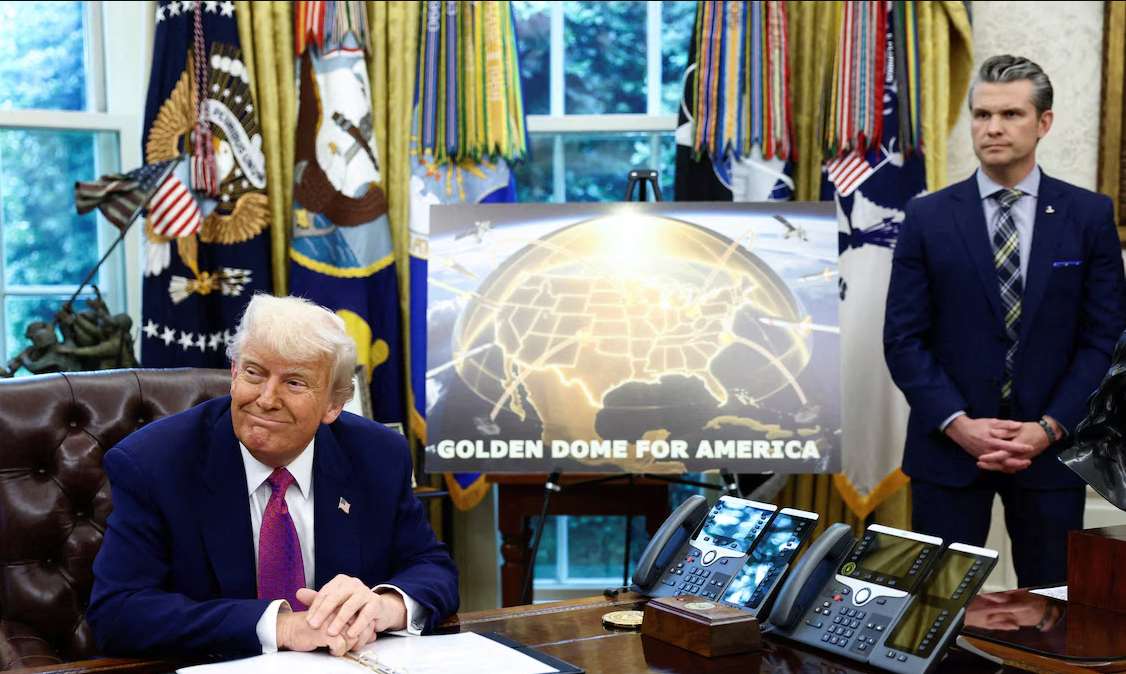
However, images of Uncle Sam embodied in the figure of Donald Trump, and of Latin American leaders captivated either by aversion or fascination toward the “American empire,” evoke once again Dorfman and Mattelart’s reading. In a more polarized political context and a much more fragmented and aggressive media ecosystem—but also one marked by democratic resilience that allows coexistence in freedom and the peaceful processing of conflicts—the focus may no longer be on deciphering hidden messages, but on analyzing a public performance in which the logic seems inverted: from fiction feeding on reality to create stories, characters, and narratives, to a hybrid reality (virtual/real) that at times appears as a caricature of itself. The dreamer Walt Disney could never have imagined that his creatures and fantasy realms would end up embodied in characters and stories so real.
*Machine translation, proofread by Ricardo Aceves.
Autor

Political scientist and journalist. Editor-in-chief of Op-ed section at Clarín newspaper. Professor at the Univ. Nacional de Tres de Febrero ang guest professor at UADE and FLACSO-Argentina. Author of: "Braden or Perón. La historia oculta"(2011) and "Detrás de Perón" (2013).