After years of economic collapse, systematic repression, and blatantly manipulated elections, Nicolás Maduro’s exit from power on January 3, 2026 is perceived, at first glance, as a definitive break with a failed past. For more than a decade, Venezuela endured one of the most severe economic contractions ever recorded in peacetime: between 2013 and 2021, the economy shrank to roughly a quarter of its original size, and although there was a modest subsequent recovery driven by an oil rebound, this never translated into widespread well-being. For millions of Venezuelans—exhausted by poverty, forced migration, and the absence of future prospects—the end of madurismo seems to close a historical cycle that began with Hugo Chávez in 1999. Yet the way this outcome unfolded—a brief but extremely violent invasion—demands a more sober reflection. History shows that while authoritarian regimes can fall quickly by force, building a stable democratic order is always a long, fragile, and deeply uncertain process.
There is no reasonable doubt that Maduro had lost popular consent. The 2024 presidential election, decisively won by the opposition and backed by a rigorous, digitized collection of more than 80% of the tally sheets, stripped him of any democratic legitimacy. The regime’s refusal to recognize that result confirmed that power no longer rested on the vote, but exclusively on coercion. This was compounded by extreme economic deterioration: the official minimum wage fell to around 130 bolívares per month—less than one dollar—even public employees with bonuses rarely exceeded $100 a month, and feeding a family cost several times that amount. Inflation, which had temporarily declined, began accelerating again, with projections pointing to levels close to 700% annually. Nearly eight million Venezuelans left the country in just over a decade, making the Venezuelan exodus one of the largest human displacements in the contemporary world outside a conventional war.

In that context, it is hardly surprising that a significant share of the population was willing to support almost any path promising rapid change, including foreign military intervention. Social desperation narrows the space for long-term political calculation. Yet the idea that the violent removal of an autocrat automatically leads to democracy is a dangerous illusion. Venezuela is not a blank slate.
During the final years of chavismo, power fragmented among multiple armed and bureaucratic actors. Senior military officers controlled key sectors of the economy; intelligence services operated with broad impunity; corruption networks linked to drug trafficking and illegal mining consolidated; and armed colectivos entrenched themselves in urban areas as paramilitary forces. Added to this was the presence of foreign armed groups, particularly Colombia’s ELN guerrilla, which at one point had thousands of fighters operating on Venezuelan territory under a cooperative relationship with the state.
Organized crime also took on a transnational dimension. The Tren de Aragua, which emerged in Venezuela and was tolerated for years through informal pacts, expanded across Latin America and became one of the most powerful criminal networks within the Venezuelan diaspora. Regime officials benefited from these relationships, which temporarily reduced homicide rates—but at the cost of strengthening autonomous armed structures. None of these actors disappeared with Maduro’s departure. On the contrary, a sudden and violent transition threatens to shatter the informal equilibria that—however perverse—had contained even greater violence, incentivizing disputes over territory, illicit rents, and political power.
The most immediate risk lies within the armed forces and security services themselves. While some officers may align with the new authorities, others remain deeply compromised by corruption, drug trafficking, or human rights violations documented by international bodies. A divided military—or one that perceives democratic reforms as an existential threat—can become a permanent source of instability. Replacing one strongman with another, or with a military junta ruling behind a civilian façade, remains a very real possibility.
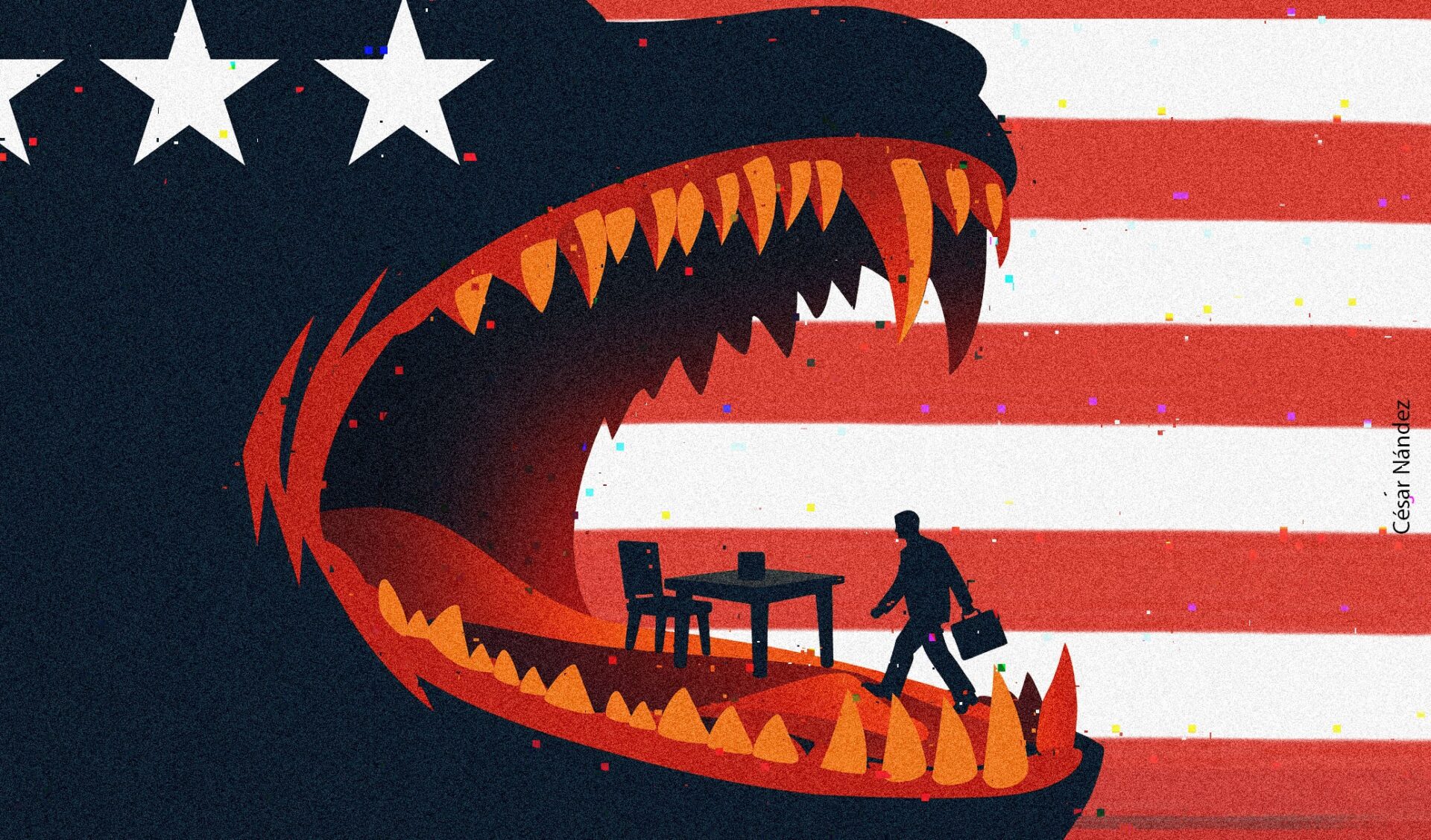
These internal risks are compounded by a troubling external dimension. The operation that ended Maduro’s government was driven by a U.S. administration that, despite proclaiming itself “anti-war,” has shown a clear willingness to use force unilaterally and expansively. The invasion raises serious ethical and political questions, as well as evident problems of international and constitutional legality. The abduction of a foreign head of state and the use of force without multilateral authorization set a dangerous precedent for the region and for the international order.
The justifications offered—from drug trafficking to the restoration of democracy—are weak and selective. Venezuela has not been a central actor in cocaine flows to the United States, and the subsequent emphasis on access to its vast oil reserves, along with the explicit revival of a hardened version of the Monroe Doctrine, reveals broader geopolitical motivations: reaffirming U.S. primacy in the hemisphere and containing Chinese influence in Latin America. Subsequent threats against other countries in the region reinforce this reading.
Far from being a surgical operation with a clear end point, early signs already suggest a drift toward occupation and “nation-building.” In a socially and politically fragmented country like Venezuela, even U.S. military planning exercises had warned that an abrupt regime collapse could lead to a prolonged period of violence and chaos, with direct effects on regional migration.
The Venezuelan opposition, now called upon to lead the transition, must learn both from its own history and from this new context. Its most durable advances over the past two decades were not achieved through violent shortcuts or by delegating strategy to foreign powers, but through elections, unity, and negotiation. The 2007 referendum, the 2015 legislative elections, and the 2024 presidential victory showed that authoritarianism could be defeated politically when the opposition acted cohesively.
The 2024 election, despite being ignored by the regime, was one of the democratic camp’s greatest strategic victories. That moral and political capital is now among the most valuable assets of the post-Maduro period. Squandering it through exclusions, revenge, or indiscriminate purges would mean repeating well-known mistakes.
Venezuela stands at a historic crossroads. The end of madurismo closes a dark chapter, but it does not automatically open a democratic one. Stability, justice, and prosperity will require patience, negotiation, and a gradual transition. Democracy is not imposed by force; it is built slowly, through institutions, agreements, and the arduous task of restoring trust in the state. Venezuela’s true challenge begins now.
As the Latin saying goes: Optimus dies post malum imperatorem est primus. The best day after a bad ruler is the first.
*Machine translation, proofread by Ricardo Aceves.
Autor

Associate Research Fellow at ICAEPA, based in Sheffield, UK. Econometrician. Consultant in risk analysis, business intelligence, value chain analysis, and transfer pricing.