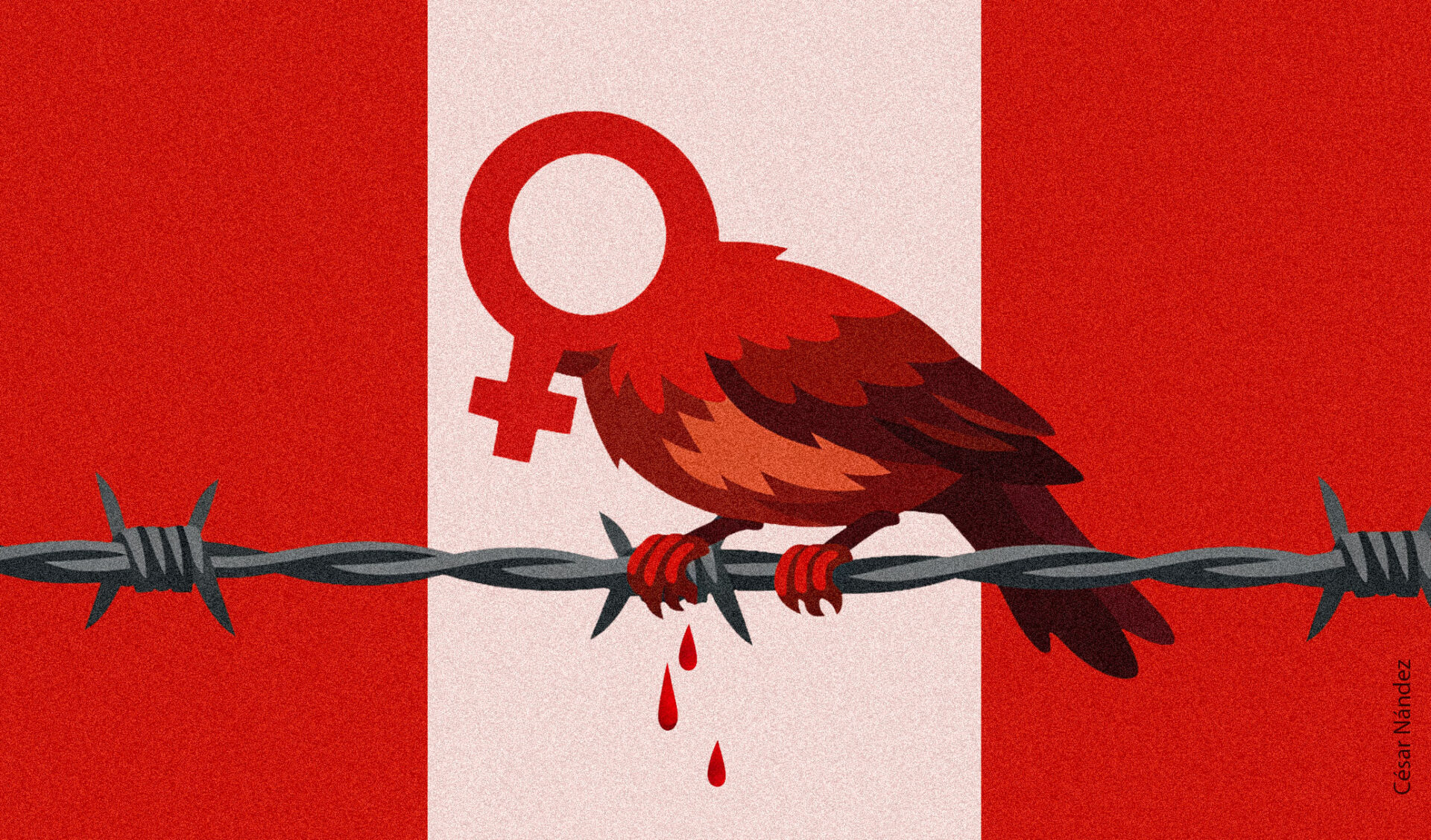
Recently, Peru has raised alarms across the region due to a convergence of political and judicial decisions that call into question the most basic rights of girls and women. On the eve of International Women’s Day, the outlook is particularly troubling: from the obstruction of access to legal abortion in cases of rape, to the judicial recognition of reproductive practices without clear regulation, all amid persistent physical violence and educational exclusion.
After years of political instability, successive presidential changes, and a deep crisis of representation, the current Congress has become a setting where conservative agendas have gained decisive influence. In this climate of institutional fragmentation and the weakening of public debate, policies related to gender and reproductive rights have become fertile ground for polarization.

What truly matters here is that what is at stake is not merely the application of a specific rule, but the choice between models of the state: one that guarantees rights in accordance with international standards, or one that subordinates those guarantees to religious convictions and electoral calculations.
Therapeutic abortion: a legal right, denied access
Although therapeutic abortion has been legally permitted in Peru since 1924, when a pregnancy represents a serious risk to the life or health of the pregnant person, in practice thousands of girls who are victims of sexual violence cannot access this basic right. A recent report revealed that between 2014 and 2023 more than 2,600 girls under the age of 15 who were victims of rape did not receive the procedure despite it being legally authorized.
Added to this is a serious political episode: congresswoman Milagros Jáuregui, a figure from the ultraconservative party Renovación Popular, was accused of publicly displaying girls with their babies at events organized by her shelter, as if this were an achievement. Feminists and human rights organizations have denounced that these actions revictimize abused girls and reflect how religious and moral discourse infiltrates decision-making over other people’s bodies.
Amid this debate, presidential candidate Keiko Fujimori, leader of the Fuerza Popular party, sparked a wave of indignation with remarks that reveal how the issue of reproductive rights has also become an electoral matter. In a television interview, Fujimori stated that, in the hypothetical case of sexual assault against one of her own daughters, she would tell them to “have the baby,” and reiterated that she would support abortion only when the mother’s life is at risk, rejecting its application in cases of rape.
This statement, which exposes her ultraconservative stance on sexual and reproductive rights, is a warning sign, given that she is a presidential aspirant clearly seeking to change the course of policies aimed at protecting girls and women who are victims of sexual violence.
Surrogacy: a legal vacuum with real impact
At the same time, Peru’s Constitutional Court issued a ruling at the end of last year recognizing the parentage of a minor born through so-called surrogacy and ordering the correction of her birth certificate, opening a gap for legal discussion of this practice in a country where there is no clear regulation protecting reproductive rights—neither those of gestational mothers nor those of children born through these techniques.
The decision has been interpreted by some legal scholars not as full approval of surrogacy, but as a call to legislate to protect “the best interests of the child” and avoid legal gaps that expose minors and families to legal uncertainty. However, this legal limbo raises ethical and social challenges: while some sectors advocate its regulation as part of reproductive rights, feminists warn about the commodification of women’s bodies and the lack of specific protections in a country without an adequate regulatory framework.
Violence and structural inequality
But the problems do not end in hospitals and courts. Official figures show that Peru records extremely high levels of gender-based violence, with more than 168,000 cases of violence against women and vulnerable groups, including thousands of cases of sexual violence against girls and adolescents. This violence is also expressed through barriers to their right to education and personal autonomy.
Talking about reproductive rights in Peru also means talking about economic inequality. In a country where more than 70% of employment is informal and poverty hits women and girls in rural and Indigenous areas the hardest, decisions about motherhood are deeply conditioned by precariousness, lack of public services, and persistent educational gaps.
For this reason, when the state limits access to the legal termination of pregnancy or postpones the regulation of practices such as surrogacy, it does not do so in a neutral vacuum, but rather in a context in which women with fewer resources bear the harshest consequences. Reproductive autonomy, in this sense, is not only a moral or legal debate but also a matter of economic justice and the distribution of power.
Setback or turning point?
Peru has been repeatedly condemned by UN bodies for violating the rights of girls who became pregnant as a result of sexual violence, including the Camila Case, involving a 13-year-old Indigenous girl who was not guaranteed access to a safe abortion despite meeting the legal conditions. Organizations such as Human Rights Watch have warned that the Peruvian state has yet to implement substantive changes despite these sanctions and international recommendations.
The Peruvian case exposes a dramatic clash because, in the face of these attacks on the human rights of girls and women, the state confronts international claims, the indignation of civil society, and a public opinion largely favorable to respecting basic reproductive rights.
Indeed, despite institutional resistance, some surveys conducted in 2024 indicated that up to 74% of Peruvians support allowing girls who are victims of rape to access therapeutic abortion, revealing a clear disconnect between public demand and political action. Even so, some political and religious sectors seek to impose a legal framework that restricts rights already won, while troubling legal openings emerge in areas such as surrogacy—an industry that essentially feeds on the most impoverished women.
What is at stake, then, is not only a matter of public policy but of dignity, autonomy, and justice for those who have historically been marginalized from their own bodies and their own stories. The challenge for Peru and the region is clear: to consolidate rights, not revoke them.
Autor

Psicóloga. Master en Políticas Públicas con enfoque de género. Especialista en Transformación Cultural y Coaching Ontológico. Directora de FeminismoINC. Autora de "Incomodar para Transformar" y "Atrevidas: Manual de trabajo personal por el activismo feminista".