The Peruvian experiment
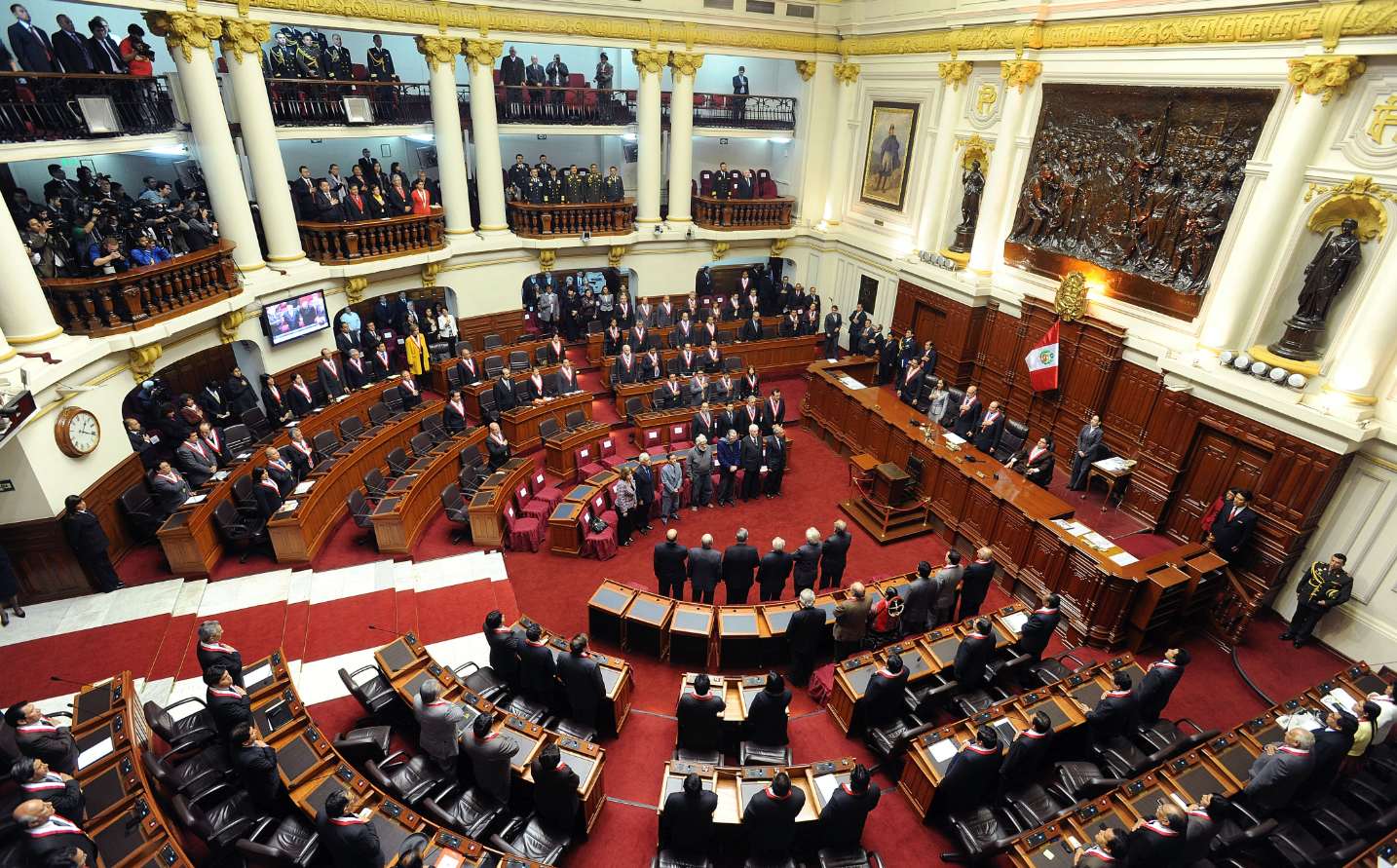
Peru has had eight presidents in ten years. None of those elected at the ballot box has managed to complete their term. Congress, the most discredited institution in the country (with a 93% disapproval rating), has become the true center of power. And while politics resembles a boxing ring without a referee, the economy grows above the regional average. This explosive combination—political chaos and macroeconomic stability—is no coincidence. It is the fuel of a project that seeks to install in Peru something unprecedented in the world: an authoritarianism of parliamentary origin.
There will be no coup d’état nor closure of Congress. The strategy is to use democratic institutions until they become unrecognizable: there will be elections, parties, and debates, but real power will be concentrated in a coalition of parties that, from the Legislative branch, has captured all the state’s checks and balances. The Executive, the Constitutional Court, the Public Prosecutor’s Office, the Ombudsman’s Office, the National Board of Justice… almost everything has come under the control of a group of parties that have also shielded their own impunity.

The decade that changed everything
Peru did not reach this point overnight. The current crisis has a starting date: 2016. That year, Pedro Pablo Kuczynski won the presidency by a narrow margin, but in Congress Fujimorismo obtained an absolute majority. What followed was not a simple dispute between branches of power, but a war of annihilation. Congress used every mechanism at its disposal to block the government, until Kuczynski resigned in 2018.
He was followed by Martín Vizcarra (removed from office in 2020), Manuel Merino (five days in power), Francisco Sagasti (a transitional president), and finally the election of Pedro Castillo in 2021. The victory of the rural schoolteacher was a political earthquake that took the entire establishment by surprise. It showed that, in a context of extreme fragmentation, the popular vote could escape the control of traditional elites.
That lesson did not go unnoticed by the coalition of parties that, although often at odds with one another, shared the common objective of maintaining control of the state. They understood that they could wield power even without popular backing, provided they managed to concentrate enough authority in the Legislative branch to neutralize the Executive.
Castillo’s failed self-coup on December 7, 2022, was the perfect catalyst. Arrested while attempting to flee, he was immediately removed from office by Congress. But the coalition did not settle for simply replacing him: it seized the moment to accelerate constitutional reforms that would limit the Executive, shield Congress, and appoint allied authorities in autonomous bodies.
The pact and institutional capture
The succession of Dina Boluarte and the continuity of the parliamentary coalition—known in the press as the “mafia pact,” composed of eight parties: Fuerza Popular, Renovación Popular, Alianza para el Progreso, Somos Perú, Podemos Perú, Perú Libre, Acción Popular, and Avanza País—demonstrated that the center of gravity of power had definitively shifted to the Legislative branch.
This “pact” does not seek to implement a government program, but rather to guarantee the impunity of its members. To that end, they have used their powers to control institutional counterweights: the appointment of Constitutional Court magistrates through opaque processes, the election of an Ombudsman with conflicts of interest, the curtailment of the autonomy of the National Board of Justice, and the removal of key prosecutors who were leading high-profile investigations.
The Peruvian paradox
Here comes the million-dollar question: if politics is chaos, why has the economy not collapsed? Between 2016 and 2025, Peru’s GDP fell only in 2020 (because of the pandemic) and in 2023 (due to El Niño). In 2025 it grew by 3.2%, one of the highest rates in the region.
The answer has several elements. First, the Central Reserve Bank and its president, Julio Velarde, who has held the position for twenty years and has been ratified by ten different presidents. Its autonomy has kept inflation under control. Second, the supercycle in metal prices: Peru lives off copper, and international prices remained high, driven by Chinese demand. Third, foreign investment, especially Chinese, with megaprojects such as the port of Chancay. Fourth, and perhaps most importantly, informality: 75% of Peruvian workers are informal, which has functioned as a social shock absorber.
This combination has created a “decoupling” between the economy and politics. And that decoupling is the best ally of the authoritarian coalition. It can govern poorly, it can be corrupt, it can capture institutions—but as long as the macroeconomy sustains itself, electoral punishment will not be immediate.
The master plan
The central piece of this architecture is the return to bicameralism through a reform enacted in March 2024, which modified 53 articles of the Constitution and will enter into force after the elections of April 12, 2026. But the new configuration does not restore the balance of the past: it creates a Senate with hypertrophied powers, a “Super Senate” that cannot be dissolved by the president and that has the final say in the approval of laws, with no referral mechanism or conciliation committee. The head of the Executive branch is reduced to a decorative figure, while real power is exercised from Parliament.
The Senate’s most critical function lies in its exclusive authority to appoint the heads of key autonomous bodies: the Ombudsman, the magistrates of the Constitutional Court, the Comptroller General, members of the Central Bank’s board of directors, the Superintendent of Banking, and members of the National Board of Justice. In practice, the coalition that controls the Senate will control the entire apparatus of the state.
At the same time, the same coalition has modified the electoral rules: it reduced the requirements for the registration of new parties (36 presidential candidates will compete in the 2026 elections), reintroduced the immediate reelection of members of Congress (nearly 70% of current legislators are running for reelection), and approved laws aimed at granting impunity to its members.
With 36 presidential candidates, it is highly likely that no ticket will obtain the majority needed to avoid a runoff. In this scenario, the key to political power lies in the election of senators. Any president who is elected will do so without a Senate caucus of their own. Presidential removal for “moral incapacity” will remain the sword of Damocles.
The cracks in the project
No political project, however perfect it may appear on paper, is free from fractures. The “mafia pact” is not a monolith. It consists of eight parties with different interests and leaderships, often in conflict with one another.
The unpredictability of the electorate is another crack. With a Congress that has a 93% disapproval rating, the “punishment vote” may paradoxically concentrate on outsider figures who promise to “clean house,” as happened with Alberto Fujimori in 1990 or Pedro Castillo in 2021.
The risk of social upheaval cannot be ruled out either. The massive mobilizations that forced the resignation of Manuel Merino in 2020, and the protests following Dina Boluarte’s assumption of office—which left dozens dead—are reminders that social tolerance has limits.
Conclusion
Peru is not heading toward a classic dictatorship, with tanks and curfews. It is moving toward something more subtle and, perhaps, more perverse: a regime that maintains democratic forms while emptying them of their substance. An authoritarianism exercised not by a strongman, but by a coalition of parties that, from the Senate, will control all the levers of the state.
Autor

Professor and researcher at the Center for Research in Social Sciences and Humanities of the Autonomous University of the State of Mexico. Former President of the Mexican Association of Political Science (AMECIP). PhD from FLACSO-Mexico.