In October, Brazil will hold a presidential election that is shaping up to be one of the most closely contested in its history, following two elections that had already divided the country, in 2018 and 2022. Lula currently holds a lead in the polls, especially in recent weeks after the latest corruption scandal involving the Bolsonaro family’s candidate. However, the campaign has not yet begun, and despite very positive economic indicators, President Lula continues to face low approval ratings. Former President Jair Bolsonaro is barred from running and is under house arrest; consequently, he has designated his son as the candidate. Amid a presidential race contested exclusively by men, one political actor is conspicuously absent: for the first time in twenty years, no woman will compete for the presidency.
Women are regarded as a decisive voting bloc in this election. It is worth remembering that, on the same day Brazil elects its new president, voters will also renew the state and federal legislatures, elect governors, and choose two-thirds of the Senate.

As in most countries, women constitute the majority of the electorate, and it is no coincidence that, in such a close race, their votes are especially coveted. Brazil, however, bears a particularly shameful distinction: it ranks as the second-worst country in Latin America in terms of women’s political representation.
The importance of the women’s vote became especially evident in the last presidential election. In 2022, with the pandemic still fresh in people’s minds and fears that Bolsonaro would remain in power after discouraging the use and production of vaccines, women voted overwhelmingly for Lula. Most surveys support this conclusion, pointing to a pragmatic assessment linked to the protection of public health. What is already well established, in any case, is that women tend to vote from a perspective of care, which includes concerns about the quality of education and food inflation.
Now, without the pandemic providing a sense of urgency and with a government that has failed to fully inspire this electorate, the contest for the women’s vote is once again wide open. On both sides, efforts to win over female voters are reflected in proposals to increase penalties for femicide, a measure supported by both political camps. Although these initiatives attract attention, it is striking that they continue to rest on a rather simplistic assumption: that women share similar political preferences simply because they are women.
Yet while the competition for the women’s vote occupies much of the public debate, far less attention is being paid during the 2026 election to women’s place as political representatives within the major parties. This became evident on June 24, when Michelle Bolsonaro, a pre-candidate for public office, released a video accusing her stepson and fellow party member, Flávio Bolsonaro.
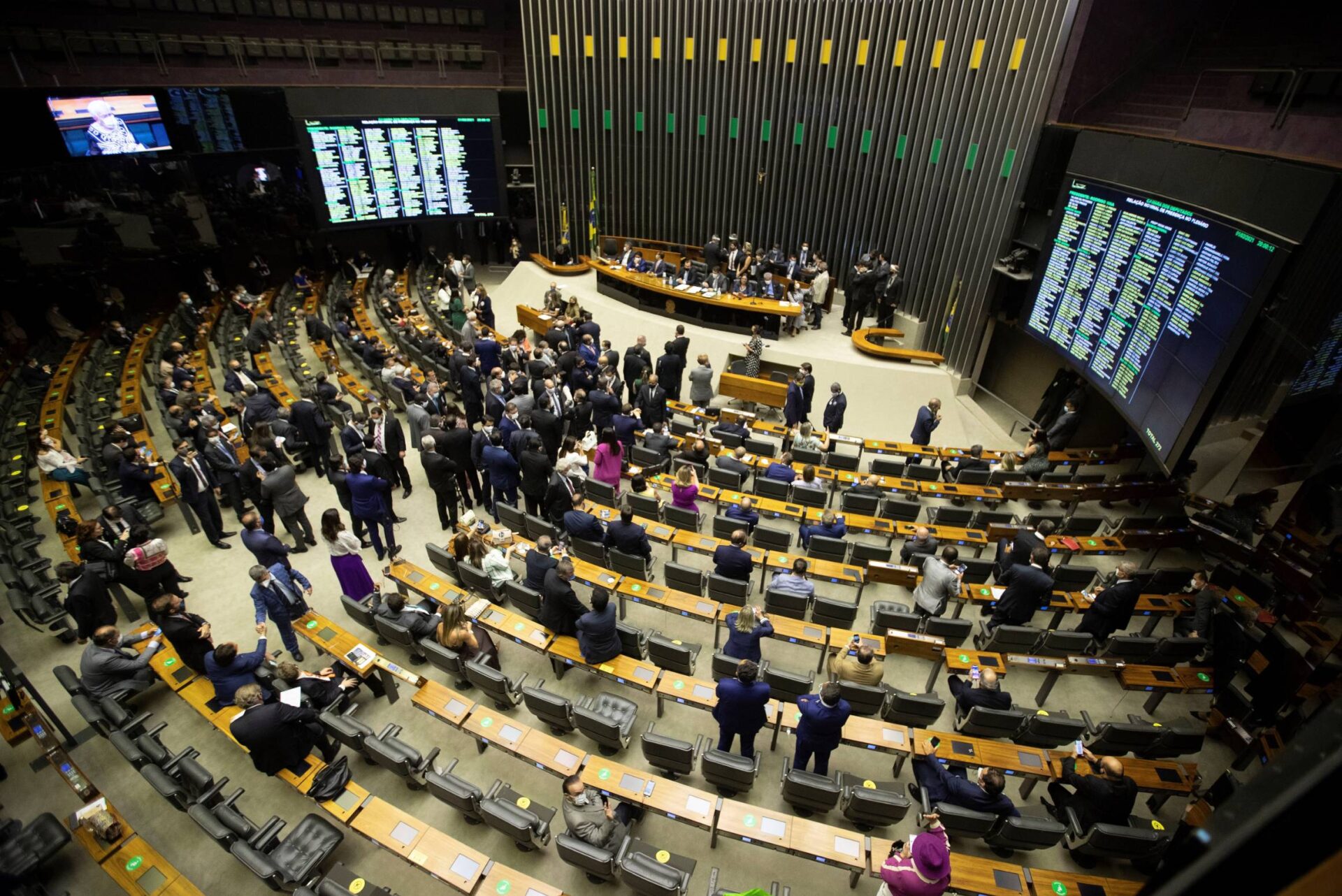
Brazil currently ranks 135th in the Inter-Parliamentary Union’s global ranking of women’s representation in national parliaments—the second-worst position among Latin American countries, surpassed only by Belize. Only 13% of municipalities have a woman serving as mayor; women hold just 18% of seats in the federal lower house (most of them white and affiliated with right-wing parties); and nearly 20% of Brazilian cities do not have a single woman on the city council. Thirty years after the adoption of gender quotas, the share of women elected remains low, and progress has advanced at a snail’s pace.
To a large extent, this is due to Brazil’s electoral system, combined with deeply masculinized party practices that act as a filter, systematically reducing the chances of female candidates long before voters even see their names on the ballot.
Quotas requiring parties to include at least 30% women on their candidate lists have existed since the late 1990s. However, in an open-list electoral system, they guarantee only the candidacy—not that the woman candidate will enjoy visibility. In such a system, where each candidate competes individually to gain public recognition, access to campaign financing is decisive. Yet public campaign resources continue to flow disproportionately to men, particularly to those who already hold office and control party structures.
But the problem goes beyond that. Because increasing the presence of women necessarily means reducing the space available to some men, what predominates is the preservation of the status quo. Informal barriers further reinforce this dynamic. In a recent study published in the journal Electoral Studies and conducted jointly with Thiago Fonseca and João Victor Guedes Neto, we found that, following legal reforms designed to promote the candidacies of women and Black candidates, political parties increased the number of women running for office, but mainly those with little chance of being elected, ensuring only that they contributed additional votes to their respective party lists.
Many times, even when women are willing to run, those who could potentially become competitive candidates never do because the party fails to finance them, support them, or promote their campaigns. And when voters do not know who they are, they simply cannot vote for them. Added to these barriers is the persistent problem of gender-based political violence, which has become increasingly visible during this election cycle, discouraging many women from entering the electoral contest.
The result is a system that depends on women’s votes while continuing to make their access to power more difficult. The rules that structure Brazil’s political system were historically designed by men and for men, and they continue to reproduce a deeply unequal pattern of representation.
In 2026, while Lula and Bolsonaro’s son—or whoever ultimately contests the presidency—compete for the votes of the largest segment of the electorate, women, who remain indispensable in determining who governs, continue to be far from occupying positions of power in the same proportion.
Autor

Research Associate at LabGen of the Univ. Federal Fluninense (Brazil). PhD in Political Science (UFF). She was a visiting scholar at Columbia University. Author of "Women and Power" (with Hildete Pereira de Melo, Editora FGV, 2018).